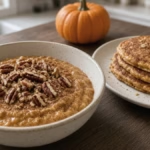



Quick answer: GLP-1 friendly recipes are small, high-protein meals that are low in fat, gentle on the stomach, and easy to eat when your appetite is low. A good starting point is one lean protein, a soft cooked vegetable, and a small serving of plain carbs, for about 25 to 30 g of protein per meal. Below you’ll find how to build that plate, foods to favor, foods that often make nausea worse, a sample day with USDA-based nutrition, and our upcoming recipe collection.
If you take Ozempic, Wegovy, Mounjaro, or Zepbound, you may have noticed that food feels different. You get full fast. Big meals can sit heavy. Greasy food may turn your stomach. This guide is about food and portions only. It’s here to help you plan simple meals that fit a smaller appetite, not to replace advice from your care team.
Why Protein Matters on GLP-1 Medication
GLP-1 medications such as semaglutide (Ozempic, Wegovy) and tirzepatide (Mounjaro, Zepbound) slow down how fast your stomach empties. They also turn down hunger signals. For many people, that means eating a lot less food than before.
When you eat less overall, it’s easy to eat less protein too. That matters because protein helps your body hold on to muscle. In the STEP 1 trial of semaglutide, a body-scan subgroup lost mostly fat, but they also lost some lean mass (Wilding et al., New England Journal of Medicine, 2021).
In 2025, four groups (the American College of Lifestyle Medicine, the American Society for Nutrition, the Obesity Medicine Association, and The Obesity Society) published a joint advisory on nutrition for people on GLP-1 therapy. Its priorities include nutrient-dense foods, adequate protein, resistance training to help preserve muscle and bone, managing stomach side effects, and support from a registered dietitian (Mozaffarian et al., American Journal of Clinical Nutrition, 2025).
Here’s the practical side. Protein also tends to be filling, and with a small appetite you can only eat so much. So it helps to eat your protein first, before the rice or bread. If you stop early, you’ve still gotten the most important part. Not sure how much protein you need in a day? Our protein calculator gives a starting estimate you can bring to your doctor or dietitian.
Spreading protein out also helps. Instead of one big dinner, aim for three small meals and one or two protein snacks. We explain why in how much protein your body can absorb per meal.
Foods to Favor
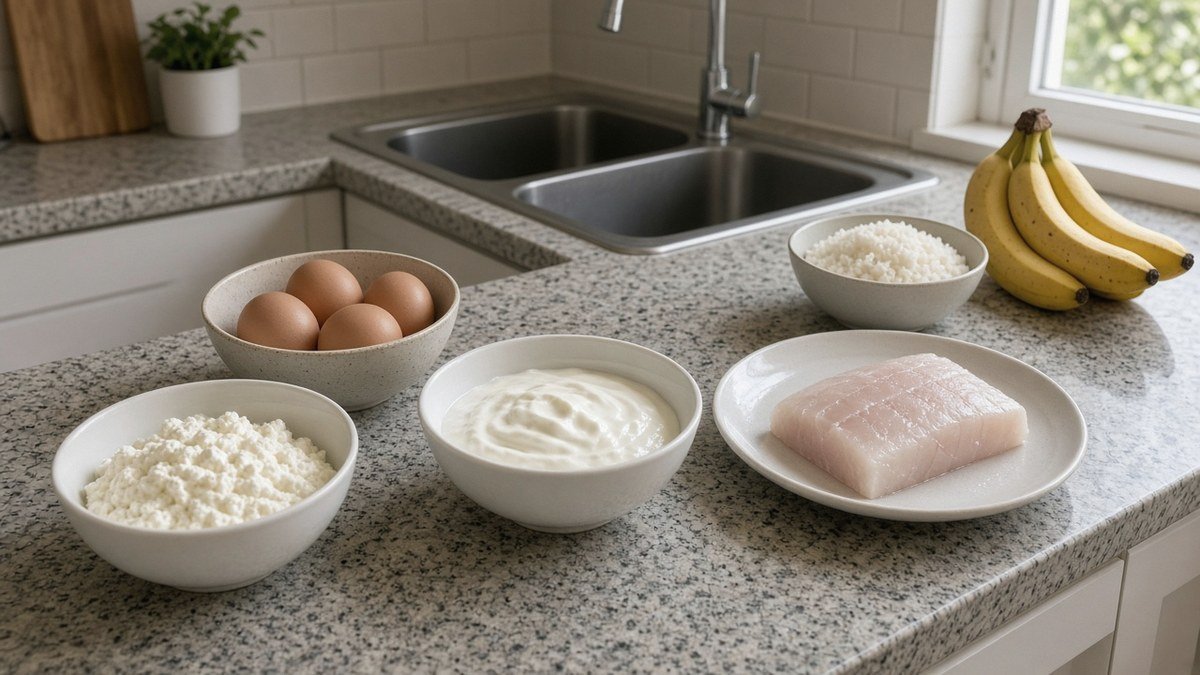
The best foods on GLP-1 medication are usually lean, soft, mild, and easy to eat in a few bites. Think “simple and gentle.” These are good staples to keep on hand:
- Eggs and egg whites. Soft scrambled eggs, egg bites, and omelets are easy to chew and quick to make. See our egg white breakfast recipes for ideas.
- Nonfat or low-fat Greek yogurt. About 17 g of protein in a 6 oz (170 g) cup, cold and smooth. Many people find cold foods easier on queasy days.
- Low-fat cottage cheese. About 12 g of protein per 1/2 cup (113 g). Blend it smooth if the texture bothers you.
- White fish, salmon, shrimp, and canned tuna. Baked or poached fish is soft and cooks fast.
- Skinless chicken and turkey breast. Shred it into soup or make small meatballs.
- Tofu and edamame. Good plant protein with a mild taste.
- Broth-based soups. They add fluid, they’re warm and soothing, and you can stir in shredded chicken or beans.
- Soft cooked vegetables. Zucchini, carrots, green beans, spinach, and squash are usually easier to digest than big raw salads.
- Plain carbs in small portions. Rice, potatoes, oatmeal, toast, and crackers. They’re bland and often settle well.
- Fruit in small amounts. Berries, banana, melon, and canned fruit in juice. They add fluid and a little fiber.
Hydration counts
Because you’re eating less, you also get less water from food. Some people forget to drink because they feel full. Sip water through the day instead of gulping a lot at once. Broth, milk, smoothies, yogurt, and watery fruits like melon all add fluid too. If you have trouble keeping fluids down, tell your doctor.
Fiber: go slow
Fiber helps with regular digestion, and constipation is a common side effect of these medications. But a big jump in fiber can cause gas and bloating, especially when your stomach is already slow. A moderate approach works better: add fruit, oats, cooked vegetables, and some beans a little at a time, and drink fluids along with them.
Foods That Often Worsen Nausea
In the STEP 1 trial, nausea was the most common side effect reported with semaglutide. Food won’t fix it, but some choices tend to make it worse. Common triggers include:
- Fried and greasy foods. French fries, fried chicken, bacon, and fast food. Fat slows digestion even more.
- Rich, creamy sauces. Alfredo, heavy gravies, and lots of cheese.
- Very large portions. Even healthy food can cause trouble if you eat past the point of feeling full.
- Spicy foods. Hot peppers and heavy spice can irritate a sensitive stomach.
- Very sugary foods and drinks. Sweets, soda, and big desserts don’t sit well for many people.
- Carbonated drinks. Bubbles can add to bloating and fullness.
- Alcohol. It can irritate the stomach. Ask your doctor whether it’s okay for you.
- Eating fast or late. Eating quickly or lying down right after a meal may make discomfort worse.
Everyone is different. Keep a simple note of what bothers you and what feels fine. That way you can build your own list of safe meals.
How to Build a GLP-1 Friendly Plate
You don’t need a special diet. You need a smaller plate with protein at the center. Aim for about 25 to 30 g of protein per meal if your care team agrees that’s right for you. Use this table as a starting point:
| Part of the plate | Examples | Starting portion | About how much protein |
|---|---|---|---|
| Lean protein (eat first) | Chicken breast, white fish, shrimp, lean turkey, tofu | 3 to 4 oz (85 to 113 g) cooked | 20 to 30 g |
| Or high-protein dairy | Nonfat Greek yogurt, low-fat cottage cheese | 3/4 to 1 cup (170 to 226 g) | 17 to 24 g |
| Or eggs | 1 whole egg + 3/4 cup (183 g) liquid egg whites | 1 small scramble | 26 g |
| Soft cooked vegetables | Zucchini, carrots, green beans, spinach | 1/2 cup (about 60 to 90 g) | 1 to 2 g |
| Plain carbs | Rice, potato, oatmeal, toast | 1/4 to 1/2 cup (40 to 80 g) cooked, or 1 slice | 2 to 4 g |
| Light fat | Olive oil, a few nuts, a little avocado | 1 tsp (5 ml) | 0 to 1 g |
A few tips make this easier:
- Use a smaller plate or bowl. A salad plate makes a small portion look normal.
- Eat slowly and stop at the first sign of fullness. You can always eat more later.
- Plan four to five small eating times. Three small meals plus one or two snacks works for many people.
- Cook mild. Bake, poach, steam, or simmer instead of frying. Lemon, herbs, garlic, and ginger add flavor without heat or grease.
- Keep backups. On days you can’t face a meal, a smoothie, yogurt, or a cup of broth with protein is better than nothing.
Sample GLP-1 Friendly Day
Here’s one example of how a day could look. It shows the structure, small meals with protein at each one. It is not a calorie target. Your own needs depend on your body, your activity, and your doctor’s advice. Nutrition values are calculated from USDA FoodData Central (SR Legacy). Meal calories are rounded to the nearest 5, and day totals come from unrounded values.
| Meal | What’s in it | Calories | Protein | Carbs | Fat | Fiber |
|---|---|---|---|---|---|---|
| Breakfast: egg white scramble | 1 large egg (50 g) + 3/4 cup (183 g) egg whites, 1 slice (32 g) whole-wheat toast | 245 | 30 g | 15 g | 6 g | 2 g |
| Snack: yogurt and berries | 6 oz (170 g) nonfat plain Greek yogurt + 1/2 cup (74 g) blueberries | 140 | 18 g | 17 g | 1 g | 2 g |
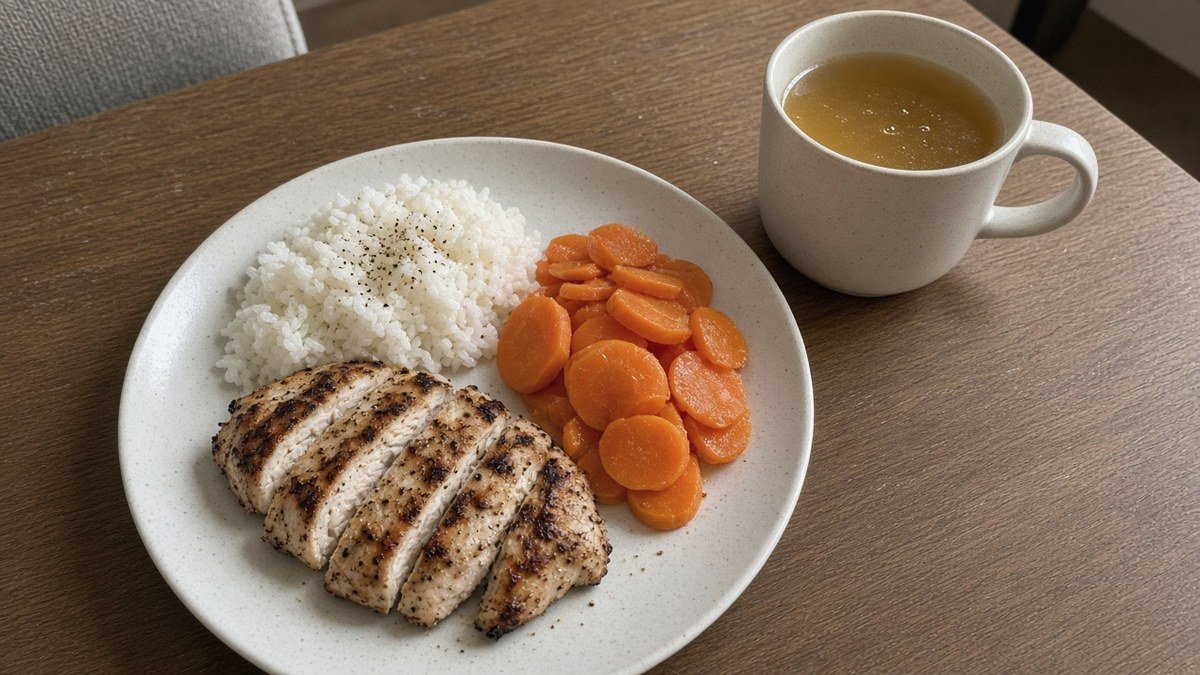
| Lunch: chicken and rice soup | 3 oz (85 g) cooked skinless chicken breast, 1/2 cup (79 g) cooked white rice, 1/4 cup (39 g) cooked carrots, 1 cup (240 ml) low-sodium chicken broth | 295 | 34 g | 28 g | 5 g | 1 g |
| Snack: cottage cheese and banana | 1/2 cup (113 g) 2% cottage cheese + 1/2 small banana (50 g) | 135 | 12 g | 17 g | 3 g | 1 g |
| Dinner: lemon baked cod | 4 oz (113 g) cooked cod, 1/2 cup (78 g) boiled potato, 1/2 cup (62 g) cooked green beans, 1 tsp (4.5 g) olive oil | 245 | 28 g | 20 g | 6 g | 3 g |
| Day total | 1,068 | 122 g | 98 g | 20 g | 10 g |
This day is low in fat and gentle in fiber on purpose. If your appetite allows, your dietitian may suggest adding more food, such as an extra slice of toast, more fruit, or a glass of milk. Drink water between meals all day long.
FAQ
What should I eat on GLP-1 medication?
Many people do well with small meals built around lean protein, such as eggs, Greek yogurt, cottage cheese, fish, chicken, or tofu, plus soft cooked vegetables and a small serving of plain carbs. Low-fat, mild foods are often easier to tolerate. Ask your doctor or a registered dietitian about your personal needs.
How much protein should I eat per meal on Ozempic or Mounjaro?
A common practical goal is about 25 to 30 g of protein per meal, spread across the day. Your total daily need depends on your body size, activity, and health. Your doctor or a registered dietitian can help you set a target that fits you.
What foods make nausea worse on GLP-1 medication?
Fried and greasy foods, rich creamy sauces, very large portions, spicy foods, sugary foods, and carbonated drinks are common triggers. Eating fast or lying down right after a meal may also make it worse. If nausea is severe or doesn’t improve, contact your doctor.
What can I eat when I have no appetite?
Try small, easy options with protein: a protein smoothie, Greek yogurt, cottage cheese, a cup of broth with shredded chicken, or a soft scrambled egg. Small sips and bites every few hours can add up. Tell your care team if you struggle to eat or drink enough.
How much fiber should I eat on GLP-1 medication?
Fiber supports regular digestion, but adding a lot at once can cause gas and bloating. Increase it slowly with fruit, oats, cooked vegetables, and beans, and drink fluids with it. A dietitian can help if you have constipation or other digestive issues.
Are these GLP-1 friendly recipes a replacement for medical advice?
No. These recipes are meal ideas built around small portions and high protein. They are not a treatment and do not replace guidance from your doctor or a registered dietitian.
GLP-1 Friendly Recipes
Our full collection is on the way. Each recipe is a small, high-protein portion with US and metric measurements and nutrition per serving. Recipes marked “coming soon” will be linked here as they go live.
- GLP-1 Friendly High-Protein Breakfast Egg Bites
- Protein Greek Yogurt Bowl for Small Appetites
- Easy Cottage Cheese Protein Pudding (GLP-1 Friendly)
- Gentle Chicken and Rice Soup With Extra Protein (coming soon)
- Lean Turkey Meatballs for Small Portions (coming soon)
- High-Protein Smoothie for Days You Can’t Eat Much (coming soon)
- Baked Salmon Bites With Lemon Yogurt Sauce (coming soon)
- Protein Jello and Whipped Cottage Cheese Snack (coming soon)
- Low-Fat Shrimp Stir-Fry (Mild, Not Spicy) (coming soon)
- 5 GLP-1 Friendly Protein Snacks Under 150 Calories (coming soon)
- High-Protein Bone Broth Ideas for Nausea Days (coming soon)
- 7-Day GLP-1 Friendly High-Protein Meal Plan (coming soon)
- GLP-1-Friendly High-Protein Meals: 5 Small-Portion Recipes (coming soon)
Looking for more gentle breakfast ideas right now? Try our high-protein breakfasts under 400 calories and pick the smaller, milder options.
Sources
- Wilding JPH, et al. Once-Weekly Semaglutide in Adults with Overweight or Obesity. New England Journal of Medicine. 2021;384(11):989-1002. doi:10.1056/NEJMoa2032183
- Mozaffarian D, et al. Nutritional priorities to support GLP-1 therapy for obesity: a joint advisory from the American College of Lifestyle Medicine, the American Society for Nutrition, the Obesity Medicine Association, and The Obesity Society. American Journal of Clinical Nutrition. 2025 (published online May 30, 2025). doi:10.1016/j.ajcnut.2025.04.023. Also published in Obesity (doi:10.1002/oby.24336).
- U.S. Department of Agriculture. FoodData Central.
This content is for informational purposes only and is not medical advice. Talk to your doctor or a registered dietitian about your nutrition while on GLP-1 medication.