

If your feed has been full of grainy daily selfies, gallon water jugs, and people bragging about “Day 47,” you’ve already met the 75 Hard challenge. It’s one of the most polarizing fitness trends in years — praised as a life-changing mental reset by some, dismissed as an extreme, gimmicky flex by others.
So what does the 75 Hard challenge actually do to your body and mind over 75 days? Here’s a clear-eyed breakdown of the rules, the real physical and psychological effects, and whether it’s actually worth doing.

What Is the 75 Hard Challenge? (The Rules)
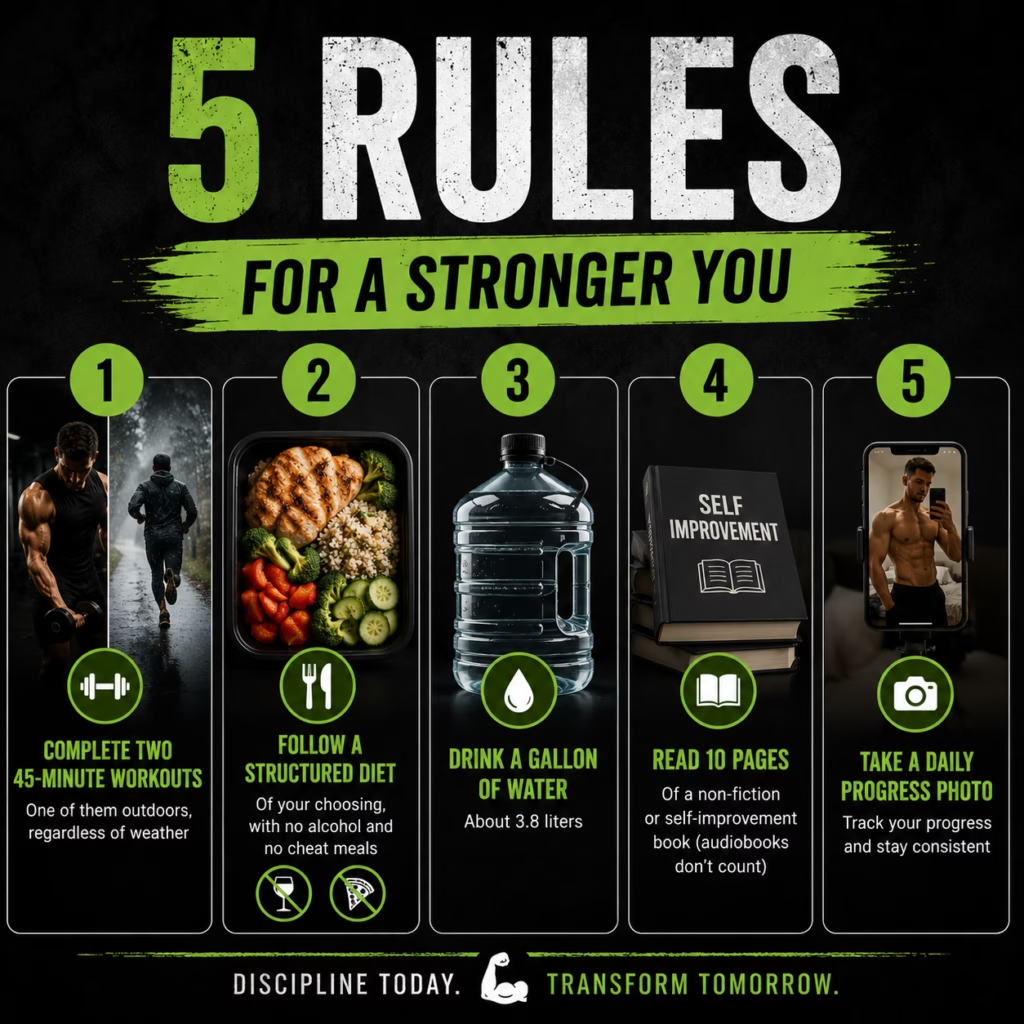
75 Hard was created by entrepreneur Andy Frisella as a mental toughness program — not, by his own description, a fitness challenge. The 75 Hard rules are simple but strict. Every single day for 75 days, you must:
- Complete two 45-minute workouts — one of them outdoors, regardless of weather
- Follow a structured diet of your choosing, with no alcohol and no cheat meals
- Drink a gallon (about 3.8 liters) of water
- Read 10 pages of a non-fiction or self-improvement book (audiobooks don’t count)
- Take a daily progress photo
Miss any single rule on any single day — even day 74 — and you start over from day one. That all-or-nothing restart clause is arguably the most talked-about (and most controversial) part of the entire program.
What Happens to Your Body: A Week-by-Week Reality Check
Weeks 1–2: Adaptation and Shock The first two weeks are typically the hardest. Two workouts a day, seven days a week, is a significant jump in training volume for most people. It’s common to experience fatigue, sore muscles that don’t fully recover, and — because of the water rule — potential dehydration or electrolyte imbalances if water intake isn’t paired with adequate sodium and minerals.
Weeks 3–5: Early Changes, New Stress By this stage, many people start noticing genuine changes: better sleep quality (from consistent exercise), appetite shifts (often decreased, sometimes increased), and early body composition changes if the “diet of choice” includes a calorie deficit.
This is also when overtraining symptoms — elevated resting heart rate, irritability, plateauing performance — start to show up in people who aren’t building in adequate recovery.
Weeks 6–75: Cumulative Results and Risk By the later stretch, physical results are usually visible for people who stuck with a reasonable diet and training split. But this is also where the lack of built-in rest days becomes a real liability. The program doesn’t include a rest day by design, which runs counter to how most exercise science treats recovery — as an active, necessary part of adaptation, not a lack of discipline.
The 75 Hard Challenge : What Happens to Your Mind
This is where 75 Hard’s fans say the real transformation happens — and where its critics raise the most valid concerns.
The upside: There’s solid psychological grounding for why rigid, non-negotiable structure can work. Removing decision-making (“should I work out today?”) and replacing it with a fixed rule (“I always work out today”) reduces the mental friction that derails a lot of people’s habits.
Many participants report a genuine boost in self-discipline and confidence that extends beyond the 75 days.
The risk: The same rigidity is a double-edged sword. The restart-on-failure rule can foster all-or-nothing thinking, where a single missed day feels like total failure rather than a normal, forgivable slip.
For people with a history of disordered eating or exercise patterns, a program built around strict food rules, mandatory daily workouts, and a daily photo tracking your body can be genuinely risky, and isn’t a good fit.
Anyone with that kind of history should approach 75 Hard — or skip it — in consultation with a doctor or therapist.
The Science: Does It Actually Work?
What’s well-supported:
- Consistency and structure are genuinely two of the strongest predictors of long-term fitness success.
- Daily reading and reduced alcohol intake are independently linked to better mental clarity and physical health.
- Removing “should I or shouldn’t I” decisions is a proven behavioral tool for habit formation.
What’s less supported:
- There’s no exercise-science basis for the “one workout must be outdoors” rule beyond general benefits of outdoor activity and sunlight exposure.
- Zero built-in rest days for 75 straight days conflicts with widely accepted recovery science, especially for people already training at a high intensity.
- The restart penalty is a motivational design choice, not something backed by behavioral research — some coaches argue it actually increases dropout rates rather than resilience.
Fitness professionals are generally split: many respect the discipline-building intent but caution that the program’s rigidity, lack of rest, and total restart penalty can create unnecessary injury or burnout risk for the wrong person.
The 75 Hard Challenge : Who Should (and Shouldn’t) Try It
Might be a good fit if you:
- Already exercise somewhat regularly and have a baseline fitness level
- Thrive under strict, rule-based structure rather than flexible goals
- Are looking for a mental reset more than a specific physical outcome
Should proceed with caution or skip it if you:
- Are new to consistent exercise (the jump in volume is steep)
- Have a history of disordered eating or exercise, or a complicated relationship with body image and progress photos
- Have an injury, health condition, or are otherwise advised by a doctor to prioritize rest and recovery
75 Hard vs. the Alternatives
Because 75 Hard’s intensity isn’t sustainable or appropriate for everyone, a few modified versions have gained traction:
- 75 Soft: One daily workout instead of two, no restart penalty for a missed day, and a flexible “eat and drink in moderation” approach instead of strict diet/no-alcohol rules. Designed as a more sustainable, less all-or-nothing entry point.
- 50 Hard: A shortened, slightly less intense version of the original program for people who want the structure without the full 75-day commitment.
Both alternatives keep the daily-habit framework that makes the original appealing, while removing the elements — total restart, zero rest days — that draw the most safety criticism.
Real Results: What People Commonly Report
Across the wave of 75 Hard testimonials online, a few patterns show up consistently: visible body composition changes, a strong sense of pride and improved self-discipline, and better reading and hydration habits that often stick well beyond day 75.
The more mixed reports involve difficulty sustaining the exact structure long-term, and a noticeable subset of people who restart multiple times before finishing or give up altogether — a sign the format isn’t a universal fit.
The Bottom Line
The 75 Hard challenge can be a genuinely powerful habit reset for the right person — someone who already has a fitness base, responds well to strict structure, and doesn’t have a complicated relationship with food, exercise, or body image.
But it isn’t a scientifically optimized fitness program, and its most extreme features — daily double workouts with no rest days, and an all-or-nothing restart rule — aren’t backed by exercise or behavioral science so much as by marketing and motivational design.
If you’re considering it, talk to a doctor first, especially if you’re new to exercise or have any underlying health conditions, and consider 75 Soft as a more sustainable starting point if the full rules feel too extreme.
This article is for general informational purposes and isn’t a substitute for personalized medical or fitness advice.