

If it feels like everyone at the gym has suddenly traded machines for kettlebells, medicine balls, and battle ropes, you’re not imagining it. Functional fitness — training built around real-life movement patterns instead of isolated muscle groups — spiked hard during the pandemic home-workout boom, faded as gyms reopened, and is now firmly back as one of 2026’s biggest fitness trends.
Here’s what functional fitness actually is, why it’s resurging, and how to build a real workout around it.
What Is Functional Fitness, Really?
Functional fitness is training designed to improve the movements you actually use in daily life — squatting to pick something up, lunging to step over an obstacle, pushing, pulling, twisting, and carrying. Instead of isolating a single muscle (like a bicep curl machine), functional exercises tend to engage multiple muscle groups and joints at once, often using free weights, kettlebells, resistance bands, and bodyweight rather than fixed machines.
The core movement patterns most functional programs are built around:
- Squat (sitting down, standing up, picking things up)
- Hinge (bending at the hips — deadlifts, picking something up off the floor)
- Push (pushing a door, a stroller, an overhead object)
- Pull (pulling open a door, rowing motions, climbing)
- Carry (holding groceries, luggage, or anything with weight while walking)
- Rotate/anti-rotate (twisting to reach or throw, stabilizing against a twisting force)
Why It’s Making a Comeback in 2026
A few forces are converging to bring functional training back into the mainstream:
- The longevity movement. As more people train for how they’ll move and feel at 60, 70, and 80 rather than purely for aesthetics, functional patterns — squatting without pain, carrying groceries without strain — have become the actual goal, not a side effect.
- Fatigue with isolated machine circuits. After years of machine-based gym routines, more people are gravitating toward training that feels more useful and more varied.
- Home and hybrid workouts normalized minimal equipment. The pandemic pushed people toward kettlebells, resistance bands, and bodyweight training out of necessity — many never went back to needing a full machine stack.
- Group class formats built around it. Kettlebell classes, boot camps, and CrossFit-adjacent formats have kept functional movement patterns visible and socially reinforced.
The Core Functional Fitness Workout
Here’s a simple, well-rounded functional workout built around the core movement patterns above. It requires only a kettlebell (or a single dumbbell) and, optionally, a resistance band.
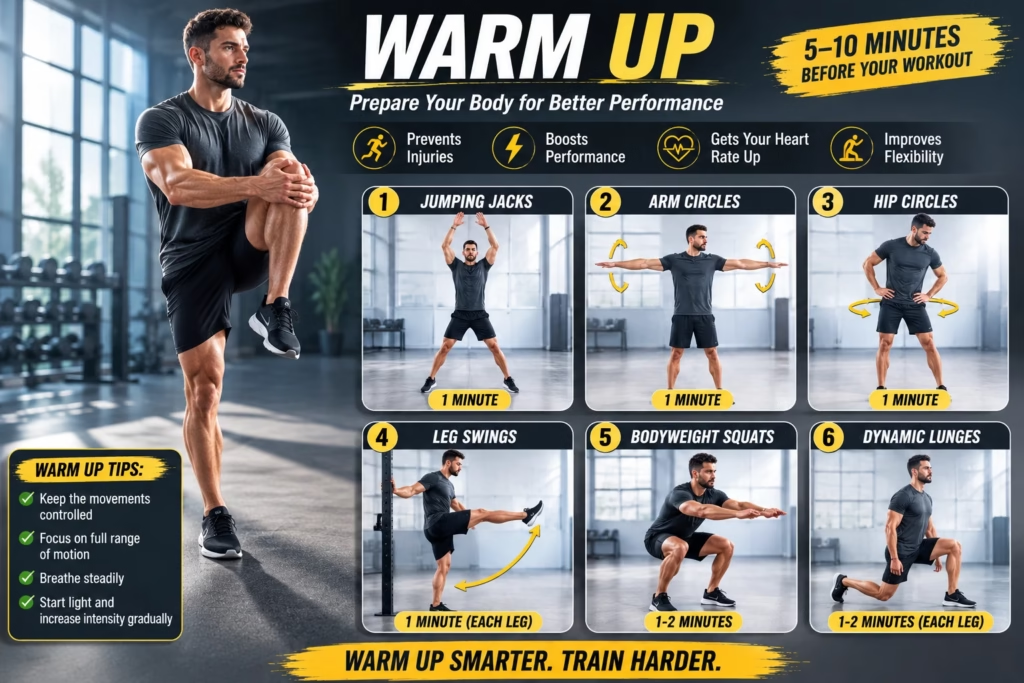
- Bodyweight squats — 10 reps
- Arm circles and hip circles — 30 seconds each
- Walking lunges — 10 reps per side
Main Circuit (repeat 3 rounds)
- Goblet squats — 12 reps (holding kettlebell at chest)
- Kettlebell deadlifts — 12 reps
- Push-ups (knee or full) — 10 reps
- Bent-over rows — 12 reps per side
- Farmer’s carry — 30–40 seconds walking with kettlebell(s)
- Standing rotational band twists — 12 reps per side
Cooldown (5 minutes)
- Hip flexor stretch
- Shoulder and chest stretch
- Deep breathing / short walk
This kind of circuit hits every core movement pattern in under 30 minutes and scales easily by adjusting weight and rep count.
Who Benefits Most From Functional Training
- Older adults looking to maintain independence — functional patterns directly support daily tasks like getting up from a chair or carrying groceries.
- Athletes in sports that require multi-directional movement, since functional training often improves coordination and stability better than isolated machine work.
- Busy people who want efficient, minimal-equipment workouts that translate to real-world strength rather than just visible muscle.
- Anyone recovering from injury (under professional guidance), since functional patterns can be scaled and are often used in physical therapy settings.
A Few Things to Keep in Mind
- Form matters more than weight. Because functional movements involve multiple joints, poor form (especially in squats and hinges) carries more injury risk than an isolated machine exercise. Starting with lighter weight and prioritizing technique is worth it.
- It’s not automatically better for pure muscle growth. If your primary goal is maximum hypertrophy in a specific muscle, traditional isolation work still has a place — functional training complements it rather than replacing it outright for that specific goal.
- Progression still needs structure. “Functional” doesn’t mean random. A good program still progressively increases weight, reps, or complexity over time.
The Bottom Line
Functional fitness isn’t a new invention — it’s a return to training the body the way it’s actually used, and its 2026 resurgence reflects a broader shift toward longevity, efficiency, and movement quality over purely aesthetic goals. A simple squat-lunge-kettlebell circuit, done consistently two to three times a week, can build strength that shows up in daily life — not just in the mirror.
This article is for general informational purposes. Consult a doctor or qualified trainer before starting a new exercise program, especially if you have an existing injury or health condition.