



Quick answer: High-protein pancakes are a delicious way to support weight loss while hitting your daily nutrition targets. Our top recipes range from 24g to 42g of protein per serving, featuring wholesome ingredients like cottage cheese, Greek yogurt, and protein powder. For more inspiration, you can also explore our favorite high protein breakfasts under 400 calories.
Starting your morning with a satisfying breakfast sets the tone for the entire day. Traditional pancakes are often loaded with refined flour and sugar, leaving you hungry an hour later. By swapping in protein-rich whole foods, you can enjoy fluffy, delicious pancakes that keep you full and support your fat loss goals. Whether you follow a vegetarian lifestyle or simply love breakfast foods, these recipes make it easy to reach your goals. You might also enjoy our collection of high protein breakfasts without eggs for even more variety.
How do these 5 high-protein pancakes compare?
To help you choose your next favorite breakfast, here is a quick look at the calories and protein for each recipe. All numbers were calculated from USDA FoodData Central.
| Recipe | Calories | Protein (g) |
|---|---|---|
| Cottage Cheese Oat | 390 | 31 |
| Greek Yogurt Banana | 360 | 29 |
| Egg White Protein | 310 | 42 |
| Lemon Ricotta | 340 | 24 |
| Chocolate Peanut Butter | 354 | 27 |
What are the best cottage cheese oat pancakes?
Blending cottage cheese into a smooth batter completely transforms its texture while delivering a massive protein boost. If you love this ingredient, you will also want to check out these cottage cheese recipes for weight loss.
Cottage Cheese Oat Pancakes
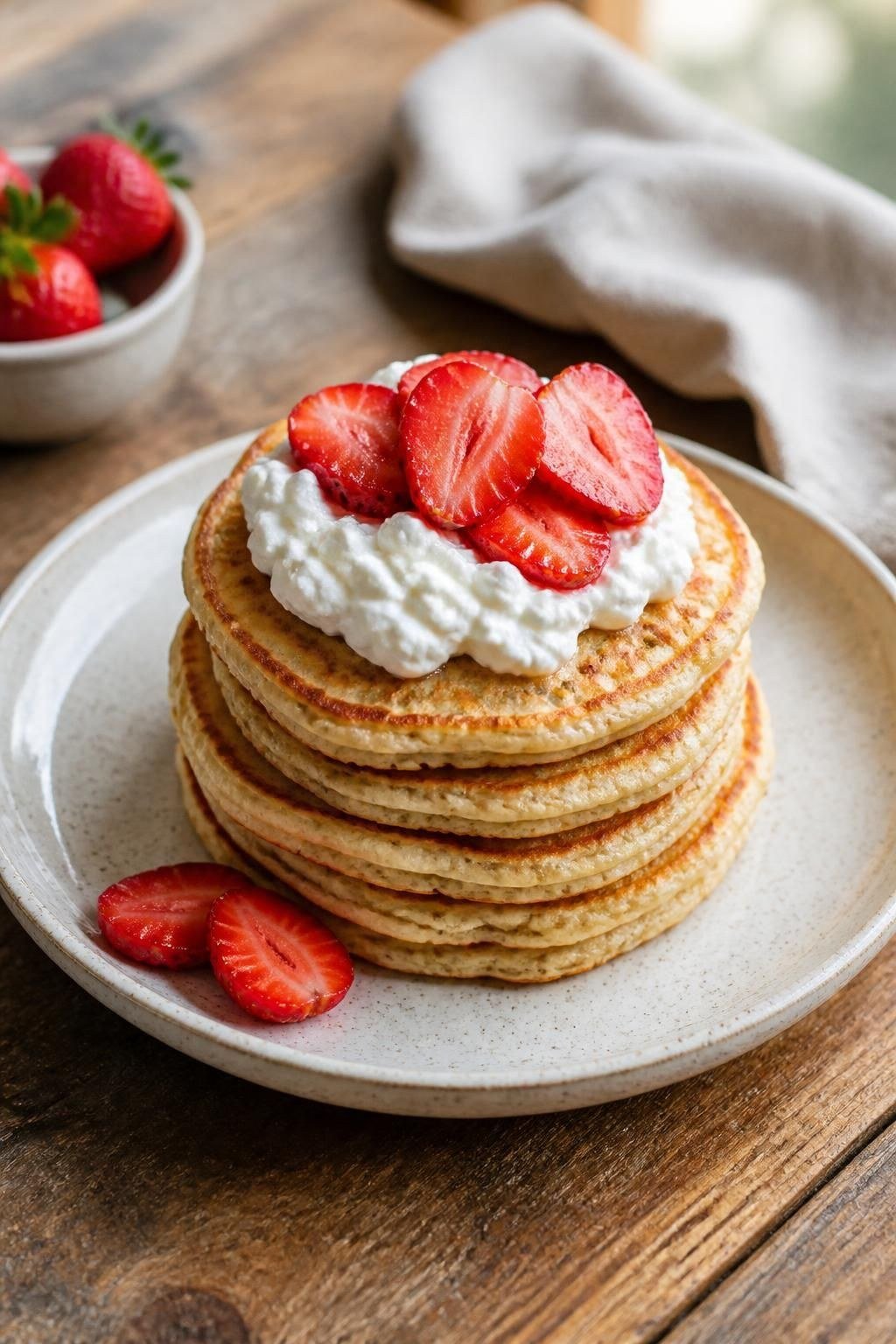
Per serving: 390 calories, 31 g protein
- 113 g 2% cottage cheese
- 40 g oats (rolled or quick)
- 100 g whole eggs
- Cooking spray and a pinch of cinnamon or salt
- Add the cottage cheese, oats, whole eggs, and cinnamon to a blender.
- Blend on high speed until completely smooth and frothy.
- Heat a non-stick skillet or griddle over medium heat and coat with cooking spray.
- Pour small portions of the batter onto the hot skillet.
- Cook for 2 to 3 minutes until bubbles form on the edges, then flip and cook for another 1 to 2 minutes until golden brown.
How do you make Greek yogurt banana pancakes?
Non-fat Greek yogurt adds natural moisture and a tart tang that balances the sweet flavor of ripe bananas. This is also a fantastic concept if you enjoy high-protein overnight oats with Greek yogurt for busy mornings.
Greek Yogurt Banana Pancakes
Per serving: 360 calories, 29 g protein
- 150 g nonfat plain Greek yogurt
- 50 g whole eggs
- 40 g oats
- 50 g banana (plus extra slices for topping if desired)
- Cooking spray, a splash of water, and a pinch of salt
- Place the Greek yogurt, whole egg, oats, and banana into a blender.
- Blend until smooth. If the batter is too thick, add a small splash of water.
- Preheat a non-stick skillet over medium heat and mist lightly with cooking spray.
- Pour batter into rounds and cook until edges look set and dry.
- Flip carefully and cook for an additional minute until cooked through.
Can you make high protein pancakes with egg whites and whey?
By combining whey protein powder and pure liquid egg whites, you get an extraordinarily high protein count with very few extra calories. You can prep components ahead of time, similar to how you would approach Greek yogurt breakfast meal prep.
Egg White Protein Pancakes
Per serving: 310 calories, 42 g protein
- 30 g whey protein powder
- 120 g egg whites
- 30 g oats
- 50 g frozen blueberries (thawed)
- Cooking spray and a splash of water or milk
- Combine the whey protein powder, liquid egg whites, and oats in a blender.
- Blend until smooth. Whey protein powder can dry out batter quickly, so stir in a splash of water or milk if it feels too thick.
- Gently fold in the thawed blueberries by hand.
- Heat a non-stick skillet over medium-low heat with cooking spray.
- Cook the batter in batches, flipping gently once bubbles appear, until both sides are set.
What makes lemon ricotta pancakes light and fluffy?
Part-skim ricotta cheese creates an airy, melt-in-your-mouth texture that feels like a weekend brunch treat while keeping your calories controlled.
Lemon Ricotta Pancakes
Per serving: 340 calories, 24 g protein
- 120 g part-skim ricotta
- 50 g whole eggs
- 30 g whole-wheat flour
- 5 g lemon juice (plus some fresh zest)
- Cooking spray and a pinch of salt
- In a medium bowl, whisk together the ricotta cheese, whole egg, lemon juice, and lemon zest.
- Gently stir in the whole-grain wheat flour and a pinch of salt until just combined.
- Heat a non-stick skillet over medium heat and apply cooking spray.
- Drop spoonfuls of the thick batter onto the skillet.
- Cook for 3 minutes on the first side until golden, then flip and cook for 2 more minutes.
How do you make chocolate peanut butter protein pancakes?
Chocolate and peanut butter is a classic flavor combination that satisfies sweet cravings without derailing your weight loss goals.
Chocolate Peanut Butter Protein Pancakes
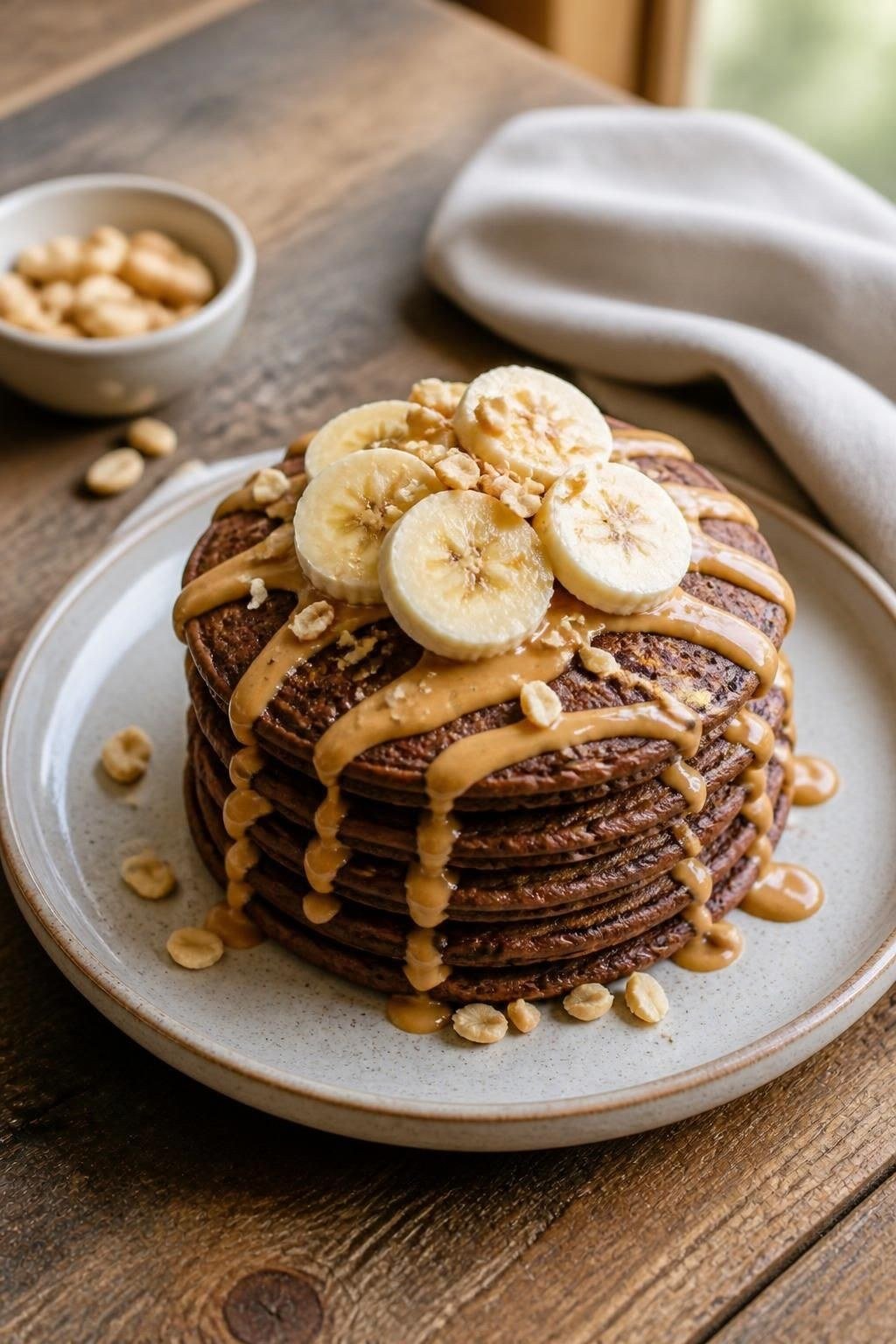
Per serving: 354 calories, 27 g protein
- 30 g oats
- 50 g whole eggs
- 100 g egg whites
- 8 g unsweetened cocoa powder
- 16 g smooth peanut butter
- Cooking spray and a splash of water
- Add the oats, whole egg, egg whites, unsweetened cocoa powder, and peanut butter to a blender.
- Process on high until completely smooth and uniform in color.
- Heat a non-stick skillet over medium heat and mist with cooking spray.
- Pour the batter into circles on the hot surface.
- Cook for about 3 minutes until bubbles form, flip carefully, and finish cooking for another 1 to 2 minutes.
How do you make and store high-protein pancakes?
Making a batch of high-protein pancakes is easy, but a few simple habits will ensure they turn out delicious every time:
- Control your heat: Protein powders and whole-grain flours can brown faster than traditional refined flour. Keep your heat at medium or medium-low to cook the inside without burning the outside.
- Use a quality blender: Blending the oats and cottage cheese or yogurt thoroughly creates a smooth batter that mimics traditional pancake texture.
- Proper storage: Cooked pancakes keep 3 to 4 days in the fridge according to standard food safety guidelines. You can also freeze them for busy mornings.
- Reheating: Pop refrigerated or thawed pancakes into a toaster or warm skillet for a minute to restore their texture.
To learn more about how dietary protein supports overall health, you can read the comprehensive overview from the Harvard T.H. Chan School of Public Health Nutrition Source.
Frequently asked questions
Can I meal prep these pancakes ahead of time?
Yes, you can cook a double batch on the weekend and store them in an airtight container in the refrigerator.
How long do cooked pancakes last in the fridge?
Cooked pancakes keep 3 to 4 days in the fridge and can also be frozen for longer storage.
Can I substitute the oats with regular flour?
Yes, you can swap out oats for an equal weight of whole-grain wheat flour if you prefer a smoother batter right out of the bowl.
Why did my protein powder pancakes turn out dry?
Whey protein absorbs moisture quickly. Simply add a small splash of water or milk to thin out the batter until it pours easily.
Are these recipes suitable for weight loss?
Each recipe is portioned to provide controlled calories alongside 24g to 42g of protein, which helps promote satiety and muscle retention during weight loss.
What are the key takeaways?
- High-protein pancakes use wholesome ingredients like cottage cheese, Greek yogurt, and egg whites to support weight loss.
- Protein content ranges from 24g to 42g per single serving across the five recipes.
- Leftovers keep safely in the refrigerator for 3 to 4 days and can be quickly reheated in a toaster or skillet.
- Always adjust batter thickness with a splash of water if your protein powder makes it too dense.
Where do these numbers come from?
- USDA FoodData Central: https://fdc.nal.usda.gov/
- Harvard T.H. Chan Nutrition Source: Protein: https://nutritionsource.hsph.harvard.edu/what-should-you-eat/protein/
- FoodSafety.gov Cold Food Storage Chart: https://www.foodsafety.gov/food-safety-charts/cold-food-storage-charts
This article is for general information and is not medical advice. Talk to your doctor or a registered dietitian before changing your diet.