



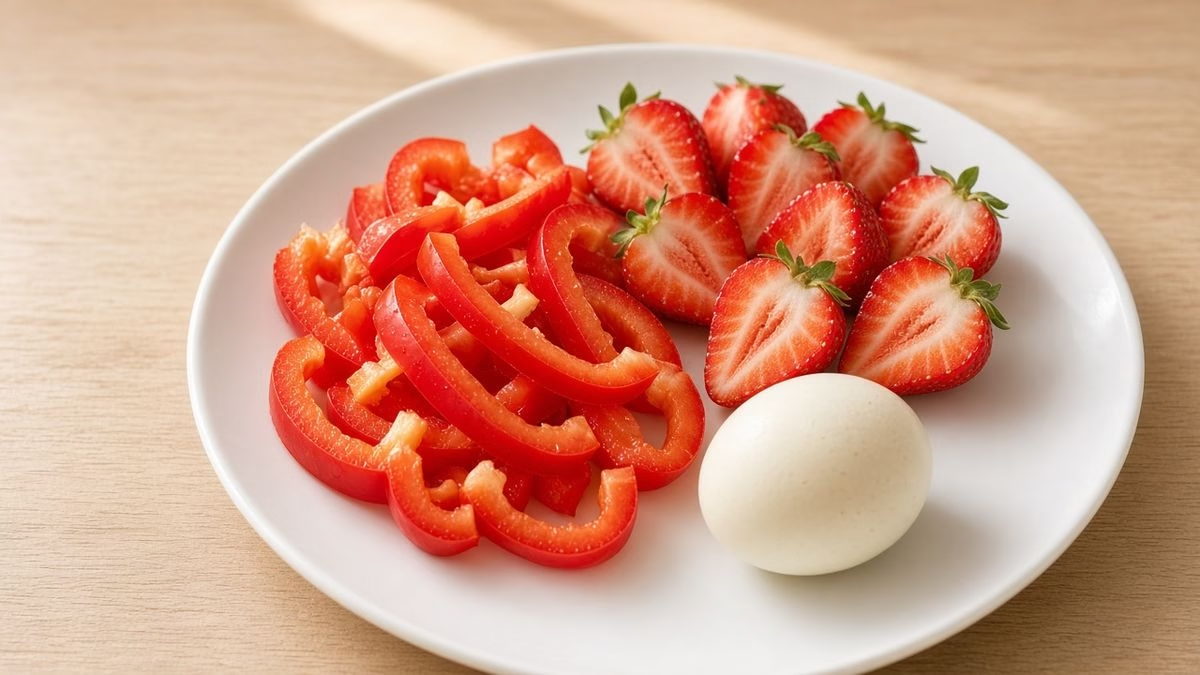
If you search for collagen rich foods vegetarian eating can rely on, start with the honest answer: no plant contains collagen, and no vegetarian food brings ready-made collagen to your plate. What these foods do is supply the amino acids, vitamin C, zinc and copper your body needs to build its own collagen, and the seven foods below do that with numbers you can check.
Every figure in this table comes from USDA FoodData Central and is given per 100 g of the food as usually eaten. Portion sizes vary, so use these as a base and scale for your own plate.
Collagen-rich foods for vegetarians at a glance
| Food | Key nutrient | Amount per 100 g | What it does |
|---|---|---|---|
| Red bell pepper | Vitamin C | 142 mg | Required for collagen to form |
| Tofu (firm) | Protein, copper | 17.3 g protein; 0.38 mg copper | Plant protein plus a cofactor |
| Eggs | Protein, proline | 12.6 g protein; 0.51 g proline | Amino acids for the collagen chain |
| Cottage cheese (2%) | Protein, proline | 10.4 g protein; 1.16 g proline | Slow-digesting dairy protein |
| Greek yogurt (nonfat) | Protein, proline | 9.5 g protein; 0.97 g proline | High protein per spoon, easy to digest |
| Lentils (cooked) | Lysine, copper | 0.63 g lysine; 0.25 mg copper | Lysine is often low in plant diets |
| Pumpkin seeds | Zinc, copper | 7.8 mg zinc; 1.34 mg copper | Minerals used in collagen synthesis |
Why plants cannot give you collagen
Collagen is a protein built by animals. It sits in skin, bone, tendons and cartilage, which is why bone broth and skin-on chicken are full of it. Plants build cellulose and lignin instead, so there is no plant collagen to eat.
What your body does instead is assemble collagen from parts. It needs four things:
- Amino acids, especially glycine, proline and lysine. Eggs, dairy, tofu, lentils and pumpkin seeds all supply these, though in different amounts.
- Vitamin C, which the enzymes that stabilise collagen cannot work without. Without it, the collagen chain is built badly. This is the reason scurvy damages skin and gums.
- Zinc and copper, trace minerals used in the final assembly steps.
- Protein overall. If total protein is low, collagen production drops, because your body prioritises other jobs.
That means a vegetarian diet can support collagen production very well. It simply does it through building blocks rather than through collagen itself.
The 7 collagen rich foods vegetarian diets should rotate
These are the foods that show up again and again in the research and in vegetarian kitchens. Amounts are per 100 g, from USDA FoodData Central.
1. Red bell pepper: the vitamin C leader
One hundred grams of raw red bell pepper carries 142 mg of vitamin C, more than most citrus fruits and roughly twice the daily amount an adult needs. Vitamin C is not optional here: it is required for the enzymes that cross-link collagen, and without enough of it the protein is made in a weak form.
Use it raw when you can. Cooking destroys part of the vitamin C, so a handful of raw pepper on a plate does more than the same pepper stewed for twenty minutes.
2. Tofu: plant protein plus copper
Firm tofu prepared with calcium sulfate gives 17.3 g of protein per 100 g and 0.38 mg of copper. That protein number is close to what meat offers, which is why tofu anchors so many vegetarian meals. Copper is used by lysyl oxidase, the enzyme that helps collagen fibres link together.
Choose firm or extra-firm for the best protein density, and press it before cooking so it browns instead of steaming.
3. Eggs: the most complete amino acid package a vegetarian can eat
Eggs give 12.6 g of protein per 100 g and 0.51 g of proline, plus 0.43 g of glycine. Proline and glycine are two of the three amino acids collagen is mostly made of, and eggs supply them in a form the body uses efficiently.
If you eat eggs, they are the cheapest way to close the collagen gap in a vegetarian diet. One large egg is about 50 g, so two eggs give roughly a third of the protein of a 100 g portion of tofu.
4. Cottage cheese: slow protein and proline
Cottage cheese at 2% milk fat gives 10.4 g of protein per 100 g and 1.16 g of proline, the highest proline figure in this list. It is mostly casein, which digests slowly, so it keeps you full longer than a whey shake.
It also brings 111 mg of calcium per 100 g. That matters less for collagen than for bones, but it is part of why dairy fits well in a vegetarian diet.
5. Greek yogurt: protein you can eat with fruit
Nonfat Greek yogurt gives 9.5 g of protein per 100 g and 0.97 g of proline. It is thick enough to eat with a spoon, which makes it the easiest way to combine a protein source with a vitamin C source in one bowl.
6. Lentils: lysine for plant-based plates
Cooked lentils give 9 g of protein per 100 g and 0.63 g of lysine, plus 0.25 mg of copper. Lysine is the amino acid most often short in diets built on grains, so lentils fill a real gap rather than a theoretical one.
They also bring 3.3 mg of iron per 100 g. Iron does not build collagen, but low iron leaves you tired, and tired people cook badly.
7. Pumpkin seeds: the mineral hit
Pumpkin seed kernels are dense: 30.2 g of protein, 7.8 mg of zinc and 1.34 mg of copper per 100 g. A 30 g handful still covers a useful share of your daily zinc, and zinc is used at several steps of collagen production.
Keep a jar on the counter. It is the fastest way to add minerals to a yogurt bowl, a salad or a soup.
Vegan or vegetarian: the difference that matters
A lacto-ovo vegetarian eats eggs and dairy, so they get collagen-supporting amino acids from eggs, yogurt and cheese without thinking about it. A vegan eats none of those, which pushes the whole job onto tofu, tempeh, legumes, seeds and grains.
Vegans can still do it, but they have to be deliberate. Two habits matter: pair a legume with a grain across the day so lysine and methionine cover each other, and eat a vitamin C source at most meals, not once a week. Pumpkin seeds and tofu cover the zinc and copper side well.
3 high-protein vegetarian meals built around these foods
Breakfast: cottage cheese and pepper plate
150 g cottage cheese, half a red bell pepper sliced raw, a handful of pumpkin seeds, and wholegrain toast. The cottage cheese brings the protein and proline, the raw pepper brings vitamin C, and the seeds bring zinc. It takes four minutes and needs no cooking.
Lunch: tofu and lentil bowl
150 g pan-fried firm tofu, a cup of cooked lentils, spinach wilted in the same pan, and a dressing with lemon. This is the highest-protein meal of the three, and the lemon adds vitamin C on top of whatever the greens carry.
Snack or light dinner: Greek yogurt bowl
200 g Greek yogurt, a sliced orange or kiwi, two tablespoons of pumpkin seeds and a spoon of oats. This one is built for the end of the day: slow protein, vitamin C and minerals, no cooking.
If you want the numbers to land where they should, our guide on how much protein you need to lose weight gives a target by body weight, and how much protein your body can use per meal explains why spreading it out beats one big portion. Our 7-day high-protein meal plan shows how vegetarian days fit into a normal week.
Do collagen supplements work for vegetarians?
Most collagen supplements are not vegetarian. Standard collagen peptides come from cow hide or bone, and marine collagen comes from fish skin, so neither fits a vegetarian diet even though the capsule may look plant-based.
Products sold as “vegan collagen” contain no collagen at all. They are blends of amino acids, vitamin C and plant extracts meant to support your own production. That is a reasonable idea, but you can get the same nutrients from food, usually cheaper.
On whether supplements work at all, the evidence is mixed and mostly short-term. Food first is the sensible order. If you do buy a supplement, check that it is labelled vegetarian or vegan rather than assuming.
Frequently asked questions
Can vegans get collagen from food?
Not directly. Vegan diets supply the amino acids and cofactors your body needs to make its own collagen. Tofu, lentils, pumpkin seeds and a vitamin C source every day cover the main gaps.
Are collagen supplements vegetarian?
Usually not. Bovine and marine collagen are animal products. “Vegan collagen” products are nutrient blends, not collagen.
How long does it take to see a difference?
Collagen in skin turns over slowly, so any change from diet takes months, not days. Sun protection and not smoking affect skin far more than a supplement.
Do I need a supplement if I eat these foods?
Most people do not. A vegetarian diet with enough total protein, daily vitamin C and a zinc source covers the building blocks. Ask a doctor or dietitian before adding supplements if you have a medical condition.
Is bone broth suitable for vegetarians?
No. Bone broth is made from animal bones and contains collagen directly, which is exactly what a vegetarian diet avoids.
Where the numbers come from
- USDA FoodData Central for every nutrient figure in this article.
- NIH Office of Dietary Supplements: Vitamin C, which explains the role of vitamin C in collagen synthesis.
- NIH Office of Dietary Supplements: Zinc for the mineral side of the equation.
- Harvard T.H. Chan School of Public Health: Protein for how much protein a day actually looks like.
This article is for general information and is not medical advice. If you have a medical condition or take medication, talk to your doctor or a registered dietitian before changing your diet or adding supplements.