



You have probably heard that your body can only absorb 30 grams of protein at a time and the rest is “wasted.” It is one of the most repeated rules in fitness, and it is mostly wrong. Here is what the research actually shows, and how to split your protein across the day if you want to lose fat and keep your muscle.
What’s in this guide
Where the 30-gram rule came from
Absorption vs. muscle building: the key difference
What the newest studies found
How much protein per meal makes sense for you
A simple way to spread protein across your day
When more protein is not a good idea
FAQ
WHERE THE “30 GRAMS PER MEAL” RULE CAME FROM
Nobody can point to a single study that set a 30-gram ceiling. The idea most likely grew out of older research showing that when people ate more protein, more nitrogen showed up in their urine. Researchers at the time read that as “the extra protein is being wasted.”
Later, a handful of well-known studies in young men found that about 20 to 25 grams of high-quality protein after a workout maximized muscle protein synthesis over the next few hours. Gyms and supplement brands turned that into a simple rule: eat 20 to 30 grams, because anything above that is useless.
The problem is that those studies measured one thing (muscle building over a short window) and the internet turned it into a claim about something else entirely (absorption).
ABSORPTION VS. USE: THE DIFFERENCE THAT CHANGES EVERYTHING
These two words get mixed up constantly, so let’s separate them.
Absorption: almost all of it gets in
When you eat protein, your stomach and small intestine break it down into amino acids, which pass into your bloodstream. This process is very efficient. Digestibility for most protein foods sits around 90 to 95 percent, whether you eat a small portion or a large one. A bigger meal simply takes longer to digest. Your gut does not stop absorbing at 30 grams and flush the rest.
Use: where the amino acids end up
Once amino acids are in your blood, your body decides what to do with them. Some go to building muscle. Others go to repairing tissue, making enzymes, hormones and immune cells, or get burned for energy. A small share of very large intakes is oxidized and its nitrogen is excreted.
So the honest question is not “how much can I absorb?” but “how much of one meal goes toward building muscle?” That is where the per-meal numbers come from.
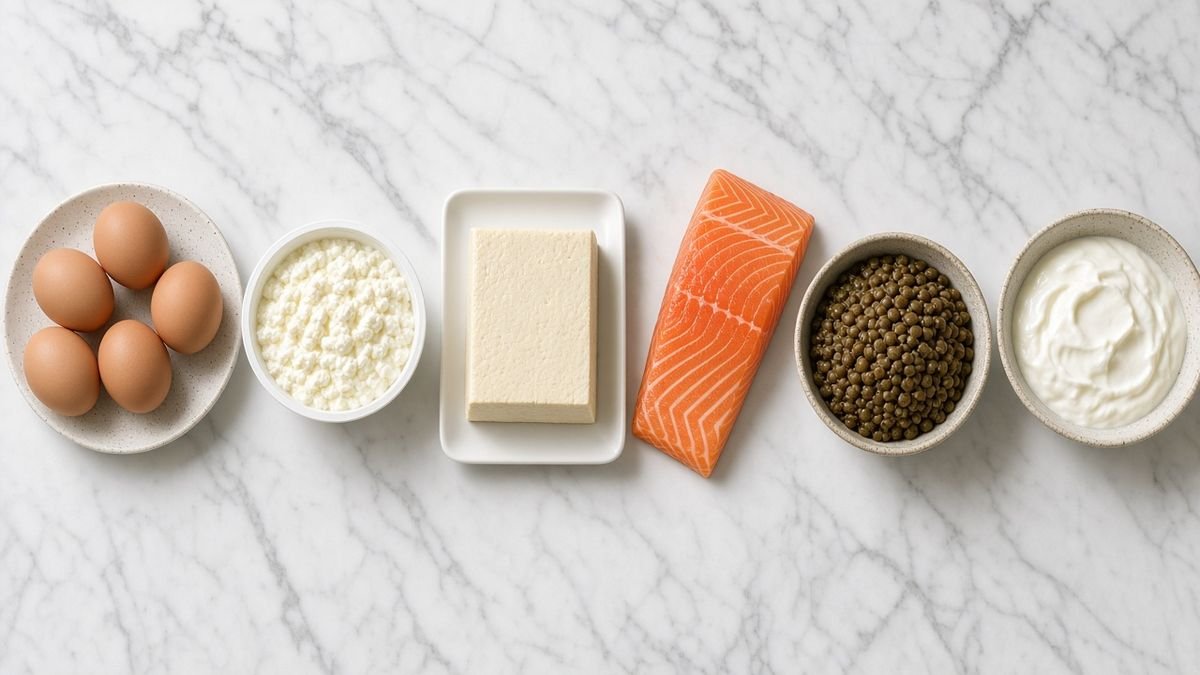
WHAT THE NEWEST RESEARCH ACTUALLY SHOWS
The 20 to 25 gram studies were short
The classic dose-response studies tracked muscle protein synthesis for about 3 to 6 hours. A larger dose digests more slowly, so a short study can miss part of its effect.
A 2023 study tested 100 grams in one sitting
Researchers in the Netherlands gave trained young adults either 25 grams or 100 grams of milk protein after a full-body workout and measured them for 12 hours. The 100-gram dose produced a larger and much longer muscle-building response than 25 grams. The authors concluded there was no clear upper limit in magnitude or duration within that window (Trommelen et al., Cell Reports Medicine, 2023).
A practical per-meal target still makes sense
A widely cited review in the Journal of the International Society of Sports Nutrition suggests about 0.4 grams of protein per kilogram of body weight per meal, across at least four meals, to reach roughly 1.6 g/kg per day (Schoenfeld and Aragon, 2018). For a 175-pound (80 kg) person, that is about 32 grams per meal. Older adults may need a bit more per meal, because aging muscle responds less strongly to small doses.
Bottom line of the science: your body absorbs nearly all the protein you eat. There is a point of diminishing returns for muscle building in a single meal, but it is higher and more flexible than 30 grams, and extra protein is not simply wasted.
HOW MUCH PROTEIN PER MEAL SHOULD YOU AIM FOR?
Start with your daily total. That matters far more than any single meal. The RDA of 0.8 g/kg is a minimum to avoid deficiency, not an ideal for active people. For people who lift weights, research points to about 1.6 g/kg per day as the point where extra protein stops adding measurable muscle gains. During a calorie deficit, intakes in the 1.2 to 1.6 g/kg range help protect lean mass and keep hunger in check. If you want a deeper look at the daily side, see our guide to a high-protein diet for weight loss.
Then divide by the number of meals you actually eat:
| Body weight | Daily target (1.6 g/kg) | Per meal (3 meals) | Per meal (4 meals) |
|---|---|---|---|
| 130 lb (59 kg) | 94 g | 31 g | 24 g |
| 155 lb (70 kg) | 112 g | 37 g | 28 g |
| 180 lb (82 kg) | 131 g | 44 g | 33 g |
| 205 lb (93 kg) | 149 g | 50 g | 37 g |
| 230 lb (104 kg) | 166 g | 55 g | 42 g |
If you carry a lot of extra body fat, base the calculation on your goal weight or a healthy weight for your height instead. Otherwise the numbers get unrealistically high.
A SIMPLE WAY TO SPREAD PROTEIN ACROSS YOUR DAY
You do not need a stopwatch or a shaker every three hours. Aim for three or four meals with a real protein source in each, and you will cover most of the benefit.
Breakfast is usually the weak spot
Most people eat very little protein in the morning and pile it into dinner. Moving 20 to 30 grams to breakfast is the easiest upgrade. Greek yogurt, eggs and cottage cheese all work. Our list of high-protein breakfasts under 400 calories gives you ready-made options.
Lunch and dinner: build around one anchor
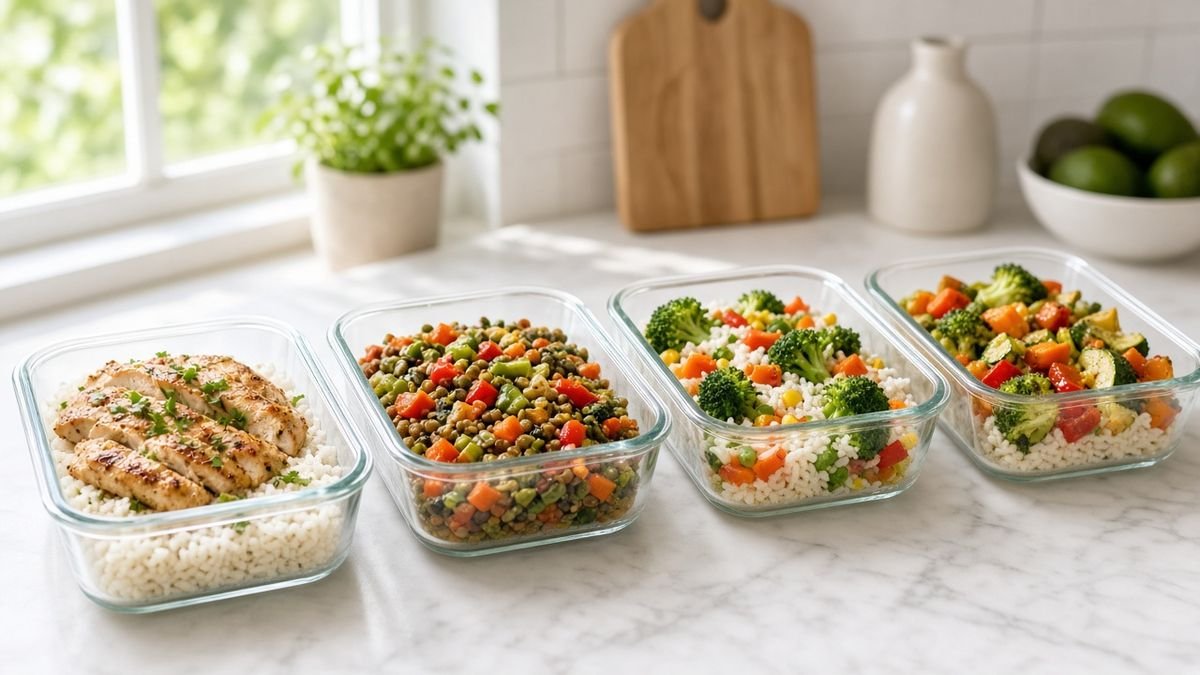
Pick one main protein (chicken, fish, tofu, lentils, lean beef) and size it to your target. Cooking it in bulk once a week removes most of the friction. Our cook-once, eat-all-week meal prep system is built around 30 grams or more per meal.
Snacks fill the gaps
If you only eat two meals a day, each one needs to be larger. That is fine: the research above shows a big meal still gets used. A protein snack between meals simply makes your targets easier to hit. Cottage cheese is one of the cheapest options, and these cottage cheese recipes for weight loss make it less boring.
DOES INTERMITTENT FASTING WASTE PROTEIN?
This is where the absorption myth caused real worry. People doing 16:8 or one meal a day were told they could never build muscle because they could only “absorb” 30 grams in their eating window.
Current evidence does not support that. Your body digests a large protein meal over many hours and uses it. Studies comparing time-restricted eating with normal eating generally find similar lean mass outcomes when total protein and training are matched. Spreading protein across more meals may give a small edge for muscle growth, but the difference is modest. If fasting helps you control calories, you can keep doing it. Just make sure your daily protein total is high enough.
WHEN MORE PROTEIN IS NOT A GOOD IDEA
High-protein eating is safe for most healthy adults, but there are real exceptions:
Kidney disease. If you have chronic kidney disease, protein intake often needs to be limited. Talk to your doctor or a registered dietitian before raising it.
Liver disease and some metabolic disorders also require medical guidance.
Very high intakes from processed meat carry their own risks. The source matters as much as the number.
Fiber can drop. If more protein pushes out vegetables, beans and whole grains, digestion and long-term health suffer.
Protein also does not cancel out calories. Eating 60 grams per meal on top of a calorie surplus will still lead to weight gain.
COMMON PROTEIN MISTAKES TO AVOID
Chasing per-meal precision while missing the daily total. The daily number wins every time.
Eating almost all protein at dinner. Shift some to breakfast and lunch.
Relying only on shakes. Whole foods bring fiber, vitamins and better satiety.
Ignoring training. Protein supports muscle, but lifting is what tells your body to build it.
For more practical guides, browse our nutrition articles.
FAQ
Can your body absorb more than 30 grams of protein at once?
Yes. Your gut absorbs nearly all the protein you eat, usually 90 percent or more. Larger meals just take longer to digest. The 30-gram figure relates to short-term muscle building, not absorption.
Is extra protein in one meal wasted?
Not really. Some is used for muscle, some for other tissues and functions, and some is burned for energy. A 2023 study found a 100-gram dose produced a bigger and longer muscle-building response than 25 grams.
How much protein per meal do I need to build muscle?
A practical target is about 0.4 grams per kilogram of body weight per meal, across three to four meals. For most adults that means roughly 25 to 45 grams per meal.
Is it better to eat protein in many small meals or a few big ones?
Total daily protein matters most. Three or four meals with a solid protein serving may be slightly better for muscle growth than one or two huge meals, but both can work.
How much protein should I eat per day to lose weight?
Many experts suggest 1.2 to 1.6 grams per kilogram of body weight during a calorie deficit to help preserve muscle and control hunger. People with kidney disease should ask their doctor first.
Do older adults need more protein per meal?
Often, yes. Aging muscle responds less to small protein doses, so adults over 60 may benefit from around 30 to 40 grams per meal along with regular strength training.
THE BOTTOM LINE
Your body is not a sieve that leaks everything above 30 grams. It absorbs almost all the protein you eat, and the most recent research shows even large meals are put to work over many hours. Focus on your daily total first, spread it over three or four meals if you can, pair it with strength training, and talk to your doctor if you have kidney problems.
Sources
Schoenfeld BJ, Aragon AA. How much protein can the body use in a single meal for muscle-building? Journal of the International Society of Sports Nutrition, 2018.
Trommelen J, et al. The anabolic response to protein ingestion during recovery from exercise has no upper limit in magnitude and duration in vivo in humans. Cell Reports Medicine, 2023.
Morton RW, et al. A systematic review, meta-analysis and meta-regression of the effect of protein supplementation on resistance training-induced gains in muscle mass and strength. British Journal of Sports Medicine, 2018.
Harvard Health Publishing. How much protein do you need every day?
National Kidney Foundation. Diet and kidney disease guidance.