



You crushed a workout two days ago and now the stairs feel like a punishment. Should you train anyway, take the day off, or do something in between? The short answer: usually you can keep moving, but how you train matters. Here is how to tell normal soreness from a real problem.
What’s in this guide
What muscle soreness actually is
The quick test: train, adjust or rest
What to do on a sore day
Recovery methods ranked by evidence
Warning signs you should never train through
How to get sore less often
FAQ
WHAT MUSCLE SORENESS ACTUALLY IS
The ache you feel a day or two after a hard or new workout is called delayed onset muscle soreness, or DOMS. It usually starts 12 to 24 hours after exercise, peaks around 24 to 72 hours, and fades within about three to five days.
DOMS comes from small-scale damage to muscle fibers and the connective tissue around them, followed by inflammation as your body repairs it. It shows up most after eccentric movements, the lowering phase of a lift, walking downhill, or a new exercise your body is not used to.
Myth: soreness is caused by lactic acid
This one refuses to die. Lactate clears from your muscles within an hour or so after exercise. It cannot explain pain that peaks two days later.
Myth: no soreness means no progress
Soreness tells you a workout was new or unusual, not that it was effective. As you train consistently, your muscles adapt (researchers call this the repeated bout effect) and you get far less sore from the same workout, while still getting stronger.
THE QUICK TEST: TRAIN, ADJUST OR REST?
Use this table before you start your session.
| What you feel | What it likely means | What to do today |
|---|---|---|
| Mild stiffness that eases as you warm up | Normal DOMS | Train as planned, maybe with a longer warm-up |
| Moderate soreness in one area, normal movement | Normal DOMS | Train other muscle groups or do light cardio |
| Soreness so strong it changes how you move | Heavy DOMS | Active recovery only: walk, mobility, easy cycling |
| Sharp, stabbing or one-sided joint pain | Possible injury | Stop and rest, see a professional if it persists |
| Severe pain, swelling, weakness and dark urine | Possible rhabdomyolysis | Seek medical care immediately |
The rule of thumb many physicians use: if soreness forces you to change your technique to compensate, the risk of injury goes up. That is your signal to switch to something gentler.
WHAT TO DO ON A SORE DAY
Option 1: train a different area
Sore legs? Train your upper body. Sore chest and arms? Do a lower-body or core session. This keeps your routine on track without loading damaged tissue again. Our upper-body workouts are a good fit when your legs need a break.
Option 2: active recovery
Light movement increases blood flow and often makes soreness feel better for a while. Good options:
A 20 to 30 minute walk
Easy cycling or swimming
Gentle mobility work or yoga
Light sets of the same movement at 30 to 50 percent of your usual effort
Studies show light exercise reduces how sore you feel temporarily. It will not speed up the actual repair much, but it will not slow it down either.
Option 3: a full rest day
If you are very sore, sleeping badly or feeling run down, a full day off is a perfectly good decision. Rest days are part of training, not a break from it. One or two easy days will not undo weeks of consistent work, while training hard on a body that is not ready often costs you more time later. A balanced plan like our simple bodyweight workout plan for beginners builds them in from the start.
IS IT SAFE TO TRAIN THE SAME SORE MUSCLE?
Generally, mild soreness is not dangerous to train through, and research suggests it does not stop long-term progress. However:
Your strength drops while you are sore, sometimes for several days. Expect lighter weights and fewer reps.
Your coordination and balance can suffer, which makes jumping, sprinting and heavy technical lifts riskier.
Pushing hard again on very sore muscles adds more damage before the first round has healed.
If you do train a sore muscle, keep the load moderate, avoid going to failure, and skip explosive work.
A note for beginners
If you are new to exercise, expect your first two or three weeks to bring the most soreness. That is normal and it passes. Start with two or three full-body sessions per week, leave at least one day between them, and keep the first sessions lighter than you think you need. Walking on your off days is one of the best things you can do. It keeps you moving, helps soreness feel better and builds the habit without adding stress to the muscles you just trained.
RECOVERY METHODS, RANKED BY EVIDENCE
A 2018 meta-analysis in Frontiers in Physiology compared common recovery methods. Here is a practical summary of what helps and what does not.
What has the best support
Sleep. Muscle repair depends on it. Most adults need 7 or more hours per night. If you struggle, these foods that may help you sleep are a small, easy place to start.
Massage. It came out as one of the most effective methods for reducing soreness and perceived fatigue.
Enough protein and calories. Damaged muscle needs raw material. A solid post-workout meal with protein and carbohydrate supports repair.
What has some support
Compression garments and cold water immersion show small benefits for perceived soreness.
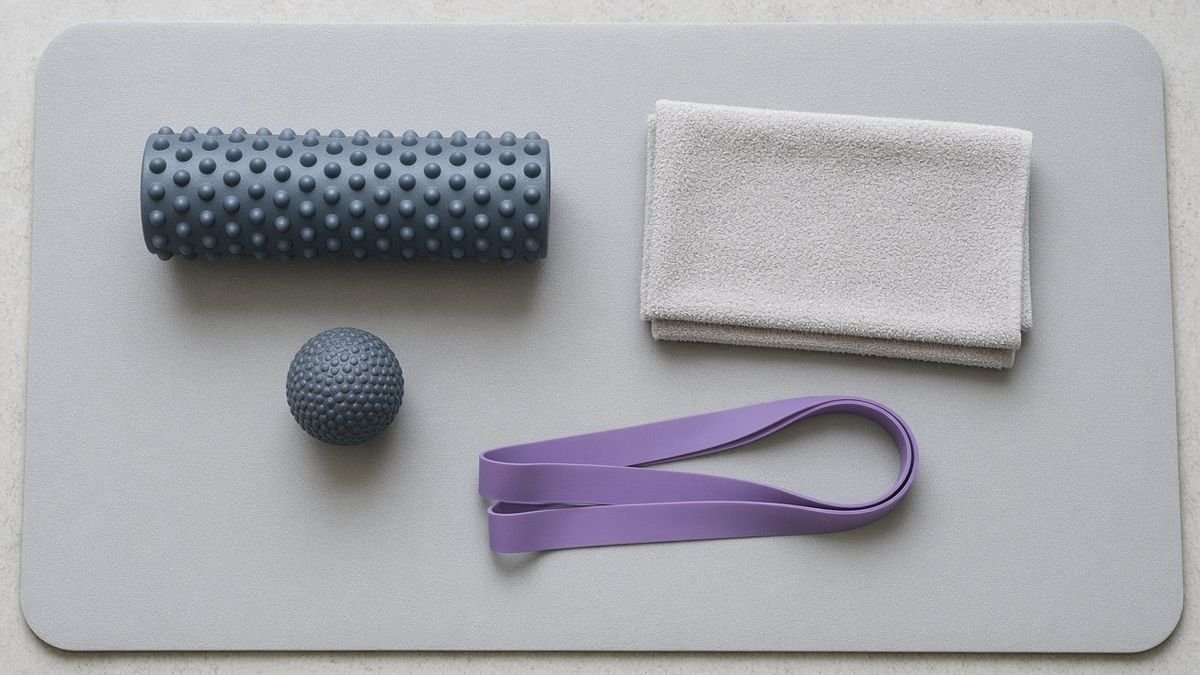
Foam rolling can reduce the feeling of soreness in the short term.
What does little
Static stretching before or after exercise. A Cochrane review found it produces almost no reduction in soreness.
Painkillers as a habit. Occasional use is fine for comfort, but routinely taking NSAIDs around training may blunt some adaptations and carries stomach and kidney risks. Do not use them to mask pain so you can train harder.

WARNING SIGNS YOU SHOULD NEVER TRAIN THROUGH
Soreness is normal. These are not:
Sharp or sudden pain during a movement
Pain in a joint rather than the muscle belly
Swelling, bruising or a visible change in the muscle
Soreness that gets worse after 72 hours or lasts longer than a week
Dark, tea-colored urine, extreme weakness or swelling after a very hard session
That last group can signal rhabdomyolysis, a condition in which damaged muscle releases proteins that can harm the kidneys. It is rare, but it does happen, especially after extreme workouts in beginners or in hot conditions. It needs emergency medical care.
Also watch for signs of overtraining: a resting heart rate that stays elevated, constant fatigue, poor sleep, frequent colds, low mood and performance that keeps falling despite rest. More rest, not more training, is the fix.
HOW TO GET SORE LESS OFTEN
Increase volume gradually. Add sets or weight in small steps rather than doubling your workload in one week.
Ease into new exercises. The first session of any new movement should feel easy.
Train consistently. Long gaps reset the repeated bout effect, so you get very sore again on your return.
Warm up properly. Five to ten minutes of light cardio and movement rehearsal prepares your muscles.
Respect recovery basics. Sleep, protein, hydration and stress management. You will find more on these in our recovery and self-care guides.
FAQ
Should I work out if I am still sore?
Usually yes, if the soreness is mild and does not change how you move. Train a different muscle group or do light cardio, and save hard sessions for the sore area until it settles.
Does working out when sore make it worse?
Light activity often makes soreness feel better for a while. Hard training on very sore muscles can add damage and slow recovery, so lower the intensity instead.
How long does muscle soreness last?
Delayed onset muscle soreness typically peaks 24 to 72 hours after exercise and fades within three to five days. Soreness lasting more than a week should be checked by a doctor.
Is muscle soreness a sign of a good workout?
No. Soreness mainly means the workout was new or harder than usual. You can build strength and muscle without getting sore, and soreness decreases as your body adapts.
What is the fastest way to relieve sore muscles?
Sleep, adequate protein, gentle movement and massage have the best evidence. Foam rolling, compression and cold water may help a little. Static stretching does very little.
When is soreness a sign of something serious?
See a doctor if you have sharp pain, joint pain, swelling, bruising, soreness lasting over a week, or dark urine with severe weakness. Dark urine after hard exercise needs urgent care.
THE BOTTOM LINE
Normal soreness is a sign of change, not damage you need to fear. In most cases you can keep training: switch muscle groups, lower the intensity, or take an active recovery day. Rest fully when soreness changes your movement or you feel run down, and never train through sharp pain, swelling or dark urine.
Sources
Cleveland Clinic. Delayed Onset Muscle Soreness (DOMS).
Dupuy O, et al. An evidence-based approach for choosing post-exercise recovery techniques to reduce markers of muscle damage, soreness, fatigue, and inflammation. Frontiers in Physiology, 2018.
Herbert RD, de Noronha M, Kamper SJ. Stretching to prevent or reduce muscle soreness after exercise. Cochrane Database of Systematic Reviews, 2011.
MedlinePlus (U.S. National Library of Medicine). Rhabdomyolysis.
Houston Methodist. Should you work out when you’re sore or in pain?