



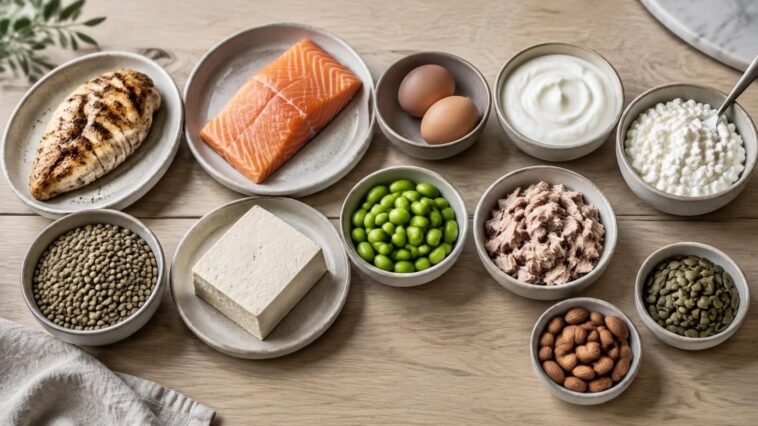
Quick answer: Per 100 g of cooked food, parmesan gives 36 g of protein, chicken breast 31 g, cod 23 g and shrimp 24 g. Per 100 calories, shrimp and cod lead.
Pumpkin seeds (30 g), turkey breast and sirloin (29 g) and tilapia (26 g) follow closely per 100 g. The tables below cover 39 foods three ways, per 100 g, per typical serving and per 100 calories, all from USDA FoodData Central and rounded. Most people need 25 to 30 g at a meal, so the useful question is not which food tops the list but which three or four foods get you there without cooking twice.
One note on the numbers: cooked weights are used wherever a food is normally eaten cooked, because raw and cooked weights disagree by 20 to 30 percent and that is the number most people get wrong.
Want your own number instead of a general one? The protein calculator turns your weight, goal and training into grams per day, and how much protein you need to lose weight explains where the range comes from.
Free printable
Take the chart with you
Thirty-nine foods on two pages: protein per 100 g, per serving and per 100 calories, plus the seven 30 g plates. Your download appears right here, and the 7-day high-protein plan follows by email.
No spam. Unsubscribe anytime.
Protein per 100 g: meat, poultry and fish
| Food (cooked) | Typical serving | Protein per serving | Protein per 100 g | Calories per 100 g | Protein per 100 kcal |
|---|---|---|---|---|---|
| Chicken breast, roasted | 3 oz (85 g) | 26 g | 31 g | 165 | 18.8 g |
| Turkey breast, roasted | 3 oz (85 g) | 25 g | 29 g | 147 | 19.7 g |
| Sirloin steak, cooked | 3 oz (85 g) | 25 g | 29 g | 205 | 14.1 g |
| Ground turkey, 93% lean | 4 oz patty (113 g) | 31 g | 27 g | 176 | 15.3 g |
| Chicken thigh, roasted | 3 oz (85 g) | 22 g | 26 g | 209 | 12.4 g |
| Ground beef, 90% lean | 4 oz (113 g) | 29 g | 26 g | 217 | 12.0 g |
| Pork tenderloin, roasted | 3 oz (85 g) | 22 g | 26 g | 143 | 18.2 g |
| Ham, lean, roasted | 3 oz (85 g) | 18 g | 21 g | 145 | 14.5 g |
| Tilapia, baked | 4 oz (113 g) | 29 g | 26 g | 128 | 20.3 g |
| Salmon, Atlantic, baked | 4 oz (113 g) | 28 g | 25 g | 206 | 12.1 g |
| Sardines, canned, drained | 1 tin (92 g) | 23 g | 25 g | 208 | 12.0 g |
| Shrimp, cooked | 3 oz (85 g) | 20 g | 24 g | 99 | 24.2 g |
| Cod, baked | 4 oz (113 g) | 26 g | 23 g | 105 | 21.9 g |
| Tuna, canned in water | 1 can (113 g drained) | 22 g | 20 g | 116 | 17.2 g |
| Canned salmon, drained | Half a can (85 g) | 17 g | 20 g | 167 | 12.0 g |
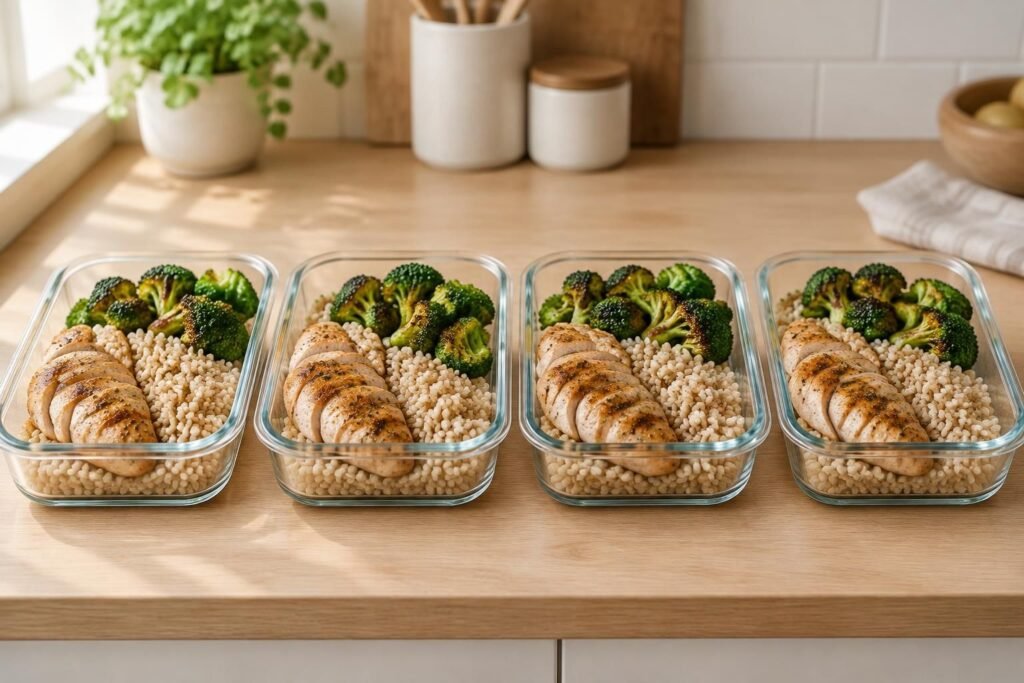
Three things this table makes obvious. White fish and shrimp cost you the fewest calories per gram of protein, which is why they dominate lean-diet lists. Chicken breast and turkey breast land within four grams of each other per 100 g, so pick on price. And salmon is not a diet food in the calorie sense: it is an excellent choice for omega-3s and taste, but you get 12 g of protein per 100 calories from it, about half of what cod gives you.
Protein per 100 g: eggs and dairy
| Food | Typical serving | Protein per serving | Protein per 100 g | Calories per 100 g | Protein per 100 kcal |
|---|---|---|---|---|---|
| Parmesan, grated | 2 tbsp (10 g) | 4 g | 36 g | 392 | 9.2 g |
| Cheddar | 1 oz (28 g) | 7 g | 25 g | 403 | 6.2 g |
| Mozzarella, part-skim | 1 oz (28 g) | 6 g | 24 g | 254 | 9.4 g |
| Cottage cheese, 2% | 1/2 cup (113 g) | 12 g | 11 g | 84 | 13.1 g |
| Skyr, plain | 3/4 cup (170 g) | 19 g | 11 g | 63 | 17.5 g |
| Egg whites, cooked | 3 large whites (100 g) | 11 g | 11 g | 52 | 21.2 g |
| Greek yogurt, nonfat | 3/4 cup (170 g) | 17 g | 10 g | 59 | 16.9 g |
| Egg, whole, hard-boiled | 1 large (50 g) | 6 g | 13 g | 143 | 9.1 g |
| Milk, 1% | 1 cup (244 g) | 8 g | 3.4 g | 42 | 8.1 g |
Dairy is where a small appetite gets fed cheaply. A 170 g tub of plain nonfat Greek yogurt gives 17 g of protein for about 100 calories, and cottage cheese does the same job with more sodium and a texture people either love or refuse. Parmesan looks like the winner per 100 g and is a trap: nobody eats 100 g of it, and a realistic two-tablespoon serving gives 4 g. Judge a food by the serving you actually eat, not by the column that flatters it.
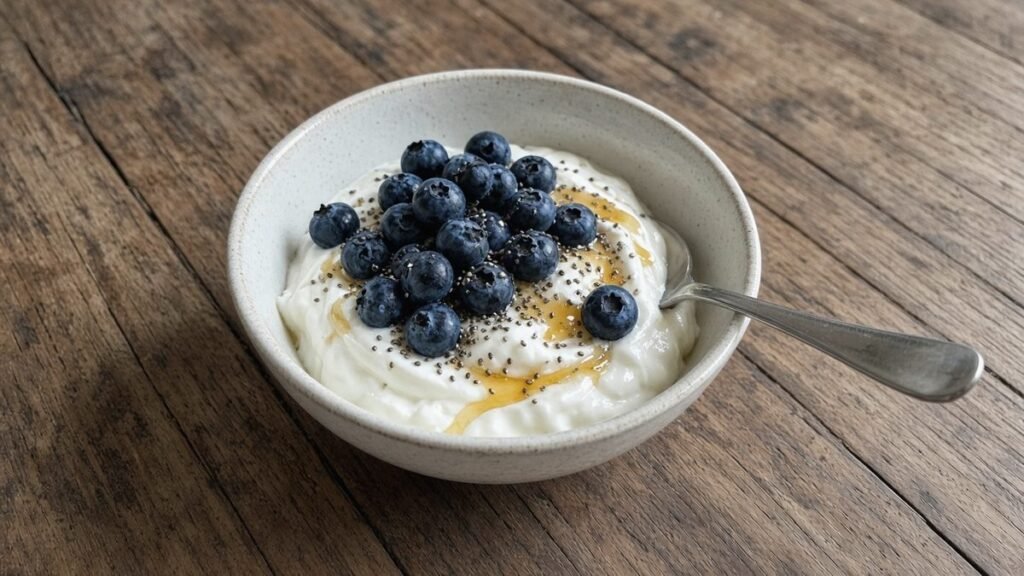
More in cottage cheese recipes for weight loss and Greek yogurt breakfast meal prep.
Protein per 100 g: beans, soy and grains
| Food | Typical serving | Protein per serving | Protein per 100 g | Calories per 100 g | Protein per 100 kcal |
|---|---|---|---|---|---|
| Tempeh | 1/2 cup (83 g) | 17 g | 20 g | 195 | 10.3 g |
| Edamame, shelled, cooked | 1 cup (155 g) | 17 g | 11 g | 121 | 9.1 g |
| Tofu, extra-firm | 1/4 block (99 g) | 10 g | 10 g | 98 | 10.2 g |
| Lentils, cooked | 1 cup (198 g) | 18 g | 9 g | 116 | 7.8 g |
| Black beans, cooked | 1/2 cup (86 g) | 8 g | 9 g | 132 | 6.8 g |
| Chickpeas, cooked | 1/2 cup (82 g) | 7 g | 9 g | 164 | 5.5 g |
| Whole-wheat pasta | 2 oz dry (about 170 g cooked) | 13 g | 7.5 g | 124 | 6.0 g |
| Quinoa, cooked | 1 cup (185 g) | 8 g | 4.4 g | 120 | 3.7 g |
Soy foods are the plant proteins that behave like meat in a meal: tempeh gives 20 g per 100 g and tofu about 10 g, and both are complete proteins, meaning they carry all nine essential amino acids in useful amounts. Beans and lentils are lower per gram but you eat more of them, and a cup of lentils still delivers 18 g. For a full set of plant mains, see high-protein vegetarian dinners for weight loss.
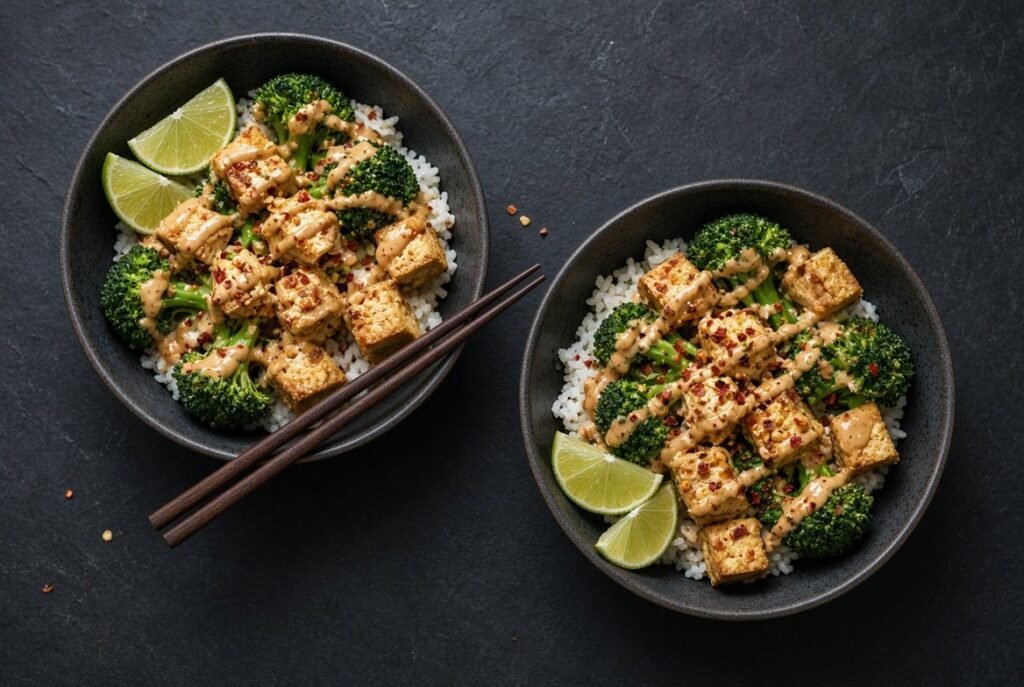
One caveat worth knowing before you buy tofu on the strength of that row: firmness and brand change the number more than any other food here. Extra-firm blocks range from about 8 g to 15 g of protein per 100 g, so read the label on the one in your fridge.
Protein per 100 g: nuts, seeds and pantry
| Food | Typical serving | Protein per serving | Protein per 100 g | Calories per 100 g | Protein per 100 kcal |
|---|---|---|---|---|---|
| Whey protein isolate | 1 scoop (30 g) | 24 g | 80 g | 380 | 21.1 g |
| Hemp seeds | 3 tbsp (30 g) | 10 g | 32 g | 553 | 5.8 g |
| Pumpkin seeds | 1 oz (28 g) | 8 g | 30 g | 559 | 5.4 g |
| Peanut butter | 2 tbsp (32 g) | 8 g | 25 g | 588 | 4.3 g |
| Almonds | 1 oz (28 g) | 6 g | 21 g | 579 | 3.6 g |
| Chia seeds | 2 tbsp (24 g) | 4 g | 17 g | 486 | 3.5 g |
| Oats, dry | 1/2 cup (40 g) | 5 g | 13 g | 389 | 3.3 g |
Treat this group as boosters, not main proteins. A tablespoon of hemp seeds on yogurt adds 3 g and a lovely nutty edge; a jar of peanut butter eaten as a protein source costs you about 700 calories for 30 g. Protein powder is the exception: it is the cheapest and most calorie-efficient way to add 20 to 25 g, and it is optional rather than necessary. If you would rather not use it, high-protein desserts without protein powder covers the swaps.
Raw versus cooked: the mistake that doubles your numbers
Protein does not disappear when you cook. Water does. A 4 oz (113 g) raw chicken breast holds about 25 g of protein; after roasting it weighs roughly 3 oz (85 g) and still holds those 25 g. So a recipe that says “4 oz chicken” means two different meals depending on whether the scale was used before or after the pan.
| What you weigh | Chicken breast | Ground beef or turkey | Fish fillet |
|---|---|---|---|
| 4 oz (113 g) raw | 25 g protein | 23 g protein | 24 g protein |
| 4 oz (113 g) cooked | 35 g protein | 29 g protein | 28 g protein |
Our recipes say which weight they mean, and it is worth checking before you swap a number into your own log. Grains and legumes run the other way: a quarter cup of dry lentils (48 g, 12 g protein) becomes about three quarters of a cup cooked. Pick one convention and stay with it; totals only go wrong when a recipe and a food label use different ones.
Which foods give the most protein per calorie?
In a calorie deficit, the useful ranking is protein per 100 calories, not per 100 g. This is the same 39 foods sorted that way, with the calories it costs to reach a 30 g serving of protein.
| Food | Protein per 100 kcal | Calories to reach 30 g protein |
|---|---|---|
| Shrimp, cooked | 24.2 g | 124 |
| Cod, baked | 21.9 g | 137 |
| Egg whites, cooked | 21.2 g | 142 |
| Whey protein isolate | 21.1 g | 142 |
| Tilapia, baked | 20.3 g | 148 |
| Turkey breast, roasted | 19.7 g | 152 |
| Chicken breast, roasted | 18.8 g | 160 |
| Pork tenderloin, roasted | 18.2 g | 165 |
| Skyr, plain | 17.5 g | 172 |
| Tuna, canned in water | 17.2 g | 174 |
| Greek yogurt, nonfat | 16.9 g | 177 |
| Ground turkey, 93% lean | 15.3 g | 196 |
| Ham, lean, roasted | 14.5 g | 207 |
| Sirloin steak, cooked | 14.1 g | 212 |
| Cottage cheese, 2% | 13.1 g | 229 |
| Chicken thigh, roasted | 12.4 g | 241 |
| Salmon, Atlantic, baked | 12.1 g | 247 |
| Ground beef, 90% lean | 12.0 g | 250 |
| Sardines, canned, drained | 12.0 g | 250 |
| Canned salmon, drained | 12.0 g | 250 |
| Tempeh | 10.3 g | 292 |
| Tofu, extra-firm | 10.2 g | 294 |
| Mozzarella, part-skim | 9.4 g | 318 |
| Parmesan, grated | 9.2 g | 327 |
| Egg, whole, hard-boiled | 9.1 g | 330 |
| Edamame, shelled, cooked | 9.1 g | 330 |
| Milk, 1% | 8.1 g | 371 |
| Lentils, cooked | 7.8 g | 387 |
| Black beans, cooked | 6.8 g | 440 |
| Cheddar | 6.2 g | 484 |
| Whole-wheat pasta | 6.0 g | 496 |
| Hemp seeds | 5.8 g | 518 |
| Chickpeas, cooked | 5.5 g | 547 |
| Pumpkin seeds | 5.4 g | 559 |
| Peanut butter | 4.3 g | 706 |
| Quinoa, cooked | 3.7 g | 818 |
| Almonds | 3.6 g | 827 |
| Chia seeds | 3.5 g | 858 |
| Oats, dry | 3.3 g | 898 |
The top ten all share one trait: very little fat or carbohydrate alongside the protein. That is not an argument against eggs, salmon or nuts, which bring things fish and yogurt do not. It is an argument for building the plate around a lean protein and letting the richer foods play a smaller part. Our cheap high-protein meals guide prices the same foods per dollar so you can weigh cost against calories in one place.
Build a plate to your numbers
Choose a protein target and a calorie budget. The list shows how much of each whole food gets you there in one sitting, and what that portion costs.
Protein powder leads every ranking of protein per calorie because it is nearly pure protein, which is exactly why it is not a meal.
What 30 g of protein looks like on a plate
Targets are easy; assembling them three times a day is the work. These are portions, not recipes, all built from the tables above.
| Meal | What goes on the plate | Protein | Calories |
|---|---|---|---|
| Breakfast, eggs | 2 large eggs, 1/2 cup cottage cheese, 1 slice whole-wheat toast | 29 g | about 320 |
| Breakfast, no eggs | 3/4 cup Greek yogurt, 3 tbsp hemp seeds, 1/2 cup dry oats, cooked | 32 g | about 420 |
| Lunch, cooked | 100 g cooked chicken breast, 1/2 cup rice, 1 cup broccoli | 35 g | about 350 |
| Lunch, no cooking | 1 can tuna, 1/2 cup cottage cheese, 2 slices whole-wheat bread | 42 g | about 385 |
| Dinner | 120 g cooked salmon, 1/2 cup quinoa, asparagus | 36 g | about 385 |
| Dinner, plant | 1 cup lentils, 1/4 block tofu, 1/2 cup edamame | 36 g | about 420 |
| Snack | 3/4 cup skyr, 1 oz pumpkin seeds | 28 g | about 265 |
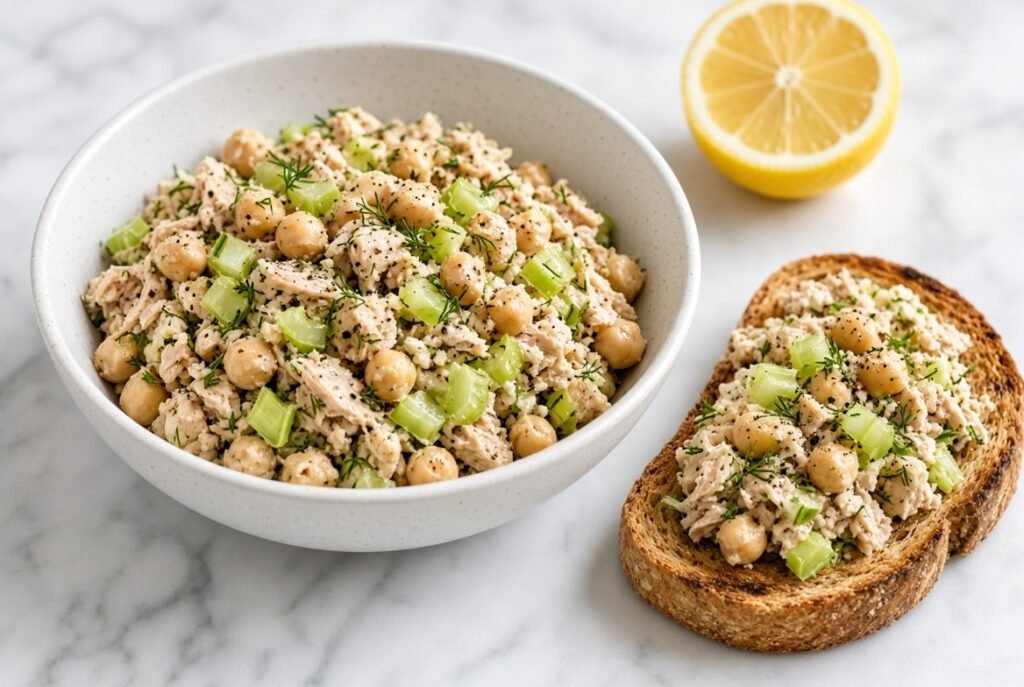
Calories are estimates from the same USDA values, and they move with brands, oils and what you drink. If you want the portions recalculated for your own serving size, the Recipe Lab does it for turkey meatballs, salmon bites, shrimp stir-fry and frozen protein desserts. A week planned at this density lands near 120 g a day, which is the shape of our 7-day high-protein meal plan.
Which high-protein foods suit a smaller appetite?
If you eat less at a sitting than you used to, whether from a GLP-1 medicine, age or a long day, volume is the enemy and density is the friend. Rank by protein per 100 g and by how easy the food is to finish: Greek yogurt, skyr, cottage cheese, ricotta, eggs, canned tuna, shrimp and soft fish all go down without much chewing. A 3 oz portion of chicken gives 26 g; a cup of lentils, the same calories, gives 18 g and a lot more bulk.
Warm liquids help too. A high-protein bone broth or a smoothie for a low appetite often works when a plate does not. For the daily target and how it changes on a GLP-1, see how much protein on a GLP-1 and keeping muscle on Ozempic.
Questions people ask about protein foods
How much protein is in 100 g of chicken breast?
About 31 g cooked, for roughly 165 calories. Raw, the same 100 g holds 22 to 23 g, because the raw weight includes water that cooking drives off.
Is 30 g of protein a lot?
It is a normal meal’s worth for an adult, not a large one. It is 100 g of cooked chicken, 170 g of Greek yogurt plus a spoon of seeds, or five eggs. Most weight-loss guidance lands on 25 to 30 g per meal and 1.2 to 1.6 g per kilogram of body weight per day.
Does cooking destroy protein?
No. Heat denatures protein, which changes texture and digestibility slightly, but the grams stay. What changes is the weight of the food, and therefore the grams per 100 g.
Which food has the most protein per calorie?
Among everyday foods, shrimp (24 g per 100 calories), cod (22 g), egg whites (21 g) and tilapia (20 g). Protein powder is in the same range at about 21 g, and it is the easiest way to add 20 g without cooking.
Do I have to count protein from vegetables and grains?
Yes, it adds up: a day of vegetables, grains and beans quietly contributes 15 to 25 g. Just do not plan a meal around them alone unless you are eating a cup or more of legumes.
Are plant proteins as good as meat?
Soy foods, quinoa and the seed-and-grain combination cover the essential amino acids. Plant proteins are usually lower per gram and come with more fibre and carbohydrate, so a vegetarian day needs larger portions or a soy anchor at two meals to reach 100 g or more.
How these numbers were calculated
Values are rounded from USDA FoodData Central records for the food as eaten, cooked where noted, without added fat or salt. Protein per 100 calories is protein grams divided by calories per 100 g, multiplied by 100. Serving weights are the ones used in our recipes, weighed on a kitchen scale rather than estimated from cup measures. Brands vary, particularly for tofu, bread, protein powder and protein pasta, so use the panel on the package when it disagrees with this page. This page is general information, not medical advice; our editorial policy covers how numbers like these are checked, and corrections are logged with a date.
Next: put one of these numbers to work. High-protein breakfasts, lunch and dinner mains, snacks and desserts, or the meal prep guide for cooking once and eating all week.