



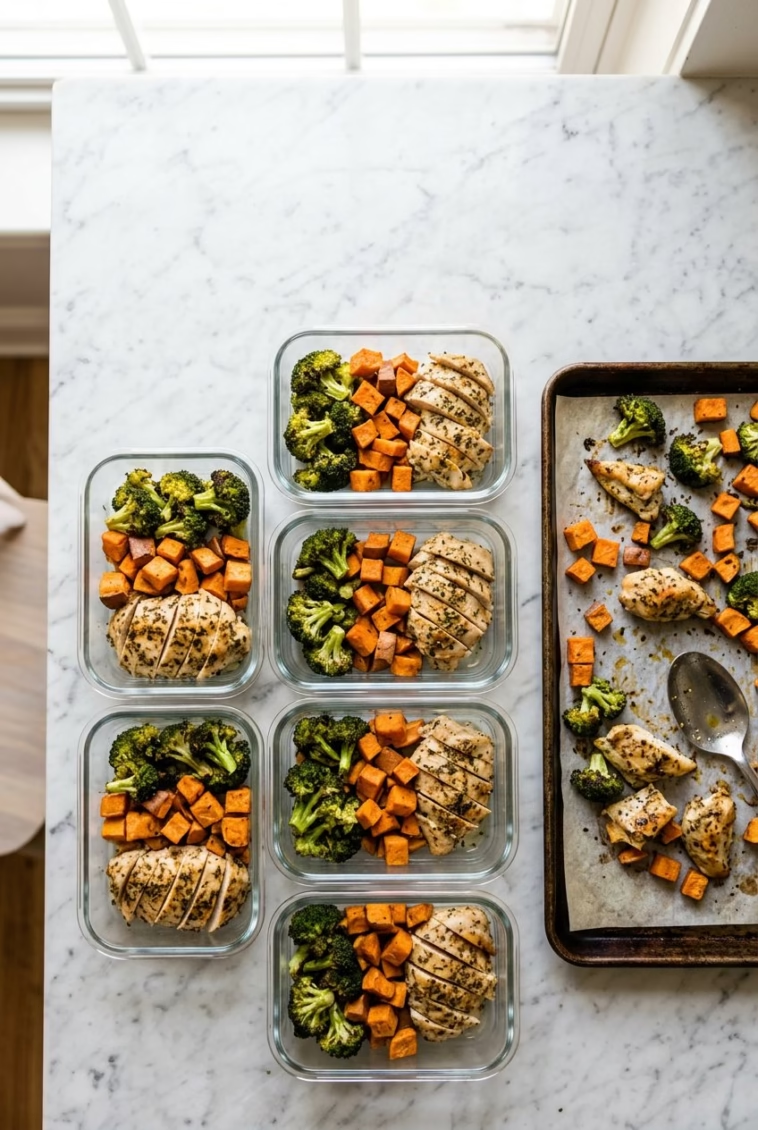
Quick answer: High-protein meal prep for beginners means one cooking session, two proteins, one or two starches, two vegetables and one sauce, cooked in about 90 minutes and packed into four to six containers. Aim for roughly 25 to 40 g of protein per container, keep what you will eat in the next three to four days in the fridge, and freeze the rest the same day. That is the whole system. Everything below is how to do it the first time without wasting food or a Sunday.
This guide is written for a first week. It does not assume you own a vacuum sealer, a dozen matching boxes or a love of cooking. Calories and protein on this site are estimates calculated from USDA FoodData Central. Your brand labels win if they disagree. This is cooking information, not medical or dietary advice for a condition. Read the disclaimer if you have a health reason to change how you eat.
Free download: the 7-day high-protein meal plan (PDF), with a shopping list. No sign-up needed.
In this guide
- Why prep protein first
- The minimum kit
- The beginner formula: 2-1-2-1
- Your first shopping list
- One 90-minute session, step by step
- What reheats well and what does not
- Fridge, freezer and food safety
- Recipes to start with
- Beginner mistakes
- FAQ
Why prep the protein first
Most people who start meal prep cook a big pot of rice, chop a lot of vegetables, and then buy lunch anyway on Wednesday because the container looks like a side dish. Protein is the part that is hard to improvise at work. Rice, bread, fruit and salad are easy to find. A plate with 30 g of protein that you did not have to think about is not.
So the rule for a beginner is simple: decide the protein before anything else, and cook it in bulk. Starches and vegetables fill the rest of the box. If you only manage one thing on a busy weekend, cook two pans of protein. You can still build a decent lunch around cooked chicken or chili with a microwave pouch of rice.
How much protein you need per day is its own topic. If you want a number, start with how much protein to lose weight, then come back here to make that number easy to hit.
The minimum kit
You can start with what is already in most kitchens. Buy the rest only after one or two sessions, when you know what you actually use.
- Two rimmed sheet pans and baking paper. One for protein, one for vegetables, both in the oven at the same time.
- One large pot for chili, stew or grains.
- An instant-read thermometer. It is the cheapest way to stop overcooking chicken “just to be safe.” Poultry is done at 165°F (74°C) in the thickest part.
- A kitchen scale. Use it for the first few weeks so your portions match the numbers on the recipe. After that, your eye gets good enough.
- Six to ten containers that close well and can go in the microwave. Glass is easier to clean. Plastic is lighter to carry. Either works.
- Masking tape and a marker for the date. This matters more than the containers.
The beginner formula: 2-1-2-1
Recipes are useful, but a formula is what lets you keep going after the first month. For each session, pick:
| Pick | How many | Easy first choices |
|---|---|---|
| Protein | 2 | Chicken breast or thighs, 93% lean ground turkey, extra-firm tofu, eggs, lentils with eggs or yogurt |
| Starch | 1 (or 2) | Brown or white rice, potatoes, sweet potatoes, whole-wheat pasta |
| Vegetables | 2 | Broccoli, bell peppers, green beans, carrots, frozen mixed vegetables |
| Sauce | 1 | Greek yogurt and herb sauce, salsa, low-sodium soy with garlic and lime |
Two proteins are enough for variety across five days. One “dry” protein (roasted chicken, baked tofu) and one “wet” protein (chili, stew, a sauce-based dish) is the easiest combination, because wet dishes reheat better and dry ones are better cold or in a bowl.
How much goes in each container
A practical lunch container for weight loss lands around 400 to 550 kcal. These portions get you there with most of the foods above:
- Protein: about 150 to 200 g raw chicken or turkey, or 150 g extra-firm tofu. That is roughly 25 to 40 g of protein once cooked, depending on the food.
- Starch: 100 to 150 g cooked rice or potatoes.
- Vegetables: 150 g or more. Vegetables are the cheap way to make the container look full.
- Fat: the oil used for roasting, about one teaspoon per portion, plus whatever is in the sauce.
The 5-day high-protein meal prep plan uses exactly this formula with weighed quantities, if you want the numbers done for you.
Your first shopping list
This list feeds one person for five weekday lunches and five breakfasts, with a little left over. It matches the session below. Group your list by store section so you do not walk back and forth.
| Section | Buy |
|---|---|
| Meat | 600 g boneless skinless chicken breast; 500 g 93% lean ground turkey |
| Dairy and eggs | 10 large eggs; 250 g liquid egg whites; 500 g plain nonfat Greek yogurt; small block of feta (60 g needed) |
| Produce | 2 heads broccoli (about 450 g florets); 2 bell peppers; 1 onion; 150 g baby spinach; 1 cucumber; 1 lemon; garlic |
| Pantry | Brown rice (about 200 g dry); 1 can black beans; 1 can crushed tomatoes (400 g); olive oil; paprika, cumin, chili powder, dried dill or oregano |
If the list feels expensive, swap the chicken breast for thighs and the turkey for dried lentils with extra eggs. The cheap high-protein meals guide compares the cost of 20 g of protein from common staples.
One 90-minute session, step by step
The trick is to start the slowest job first and fill the waiting time with quick ones. Read the whole list before you turn on the oven.
- 0:00 Oven and rice. Heat the oven to 425°F (220°C). Start the brown rice on the stove or in a rice cooker. It takes the longest and needs no attention.
- 0:05 Chili base. In the large pot, soften the chopped onion and one pepper in a teaspoon of oil. Add the turkey and break it up until no pink is left.
- 0:15 Simmer. Add the crushed tomatoes, rinsed beans and spices. Turn the heat low and let it simmer, lid partly on, for 25 to 30 minutes.
- 0:20 Sheet pans. Cut the chicken into even pieces, toss with a little oil, paprika, garlic and salt. Spread the broccoli on the second pan. Both go in the oven for 18 to 22 minutes. Check the chicken with the thermometer.
- 0:25 Egg bake. Whisk the eggs and egg whites, stir in spinach, the second pepper and crumbled feta. Pour into a baking dish lined with paper.
- 0:45 Swap the oven. Chicken and broccoli come out. Lower the oven to 350°F (175°C) and bake the eggs for 25 to 30 minutes, until the center is set.
- 0:50 Sauce. Grate the cucumber, squeeze out the water, and stir it into the Greek yogurt with lemon, garlic and dill.
- 1:00 Cool fast. Spread rice and chili in shallow containers so they cool quickly. Do not leave a deep pot on the counter for hours.
- 1:15 Portion and label. Fill containers, write the date, and put anything for day four or five straight into the freezer.
- 1:30 Done. Wash the pot and pans while the containers finish cooling in the fridge.
The first session often takes closer to two hours. That is normal. By the third, most people are under 90 minutes because they stop reading the steps.
What reheats well and what does not
This is the part most beginner guides skip, and it is why a lot of people quit meal prep after two weeks of dry chicken. Some foods are better on day three than on day one. Others are only good the day you cook them.
| Reheats well | Reheats so-so | Eat fresh or cold |
|---|---|---|
| Chili, stews, curries and sauce-based dishes | Chicken breast (add sauce, reheat covered) | Fish fillets, especially salmon after day two |
| Chicken thighs | Rice (sprinkle with water, cover) | Creamy pasta and cheese sauces |
| Ground turkey and beef dishes | Roasted broccoli (softer, still fine) | Salads with dressing already on |
| Lentils and beans | Egg bakes and egg muffins | Fried or crumbed food |
| Baked or pan-crisped tofu | Potatoes | Avocado and soft herbs |
A full list of lunches tested for the microwave, with reheating times, is in high-protein lunches that reheat well. Two quick rules: reheat until the food is steaming hot all the way through, and add a spoon of water or sauce before reheating anything dry.
Some recipes on this site are honest about not being prep food. Cottage cheese pasta is better the evening you cook it; the sauce tightens in the fridge. Chickpea tuna salad is the opposite case: no cooking, no microwave, a good lunch for a day when you have no access to one.
Fridge, freezer and food safety
The USDA’s guidance for most cooked leftovers is to eat them within three to four days from the fridge, kept at 40°F (4°C) or below, and to refrigerate them within two hours of cooking. Frozen food stays safe while frozen; quality is the limit, usually a few months for cooked dishes. See the USDA’s leftovers and food safety page for details.
For a five-day week, that means:
- Monday to Wednesday containers go in the fridge.
- Thursday and Friday containers go in the freezer on Sunday.
- Move them to the fridge the night before you eat them, not onto the counter.
- Keep sauces in a separate small pot and add them after reheating, especially yogurt sauces.
Freezer-friendly options: chili, stews, cooked rice, cooked chicken thighs, egg bakes and black bean egg breakfast burritos. Things that freeze badly: raw vegetables for salads, yogurt sauces, cucumber, and cooked pasta in a cream sauce.
Recipes to start with
Once the basic session feels easy, swap in one new recipe per week. These are the live recipes on this site that are built for prep. Calories and protein are per serving, as printed on each recipe page. For a weight-loss version, try batch cooking for weight loss, or go protein-first with chicken meal prep for the week.
| Recipe | Approx. kcal | Approx. protein | Why it works for prep |
|---|---|---|---|
| Sheet-pan chicken thighs and potatoes | 395 | 39 g | One pan, thighs stay juicy when reheated |
| Peanut tofu rice bowl | 545 | 31 g | Plant-based, tofu holds its texture for days |
| Lentil and egg shakshuka | 435 | 29 g | Make the lentil sauce ahead, add eggs when reheating |
| Black bean egg breakfast burritos | 490 | 28 g | Freezer breakfast for six mornings |
Breakfast prep
Breakfast is the easiest meal to prep because it barely changes. Two pages cover it: Greek yogurt breakfast meal prep for jars you assemble on Sunday, and high-protein overnight oats, which do not need protein powder.
Prep plan or meal plan?
Two pages on this site sound similar. They do different jobs:
- The 5-day high-protein meal prep plan is a cooking plan: one session, one shopping list, exact containers for Monday to Friday.
- The 7-day high-protein meal plan for weight loss is a menu: what to eat each day, all meals, with daily totals.
Use the menu if you want to know what to eat. Use the prep plan if you already know and need it cooked.
More recipes are grouped in the Meal Prep category.
Beginner mistakes
- Prepping seven days at once. Food for day six and seven sits too long or gets thrown away. Prep five, cook the weekend fresh.
- One recipe, five times. By Thursday nobody wants it. Two proteins and one sauce is the minimum for variety.
- Overcooking chicken breast. It will be reheated, so pull it as soon as it reaches 165°F (74°C). Use thighs if you keep ending up with dry meat.
- Forgetting the sauce. A dry box gets skipped. A sauce costs five minutes and saves the lunch.
- Not labeling. “I think that was Sunday” is not a food safety system. Write the date.
- Cooling food in a deep pot. Split it into shallow containers so it cools quickly in the fridge.
- Prepping only lunches and leaving snacks to chance. If the afternoon is your weak point, add one snack, such as Greek yogurt cups or hard-boiled eggs, to the session.
Want a step-by-step plan? Follow our free 7-day high-protein course.
Frequently asked questions
How do I start high-protein meal prep as a beginner?
Pick two proteins, one starch, two vegetables and one sauce. Cook them in one session of about 90 minutes, portion into containers with roughly 25 to 40 g of protein each, refrigerate three or four days of food and freeze the rest. Repeat the same session for two or three weeks before changing it.
How long does meal prep last in the fridge?
The USDA recommends eating most cooked leftovers within three to four days if they are refrigerated at 40°F (4°C) or below. For a five-day week, freeze the containers for days four and five on prep day and thaw them in the fridge overnight.
What are the best proteins for meal prep?
Chicken thighs, ground turkey, lentils, beans, extra-firm tofu and eggs hold up best after reheating. Chicken breast works if you do not overcook it and pack it with a sauce. Fish is better cooked fresh or eaten within one to two days.
How much protein should be in each meal prep container?
Many people aim for about 25 to 40 g of protein per main meal, which is roughly 150 to 200 g of raw chicken or turkey. Your own daily target depends on your body size and goals; see the protein guide linked above for a starting point.
Can I meal prep without a microwave at work?
Yes. Choose foods that taste good cold, such as chicken grain bowls, bean salads, boiled eggs and no-cook tuna salads, and keep them cold with an ice pack until lunch.
Is it cheaper to meal prep?
Usually, yes, because you buy larger packs and waste less. Chicken thighs, eggs, lentils, beans, canned fish and Greek yogurt give a lot of protein per dollar.
Key takeaways
- Decide the protein first, then build the box around it.
- Use the 2-1-2-1 formula: two proteins, one starch, two vegetables, one sauce.
- One 90-minute session covers five lunches and five breakfasts.
- Fridge for three to four days, freezer for the rest, and label everything.
- Wet dishes reheat better than dry ones. Keep sauces separate.