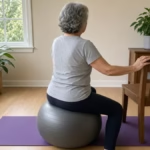



Cardio without legs is absolutely possible: battle ropes, shadowboxing, an arm ergometer, and seated intervals can all push your heart rate into a real training zone while your knees, ankles, or feet rest. Below are 10 upper-body moves with step-by-step form, a summary table, and a 15–20 minute seated HIIT session you can start today.
Whether you are nursing a sprained ankle, recovering from knee surgery, managing plantar fasciitis, or training from a wheelchair, the same rule applies: cardio is defined by what your heart does, not by which limbs move.
Medical note: if you have an injury, recent surgery, a heart condition, or you are over 65 and new to exercise, consult your doctor or physical therapist before starting. Stop if you feel chest pain, dizziness, or sharp joint pain.
How to Do Cardio Without Legs (and Still Burn Fat)
Cardio means keeping your heart rate elevated, roughly 60–85% of your maximum, for a sustained period. The muscles producing that work are secondary. Fat-burning cardio without legs works through the same mechanism as running: you spend energy, and over weeks a consistent calorie deficit does the rest. The CDC physical activity guidelines recommend 150 minutes of moderate activity per week for adults, and upper-body sessions count toward that total.
The challenge is that arm and shoulder muscles are smaller than leg muscles, so they tire before your heart and lungs do. Three rules solve this:
- Use intervals. Work 30–40 seconds, rest 20. Small muscles recover fast, so you can repeat many rounds.
- Rotate muscle groups. Alternate pushing, pulling, and core moves so no single area fails first.
- Keep rests short. Under 30 seconds between exercises keeps your heart rate in the zone.
A simple intensity check: during work intervals you should be able to speak a few words but not hold a conversation. If you want more structure, the Mayo Clinic’s guide to aerobic exercise explains how intensity and frequency fit together.
10 Upper-Body Cardio Exercises Without Using Legs
All 10 can be done seated on a sturdy chair without arms, a bench, or a locked wheelchair unless noted. Choose 4–6 for a session.
1. Arm Ergometer (Upper-Body Ergometer)
The arm ergometer is the gold standard for cardio without using legs and is found in most rehab clinics and many gyms. It is the safest option after a lower-limb injury.
- Starting position: Sit facing the arm bike with the crank at shoulder height, feet flat or on the footrests, back tall.
- Movement: Turn the handles in smooth circles, pushing and pulling evenly. Keep a steady 60–80 rpm.
- Sets x reps: Start with 3 x 3 minutes at moderate effort, 1 minute easy between; build to 15–20 continuous minutes.
- Common mistake: Hunching forward and shrugging, which loads the neck instead of the back and arms.
- Easier / harder: Easier: Lower resistance and pedal for 1-minute blocks. Harder: Alternate 30 seconds hard and 30 seconds easy for 10 rounds.
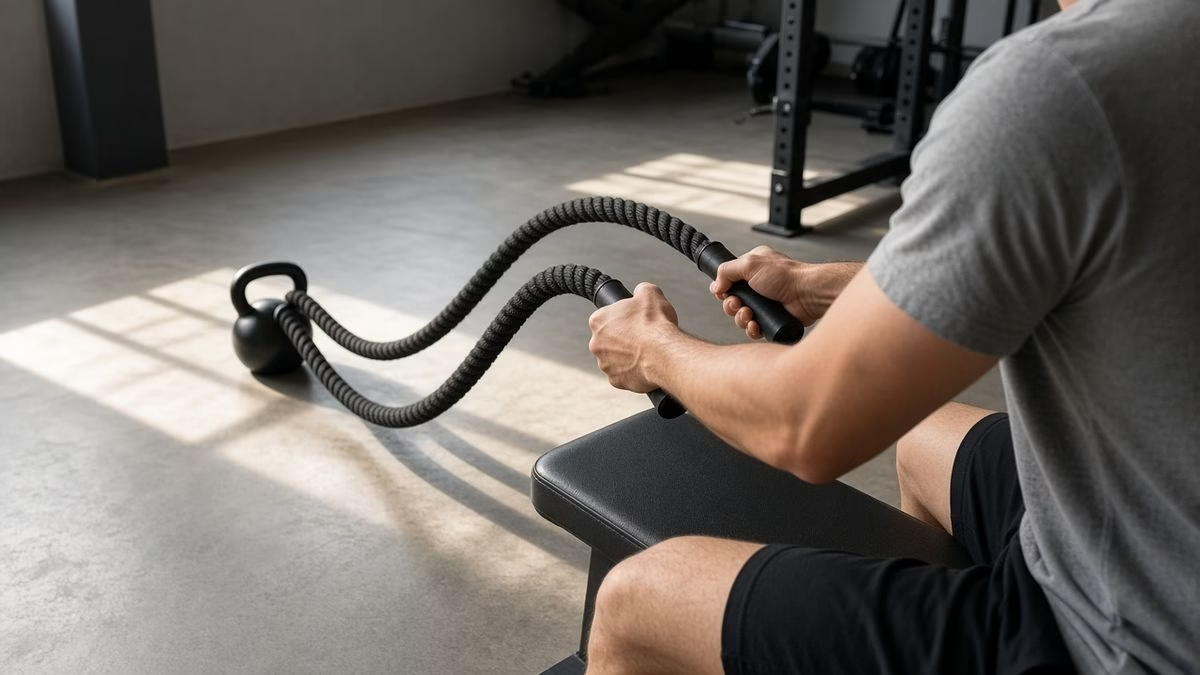
2. Seated Battle Rope Waves
Battle ropes deliver one of the highest heart-rate responses of any upper-body exercise. No ropes? Fast alternating overhead presses with light dumbbells work similarly.
- Starting position: Sit on a bench with the rope anchored 8–10 feet in front of you, one end in each hand, elbows slightly bent.
- Movement: Alternate arms up and down fast to send waves to the anchor. Keep your chest up and core braced.
- Sets x reps: 6–8 rounds of 20 seconds on, 20 seconds off.
- Common mistake: Making tiny waves with the wrists only; drive from the shoulders.
- Easier / harder: Easier: Use a lighter, thinner rope or slow the rhythm. Harder: Switch to double-arm slams or add circles and in-and-out waves.
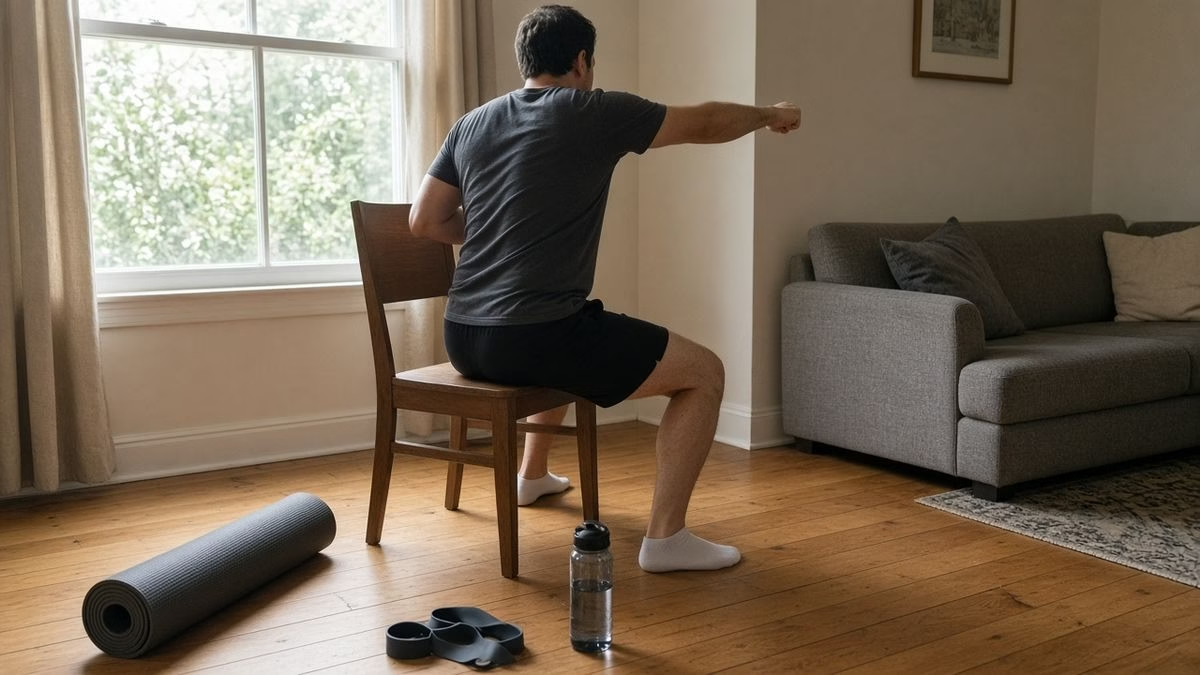
3. Seated Shadowboxing
Shadowboxing is free, needs no space, and doubles as stress relief. It is also great for wheelchair users.
- Starting position: Sit tall on the front of a chair, fists at your cheeks, elbows tucked, core tight.
- Movement: Throw combinations: jab, cross, hook, hook, uppercut. Rotate through your torso and return your hands to your face after every punch.
- Sets x reps: 5 rounds of 2 minutes, 45 seconds rest.
- Common mistake: Locking the elbows at full extension; stop just short to protect the joint.
- Easier / harder: Easier: Throw only jabs and crosses at a slower pace. Harder: Hold 1–2 lb dumbbells or add rapid speed-bag circles for the last 20 seconds.
4. Heavy Bag or Speed Bag Punching
- Starting position: Position a chair so a hanging bag or a freestanding bag is at chest height within arm’s reach.
- Movement: Punch in rhythm with straight punches and hooks, rotating your shoulders, exhaling on each strike.
- Sets x reps: 4 rounds of 90 seconds, 60 seconds rest.
- Common mistake: Punching with bare hands; wear wraps or bag gloves.
- Easier / harder: Easier: Hit a pad held at a lighter tempo. Harder: Do 15-second all-out flurries every 30 seconds.
5. Seated Medicine Ball Slams
Slams turn a medicine ball workout into fast cardio.
- Starting position: Sit on a sturdy bench holding a 4–8 lb non-bounce ball overhead.
- Movement: Brace your core and throw the ball to the floor in front of you, then reach down (or have a partner return it) and lift it overhead again.
- Sets x reps: 4 sets of 12 slams, 30 seconds rest.
- Common mistake: Rounding the lower back to pick up the ball; hinge from the hips and keep the chest proud.
- Easier / harder: Easier: Use a 2–4 lb ball and slam against a wall instead. Harder: Add a rotation and slam to alternating sides.
6. Seated Jump Rope (Rope Spins)
A smart trick kept from our original guide: it looks unusual, but it keeps the heart rate surprisingly high.
- Starting position: Sit on a chair with a rope folded or a ropeless jump rope handle in each hand, elbows at your sides.
- Movement: Spin the rope fast using only your wrists and forearms, as if you were skipping.
- Sets x reps: 5 rounds of 60 seconds, 30 seconds rest.
- Common mistake: Swinging from the shoulders, which tires you before your heart rate climbs.
- Easier / harder: Easier: Spin at a slower cadence for 30 seconds. Harder: Do double-speed 15-second bursts.
7. Rowing Machine, Arms Only
Only use this if bending your knees is allowed; otherwise substitute seated band rows.
- Starting position: Sit on the rower with your knees fixed and slightly bent, back tall, handle at arm’s length.
- Movement: Lean back slightly and pull the handle to the lower ribs, squeeze the shoulder blades, then return smoothly. Your legs stay still.
- Sets x reps: 5 x 2 minutes, 1 minute rest.
- Common mistake: Yanking with the arms and rounding the back.
- Easier / harder: Easier: Shorten the stroke and reduce damper setting. Harder: Increase stroke rate to 30+ per minute for 30-second bursts.
8. Seated Band Punch-and-Row
- Starting position: Sit with a resistance band wrapped behind you (or anchored at chest height in front for rows).
- Movement: Punch forward against the band 10 times, then turn around and row it 10 times. Keep moving between them.
- Sets x reps: 4 rounds of 45 seconds, 15 seconds rest.
- Common mistake: Letting the band snap back; control both directions.
- Easier / harder: Easier: Use a light band. Harder: Use a thicker band and go faster.
9. Swimming With a Pull Buoy
Not seated, but zero impact on your joints and excellent for fat burning. Check with your doctor first if you have a wound or cast.
- Starting position: In the pool, place a pull buoy between your thighs so your legs float and stay still.
- Movement: Swim freestyle using only your arms and core, breathing every 2–3 strokes.
- Sets x reps: 8 x 25 yards, 30 seconds rest; build to 20 continuous minutes.
- Common mistake: Kicking out of habit; keep the buoy squeezed.
- Easier / harder: Easier: Use a kickboard under the chest and pull slowly. Harder: Add hand paddles.
10. Seated Core Circuit
- Starting position: Sit on the front edge of a chair, hands crossed on chest, lean back slightly with a straight spine.
- Movement: Cycle through 30 seconds each: seated torso twists, seated side bends, overhead reach-and-pull, and fast arm circles.
- Sets x reps: 3 rounds, 30 seconds rest between rounds.
- Common mistake: Holding your breath; breathe in a steady rhythm.
- Easier / harder: Easier: Lean back less and slow the pace. Harder: Hold a light weight during twists and reaches.
Summary Table: Cardio Without Legs
| Exercise | Main muscles | Level | Sets |
|---|---|---|---|
| Arm ergometer | Shoulders, back, arms | Beginner | 3 x 3 min |
| Seated battle ropes | Shoulders, arms, core | Intermediate | 6–8 x 20 s |
| Seated shadowboxing | Shoulders, chest, core | Beginner | 5 x 2 min |
| Bag punching | Shoulders, chest, arms | Intermediate | 4 x 90 s |
| Medicine ball slams | Lats, shoulders, core | Intermediate | 4 x 12 |
| Seated jump rope | Forearms, shoulders | Beginner | 5 x 60 s |
| Rower, arms only | Back, biceps | Intermediate | 5 x 2 min |
| Band punch-and-row | Chest, back, arms | Beginner | 4 x 45 s |
| Pull-buoy swimming | Lats, shoulders, core | Intermediate | 8 x 25 yd |
| Seated core circuit | Abs, obliques | Beginner | 3 rounds |
20-Minute Seated HIIT Workout (No Legs Needed)
This session needs only a chair and, optionally, a light band or two light dumbbells. Work 40 seconds, rest 20 seconds, and move straight to the next exercise.
- Warm-up (3 minutes): arm circles, shoulder rolls, slow seated punches, torso rotations.
- Round (5 minutes): seated shadowboxing, fast overhead presses, seated jump rope spins, band rows, seated torso twists.
- Repeat the round 3 times (15 minutes). Rest 60 seconds between rounds if needed.
- Cool-down (2 minutes): slow breathing, chest-opener and triceps stretches.
Beginners can do 2 rounds (about 15 minutes). As fitness improves, move to 45 seconds on and 15 off. Aim for 3 sessions per week on non-consecutive days.
Fat-Burning Cardio Without Legs: What to Expect
Upper-body cardio usually burns fewer calories per minute than running because less muscle mass is working, so intervals and consistency matter more. Pair 3–4 sessions a week with a modest calorie deficit (our calorie deficit guide shows how to calculate yours), enough protein, and sleep. Do not expect spot reduction: fat loss happens across the whole body.
Injured, Sore, or in a Wheelchair? Adjust the Plan
- Sore legs from training: upper-body cardio is ideal active recovery while your legs heal.
- Knee or foot injury: stick to seated options and avoid anything that pushes through the feet. Our low-impact HIIT for foot injuries offers more ideas.
- After surgery: wait for clearance from your surgeon or physical therapist.
- Wheelchair users: lock the brakes, keep your back supported when needed, and favor the arm ergometer, shadowboxing, band work, and the core circuit.
Pain that worsens, swelling, or clicking in an injured joint means stop and consult your doctor.
FAQ
Can you do cardio without legs?
Yes. Cardio depends on raising your heart rate for a sustained period, and arm ergometers, battle ropes, shadowboxing, and seated intervals all do that without using your legs.
What is the best fat burning cardio without legs?
Battle ropes, the arm ergometer, and seated HIIT circuits give the biggest heart-rate response. Fat loss still depends on total weekly activity plus a calorie deficit.
How do you do cardio without legs at home?
Use a chair and follow a circuit: shadowboxing, fast overhead presses, seated jump rope spins, band rows, and torso twists, 40 seconds on and 20 seconds off for 15–20 minutes.
How often should I do cardio without using legs?
Three to four sessions of 15–30 minutes per week is a solid target, building toward the 150 weekly minutes recommended by the CDC.
Is seated cardio safe with a knee or foot injury?
Usually, because it keeps weight off the injured joint, but consult your doctor or physical therapist first and stop if pain increases.