

The best chin up alternative is any vertical or horizontal pull that trains your lats and biceps with an underhand or neutral grip: inverted rows, band pulldowns, dumbbell rows, and lat pulldowns all fit. Below are 12 chin-up alternatives grouped by equipment, from none at all to a full gym, plus a 6-week progression to your first real chin-up.
Chin-ups are hard because you lift your entire body weight with your back and arms. If you cannot do one yet, have no bar, or have a sore shoulder, a smart chin up replacement keeps you building the same muscles until you can.
What Muscles Do Chin-Ups Work?
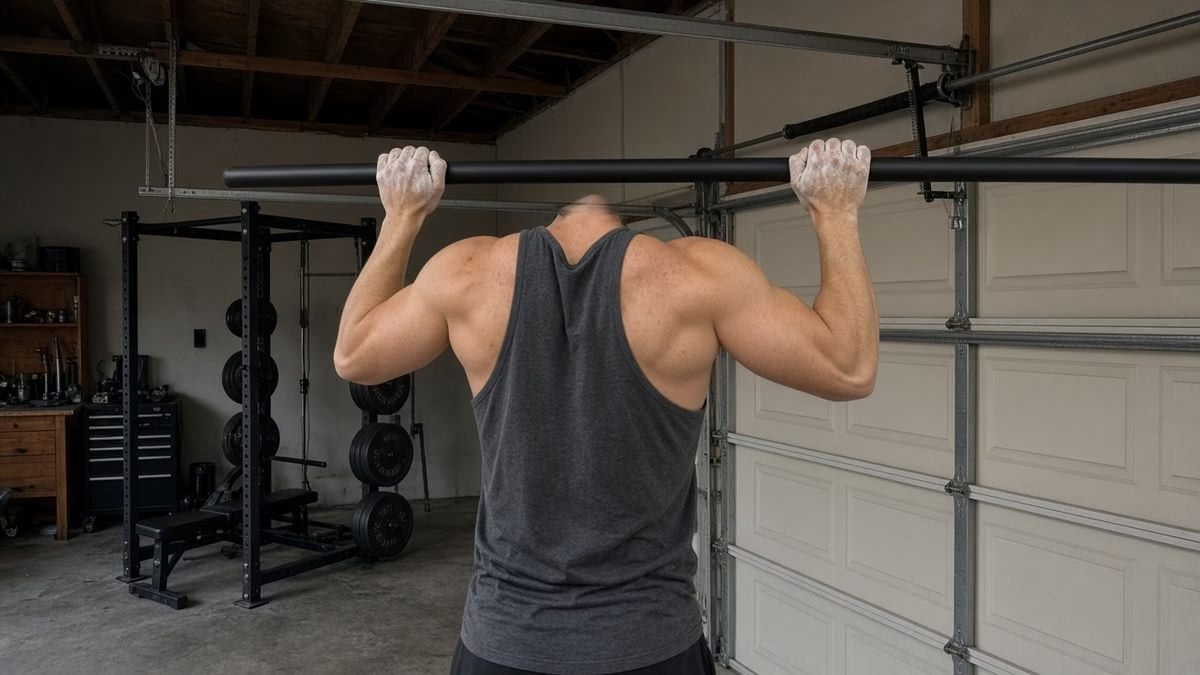
A chin-up is a vertical pull with palms facing you. It mainly trains the latissimus dorsi (lats), biceps, rear shoulders, mid-back (rhomboids and trapezius), forearms and grip, and the core, which keeps your body from swinging. A good chin up substitute should hit as many of those as possible, ideally with an underhand grip to bias the biceps.
The CDC physical activity guidelines recommend muscle-strengthening work for all major muscle groups at least 2 days a week; two pulling sessions with the exercises below covers your back and arms.
How to Choose a Chin Up Alternative
- Match the movement: pulldowns copy the vertical pull; rows train the same muscles horizontally.
- Use an underhand grip whenever possible to keep the biceps emphasis of a chin-up.
- Pick a load you can control for 8–12 reps with a 2-second lowering phase.
- Combine one vertical and one horizontal pull per workout for full coverage.
Chin Up Alternatives With No Equipment
1. Table Inverted Row
Test the table first: it must not tip. A low bar or Smith machine works the same way at the gym.
- Starting position: Lie under a sturdy, heavy table, grip the edge with palms facing you, heels on the floor, body straight.
- Movement: Pull your chest to the table edge, squeeze your shoulder blades, lower slowly.
- Sets x reps: 3 x 6–12.
- Common mistake: Letting the hips sag; keep a straight plank line.
- Easier / harder: Easier: Bend your knees and keep feet flat. Harder: Elevate your feet on a chair.
2. Door-Frame Towel Row
- Starting position: Loop a strong towel around a solid door handle (door closed, standing on the side that pulls it shut), hold both ends, lean back with arms straight.
- Movement: Row your body toward the door, elbows close to your sides, then lower slowly.
- Sets x reps: 3 x 10–15.
- Common mistake: Using a door that opens toward you.
- Easier / harder: Easier: Stand more upright. Harder: Walk your feet closer to the door and lean back further.
3. Prone Y-T-W Raises
- Starting position: Lie face down on the floor, forehead on a folded towel, arms overhead in a Y with thumbs up.
- Movement: Lift your arms a few inches and hold 2 seconds, then repeat with arms in a T and a W shape.
- Sets x reps: 2–3 rounds of 8 per letter.
- Common mistake: Arching the neck to lift higher.
- Easier / harder: Easier: Do only the W. Harder: Hold light water bottles.
Chin Up Alternatives With Resistance Bands
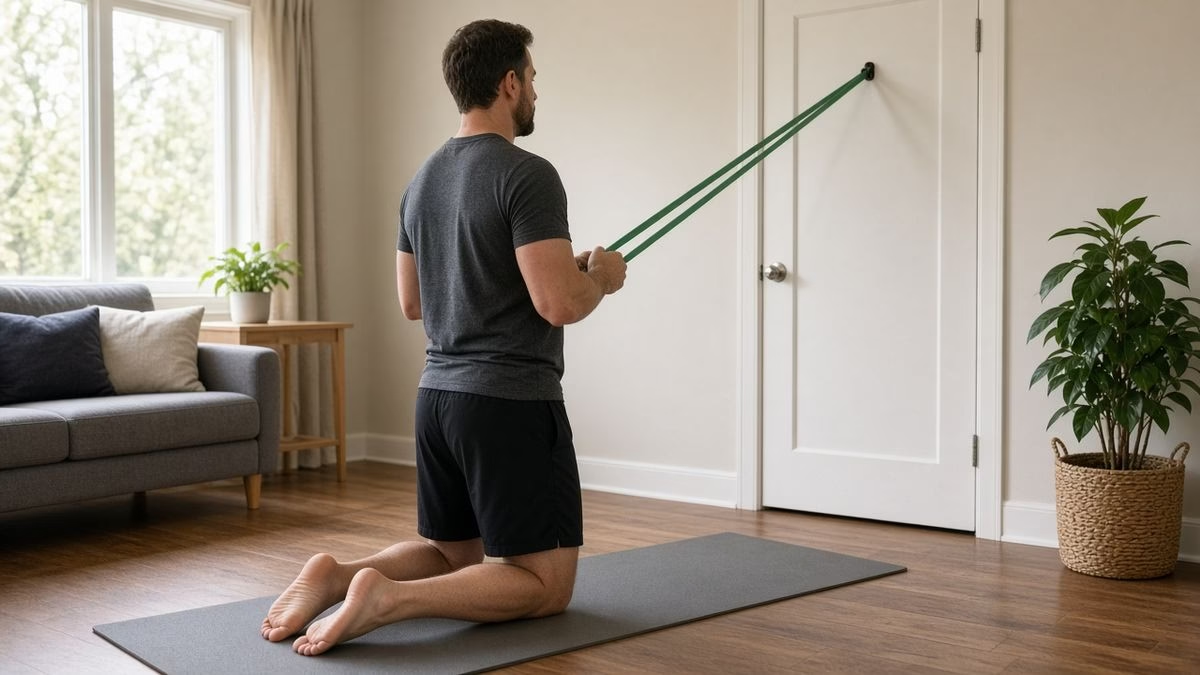
4. Kneeling Band Lat Pulldown
- Starting position: Anchor a band high on a door or bar, kneel facing it, hands underhand on the band, arms extended.
- Movement: Pull your elbows down to your ribs while keeping your chest up, pause, return slowly.
- Sets x reps: 3 x 12–15.
- Common mistake: Leaning back to cheat the rep.
- Easier / harder: Easier: Use a lighter band. Harder: Use a thicker band or pull one arm at a time.
5. Band-Assisted Chin-Up
- Starting position: Loop a band around the bar, put one knee or foot in it, grip the bar underhand, shoulder-width.
- Movement: Pull your chin over the bar, lower under control to full extension.
- Sets x reps: 3 x 5–8.
- Common mistake: Bouncing out of the bottom using the band.
- Easier / harder: Easier: Use a thicker band for more help. Harder: Use a thinner band or do slow 4-second negatives.
6. Seated Band Row
- Starting position: Sit on the floor with legs extended, band around your feet, palms facing up or each other.
- Movement: Row your hands to your lower ribs, squeeze your shoulder blades, return slowly.
- Sets x reps: 3 x 12–15.
- Common mistake: Rounding the shoulders forward at the end.
- Easier / harder: Easier: Bend your knees and use a light band. Harder: Double the band and pause 2 seconds at the end.
Chin Up Alternatives With Dumbbells
7. One-Arm Dumbbell Row
- Starting position: Place one hand and knee on a bench, the other foot on the floor, dumbbell hanging under your shoulder.
- Movement: Pull the dumbbell to your hip, elbow close, then lower slowly.
- Sets x reps: 3 x 8–12 per side.
- Common mistake: Twisting your torso to lift heavier.
- Easier / harder: Easier: Use a lighter dumbbell. Harder: Add a 2-second squeeze at the top.
8. Chest-Supported Underhand Row
- Starting position: Lie face down on an incline bench with a dumbbell in each hand, palms forward.
- Movement: Row both dumbbells to your lower ribs, squeeze, lower.
- Sets x reps: 3 x 10–12.
- Common mistake: Shrugging toward the ears.
- Easier / harder: Easier: Lower the bench angle less steeply and use lighter weights. Harder: Slow 3-second lowering.
9. Dumbbell Pullover
- Starting position: Lie on a bench holding one dumbbell with both hands above your chest.
- Movement: Lower it behind your head with slightly bent elbows until you feel a lat stretch, then pull back over your chest.
- Sets x reps: 3 x 10–12.
- Common mistake: Bending the elbows too much so it becomes a triceps exercise.
- Easier / harder: Easier: Use a light weight and short range. Harder: Use a heavier dumbbell and hold the stretch.
Chin Up Alternatives at the Gym
10. Underhand Lat Pulldown
The closest chin-up replacement: same movement, adjustable load.
- Starting position: Sit at the pulldown machine, thighs under the pads, grip the bar underhand shoulder-width.
- Movement: Pull the bar to your upper chest, elbows down and back, then return to full stretch.
- Sets x reps: 3 x 8–12.
- Common mistake: Pulling the bar behind your neck.
- Easier / harder: Easier: Reduce the weight. Harder: Increase the weight or pause 2 seconds at the chest.
11. Seated Cable Row (Close Grip)
- Starting position: Sit at the cable row, feet on the platform, knees soft, V-handle in hand.
- Movement: Pull the handle to your belly, chest up, then extend your arms without rounding.
- Sets x reps: 3 x 10–12.
- Common mistake: Rocking back and forth.
- Easier / harder: Easier: Lighter stack. Harder: Single-arm rows with a handle.
12. Assisted Chin-Up Machine
- Starting position: Kneel on the platform, grip the handles underhand.
- Movement: Pull up until your chin clears the handles, lower slowly.
- Sets x reps: 3 x 6–10.
- Common mistake: Dropping fast on the way down.
- Easier / harder: Easier: Increase the counterweight. Harder: Reduce the counterweight week by week.
Chin Up Alternatives Summary Table
| Exercise | Main muscles | Level | Sets |
|---|---|---|---|
| Table inverted row | Lats, mid-back, biceps | Beginner | 3 x 6–12 |
| Door-frame towel row | Mid-back, biceps, grip | Beginner | 3 x 10–15 |
| Prone Y-T-W raises | Rear shoulders, upper back | Beginner | 2–3 x 8 |
| Band lat pulldown | Lats, biceps | Beginner | 3 x 12–15 |
| Band-assisted chin-up | Lats, biceps, core | Intermediate | 3 x 5–8 |
| Seated band row | Mid-back, biceps | Beginner | 3 x 12–15 |
| One-arm dumbbell row | Lats, mid-back | Beginner | 3 x 8–12 |
| Chest-supported row | Mid-back, biceps | Beginner | 3 x 10–12 |
| Dumbbell pullover | Lats, chest | Intermediate | 3 x 10–12 |
| Underhand lat pulldown | Lats, biceps | Beginner | 3 x 8–12 |
| Seated cable row | Mid-back, lats | Beginner | 3 x 10–12 |
| Assisted chin-up machine | Lats, biceps | Beginner–Intermediate | 3 x 6–10 |
How to Do Your First Chin-Up: 6-Week Progression
Train pulling 2–3 times per week. Add these bar drills to the end of each session once you have access to a bar.
- Weeks 1–2: dead hang 3 x 20–30 seconds, scapular pulls 3 x 8, inverted rows 3 x 8, band pulldowns 3 x 12.
- Weeks 3–4: flexed-arm hang (chin over bar) 3 x 10–15 seconds, band-assisted chin-ups 3 x 5, one-arm rows 3 x 10.
- Weeks 5–6: slow negatives (jump up, lower over 4–5 seconds) 4 x 3, thinner-band chin-ups 3 x 5, then test one strict chin-up at the start of a session.
Grip often fails first, so add hangs and carries from our hand grip workout guide. Body weight matters too: every pound lost makes a chin-up easier.
Sample Pull Workout Without a Bar
- Kneeling band lat pulldown: 3 x 12
- Table inverted row: 3 x 8
- One-arm dumbbell row: 3 x 10 per side
- Prone Y-T-W raises: 2 x 8
- Hollow body hold: 3 x 20 seconds
Rest 60–90 seconds between sets. For a complete upper-body day, pair it with our back and shoulder workout or the moves in how to gain arm muscle at home. The ACSM physical activity guidelines explain how strength work fits a weekly routine.
If you have shoulder, elbow, or wrist pain, consult your doctor or a physical therapist before loading these movements.
FAQ
What is the best chin up alternative?
The underhand lat pulldown is the closest chin up alternative because it copies the same vertical pull. At home, band pulldowns and inverted rows are the best options.
What can I do instead of chin ups without a bar?
Table inverted rows, door-frame towel rows, band lat pulldowns, and dumbbell rows all train the lats and biceps without a pull-up bar.
Are rows a good chin up replacement?
Yes. Rows train the same back and biceps muscles horizontally. Combine them with a vertical pull such as a pulldown for complete coverage.
How long does it take to do a first chin-up?
Many beginners get their first chin-up after 6–12 weeks of consistent pulling work, depending on starting strength and body weight.
Is an alternative exercise for chin ups as effective?
For building muscle, yes, if you train hard with good form and progress the load. For the chin-up skill itself, add bar-specific practice such as negatives.

