


Quick answer: The 12-3-30 workout means walking on a treadmill at a 12% incline and 3.0 mph (4.8 km/h) for 30 minutes. Beginners should not start there. Begin with 15 to 20 minutes at a 3 to 5% incline and 2.5 to 2.8 mph (4.0 to 4.5 km/h), 3 days a week, and add 1 to 2% of incline or a few minutes each week. Most people can reach the full 12-3-30 in about 4 to 6 weeks. A 180 lb (82 kg) person burns roughly 340 calories in a full 12-3-30 session.
The 12-3-30 went viral because it is simple: three numbers, no running, one machine. It is also much harder than it looks. A 12% grade loads your calves, Achilles tendons, hamstrings and lower back, and jumping in on day one is the fastest way to end up sore or injured. This plan gets you there step by step.
What’s in this guide
- What is the 12-3-30 workout?
- Is the 12-3-30 good for beginners?
- How many calories does the 12-3-30 burn?
- The 4-week beginner plan
- How to do it with good form
- Modified 12-3-30 options
- Make it work for weight loss
- FAQ
- The bottom line
WHAT IS THE 12-3-30 WORKOUT?
| Number | Setting | What it means |
|---|---|---|
| 12 | Incline | Treadmill grade set to 12% |
| 3 | Speed | 3.0 mph (4.8 km/h), a brisk walk |
| 30 | Time | 30 minutes of continuous walking |
The routine was popularized on social media around 2020. It is a steady-state incline walk: the effort stays the same from start to finish, which makes it easy to repeat and easy to track.
IS THE 12-3-30 GOOD FOR BEGINNERS?
The format is beginner-friendly; the full settings are not. Walking up a 12% grade at 3.0 mph is a vigorous effort for most people who are new to exercise. Start with a modified version if any of these apply:
- You cannot yet walk 30 minutes on flat ground without stopping.
- You have to hold the handrails tightly to keep up.
- You have calf, Achilles, knee, hip or lower back problems.
- You have heart disease, high blood pressure, diabetes or you are pregnant: ask your doctor first.
HOW MANY CALORIES DOES THE 12-3-30 BURN?
Estimates for 30 minutes at 3.0 mph (4.8 km/h), calculated with the ACSM walking equation (oxygen cost of speed and grade), converted to calories. These are gross calories and real numbers vary with fitness, stride and handrail use: holding the rails cuts the burn noticeably.
| Incline | 150 lb (68 kg) | 180 lb (82 kg) | 210 lb (95 kg) |
|---|---|---|---|
| 0% (flat) | 110 | 135 | 155 |
| 5% | 185 | 220 | 255 |
| 12% | 280 | 340 | 395 |
Going from flat to a 12% grade at the same speed roughly multiplies the burn by 2.5. That is the main appeal of the workout: high calorie burn with no running impact.
THE 4-WEEK BEGINNER PLAN
Do 3 sessions a week on non-consecutive days. Every session starts with 5 minutes flat at 2.5 to 3.0 mph (4.0 to 4.8 km/h) and ends with 3 to 5 minutes flat and a gentle calf stretch.
| Week | Incline | Speed | Main walk | Sessions |
|---|---|---|---|---|
| 1 | 3–5% | 2.5–2.8 mph (4.0–4.5 km/h) | 15–20 min | 3 |
| 2 | 5–7% | 2.7–3.0 mph (4.3–4.8 km/h) | 20–25 min | 3 |
| 3 | 7–10% | 2.8–3.0 mph (4.5–4.8 km/h) | 25–30 min | 3 |
| 4 | 10–12% | 3.0 mph (4.8 km/h) | 25–30 min | 3–4 |
Change only one setting at a time: incline, speed or minutes. If you finish a week breathing so hard you can only say a few words, or your calves ache for more than two days, repeat that week. In week 4, try one full 12-3-30. If your form breaks, drop to 10 or 11% and keep building.
HOW TO DO IT WITH GOOD FORM
- Stand tall with a slight forward lean from the ankles, not a bend at the waist.
- Let go of the handrails once you are steady. A light touch for balance is fine; leaning on them is not.
- Take shorter, quicker steps than on flat ground and land under your hips.
- Push through the whole foot and squeeze your glutes as the back leg extends.
- Use the talk test: you should be able to speak in short sentences, but not sing.
- Stop if you feel chest pain, dizziness or sharp pain in the calf or Achilles.
MODIFIED 12-3-30 OPTIONS
No 12% incline on your treadmill
Use the highest incline you have and add 5 to 10 minutes, or slow down slightly and add 1 to 2 short, brisker minutes every 10 minutes.
Intervals for beginners
Alternate 2 minutes at 8 to 12% with 2 minutes at 3 to 4% for 24 to 30 minutes. This gives your calves regular breaks.
Without a treadmill
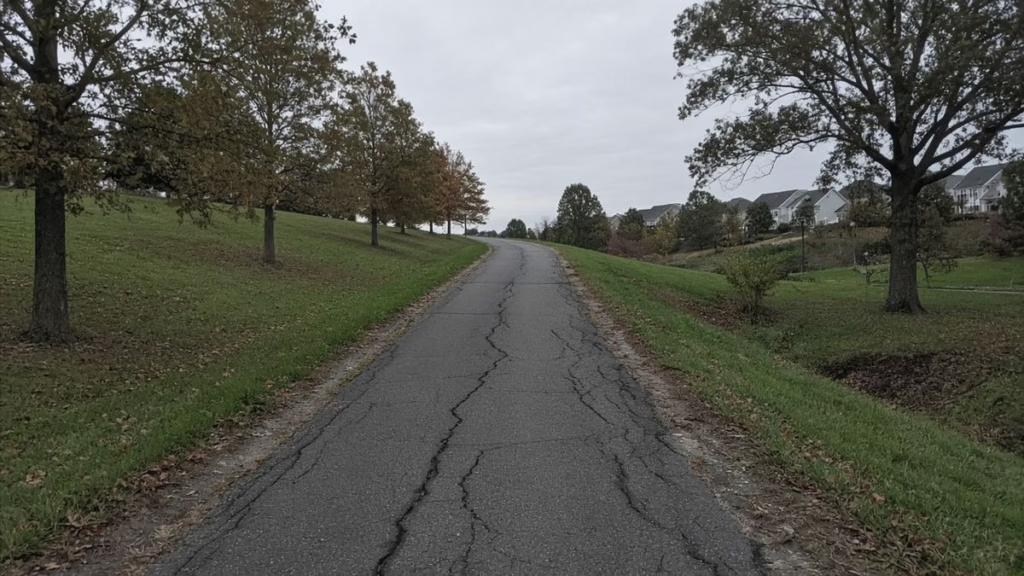
Walk up a long hill or a parking garage ramp for 30 minutes total, walking down slowly. A stair climber at a slow, steady pace also works.
MAKE IT WORK FOR WEIGHT LOSS
Three to four 12-3-30 sessions a week burn roughly 1,000 to 1,400 calories for a 180 lb (82 kg) person, which helps, but food still sets the pace of fat loss. Calculate your calorie deficit first, then use our protein calculator to keep muscle while you lose fat. Add two short strength sessions a week from our list of the best exercises for weight loss. On easy days, flat walking is ideal: read about walking benefits and good practices. Steep incline walking is hard on the calves, so finish every session with these calf stretches.
FAQ
What does 12-3-30 mean?
It means a 12% treadmill incline, a speed of 3.0 mph (4.8 km/h) and 30 minutes of walking.
Can a beginner do the 12-3-30 workout?
Yes, with a modified start. Begin at a 3 to 5% incline and 2.5 to 2.8 mph (4.0 to 4.5 km/h) for 15 to 20 minutes, then build over about 4 weeks.
How many calories does the 12-3-30 burn?
About 280 calories for a 150 lb (68 kg) person, 340 for 180 lb (82 kg) and 395 for 210 lb (95 kg), if you do not hold the handrails.
How many times a week should I do 12-3-30?
Start with 3 sessions a week on non-consecutive days. Once you can do the full workout comfortably, 3 to 5 times a week is reasonable, with easier flat walks on other days.
Is 12-3-30 better than running for weight loss?
Not necessarily better, but it is lower impact. Both burn calories; the best choice is the one you can repeat consistently without pain.
Why do my calves hurt after 12-3-30?
A steep grade stretches and loads the calves and Achilles tendons far more than flat walking. Lower the incline, shorten your steps and stretch after each session.
How long until I see results from 12-3-30?
Fitness usually improves within 2 to 4 weeks. Visible weight loss depends mostly on your calorie deficit and typically takes 4 to 8 weeks to notice.
THE BOTTOM LINE
The 12-3-30 is a great low-impact workout once you have built up to it. Start at 3 to 5% for 15 to 20 minutes, add one setting at a time over about 4 weeks, let go of the handrails and pair the walks with a modest calorie deficit and strength training.
Sources
- American College of Sports Medicine, ACSM’s Guidelines for Exercise Testing and Prescription, walking metabolic equation (VO2 = 0.1 × speed + 1.8 × speed × grade + 3.5)
- CDC, Adult Activity: An Overview: https://www.cdc.gov/physical-activity-basics/guidelines/adults.html
- U.S. Department of Health and Human Services, Physical Activity Guidelines for Americans, 2nd edition: https://odphp.health.gov/our-work/nutrition-physical-activity/physical-activity-guidelines