


Why 30 g under 400 calories is the useful benchmark
When appetite is small, two numbers decide whether a meal works: how much protein it carries, and how many calories it costs to get there. A meal with 30 g of protein for under 400 calories leaves room for two more eating occasions in a day of 1,000 to 1,200 calories. A meal with 12 g for 400 calories does not, no matter how healthy it looks.
Every entry below clears 30 g of protein and stays under 400 calories, using portions you can finish in one sitting. Calories and protein come from USDA FoodData Central values for the ingredients as listed, or from the tested recipe where a link is given.
The twelve meals
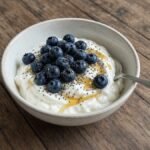
1. Cottage cheese and Greek yogurt bowl with blueberries
37 g protein, 258 calories.
1 cup (226 g) low-fat cottage cheese, 1/2 cup (120 g) plain nonfat Greek yogurt, 1/2 cup (75 g) blueberries. Mash the cottage cheese with a fork first if the curds bother you, then stir in the yogurt.
This is the highest protein-per-calorie option on the list at 14.3 g per 100 calories, and it needs no cooking. The full method with gram weights is in the protein Greek yogurt bowl recipe.
2. Tuna on toast with cottage cheese
32 g protein, 236 calories.
1 can (113 g drained) light tuna in water, 1/4 cup (57 g) cottage cheese, 1 slice (40 g) whole-grain bread, lemon juice. Mix the tuna with the cottage cheese instead of mayonnaise: it holds together and adds 7 g of protein rather than 10 g of fat.
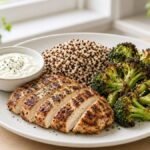
3. Chicken, rice and broccoli bowl
39 g protein, 353 calories.
120 g cooked chicken breast, 1/2 cup (79 g) cooked white rice, 1 cup (90 g) steamed broccoli, a teaspoon of soy sauce. The chicken alone is 37 g. This is the version of a rice bowl that fits a small appetite rather than a bodybuilder’s.
4. Egg white scramble with spinach and feta
31 g protein, 268 calories.
2 whole eggs, 1/2 cup (122 g) liquid egg whites, 1 cup (30 g) spinach, 2 tbsp (15 g) feta. The whites carry 13 g for 63 calories, which is why they appear in so many gentle recipes.
5. Baked salmon bites with lemon yogurt sauce
27.8 g protein, 200 calories for 6 bites and 3 tbsp of sauce.
Just under 30 g, and it earns its place: nothing else on this list gives you 28 g of protein with omega-3 fats for 200 calories. Add 1/4 cup of edamame on the side and you are at 32 g for 250 calories. Full recipe.
6. Cottage cheese chocolate pudding
25.5 g protein, 257 calories.
Four ingredients, a blender, no cooking. It reaches 25.5 g, so pair it with 1/2 cup of Greek yogurt (12 g, 60 calories) if you want to clear 30 g, or eat it as an evening top-up when 25 g is the goal. Full recipe.
7. Chicken and rice soup with egg white ribbons
28.7 g protein, 238 calories per bowl.
Mostly broth, so it adds fluid on a day when eating is hard. The egg whites stirred in at the end push it close to 30 g without more meat to chew. Two tablespoons of grated Parmesan takes it to 32.7 g for 281 calories. Full recipe.
8. Shrimp stir-fry with broccoli and snow peas
26.3 g protein, 172 calories.
The lowest calorie main on the list at 15.3 g of protein per 100 calories. Serve it with 1/2 cup (78 g) shelled edamame to reach 35 g for 266 calories. Full recipe.
9. Tofu and edamame bowl
33 g protein, 311 calories.
150 g firm tofu, 1/2 cup (78 g) shelled edamame, 1 tsp sesame oil, soy sauce, rice vinegar. Press the tofu first so it browns instead of steaming. A plant-based option that reaches 30 g without protein powder or a long ingredient list.
10. Lentil bowl with two eggs
30.6 g protein, 374 calories.
1 cup (198 g) cooked lentils, 2 large eggs, a handful of spinach. Lentils give 18 g, the eggs 12.6 g. Higher in fibre than anything else here, which matters if constipation is part of your week.
11. Protein smoothie with Greek yogurt and cottage cheese
28.2 g protein, 266 calories.
One glass, 415 ml, five minutes, no powder. Split it into two small glasses and it becomes two 14 g snacks. Full recipe.
12. Egg bites with spinach and red pepper
22.5 g protein, 188 calories for three bites.
Under 30 g on its own, so serve with 1/2 cup of cottage cheese (14 g, 81 calories) for 36.5 g total. Baked once on a Sunday, eaten on three mornings. Full recipe.
The pattern behind the list
Three ingredients do most of the work: cottage cheese, Greek yogurt and egg whites. All three are mild, need no seasoning, and can be eaten cold or barely warm, which is what a small appetite tolerates.
| Ingredient | Protein per 100 g | Calories per 100 g | Protein per 100 calories |
|---|---|---|---|
| Liquid egg whites | 10.7 g | 52 | 20.6 g |
| Cottage cheese, 1% | 12.4 g | 72 | 17.2 g |
| Greek yogurt, nonfat | 10.0 g | 59 | 16.9 g |
| Chicken breast, cooked | 31 g | 165 | 18.8 g |
| Tuna, canned in water | 22 g | 97 | 22.7 g |
| Tofu, firm | 16 g | 145 | 11.0 g |
| Lentils, cooked | 9 g | 116 | 7.8 g |
Read the last column, not the second. It tells you how much protein you buy per calorie, which is the only ratio that matters when you cannot eat much.
Three rules that make these meals work in practice
Build the plate around the protein first, then add volume. Put 30 g of protein in the bowl, then decide whether there is room for rice, bread or vegetables. Doing it the other way round leaves you full on the low-protein part.
Cook the protein in a batch, assemble the rest. Chicken, boiled eggs and portioned cottage cheese keep for days. Rice and vegetables take minutes. This is the whole reason meal prep works for a small appetite.
Keep one no-cook option in the fridge at all times. On the days you cannot face the kitchen, having a cottage cheese bowl ready is the difference between 30 g and nothing.
Where these numbers come from
Calories and macros are calculated from USDA FoodData Central for the ingredients as listed. Optional salt, herbs and lemon are not counted. Brands of cottage cheese and yogurt vary in protein by up to 2 g per 100 g, so check your label the first time you buy a new one, then stop checking.
Not medical advice. These are ordinary high-protein meals sized for people who eat less at a sitting. If you take a GLP-1 medication, have kidney or liver disease, are pregnant, or have a history of disordered eating, set your portions and your daily target with your prescriber or a registered dietitian. For the daily number these meals add up to, read how much protein to aim for on a GLP-1.
When even these feel like too much: read what to eat when nothing sounds good and start with a smaller step.