


Lowfat cottage cheese is a simple high-protein base: USDA FoodData Central lists 2% milkfat cottage cheese at 84 kcal and 11 g of protein per 100 g (Foundation, FDC 328841). The five recipes below are scaled from that row and the other USDA entries in the source list. Totals are estimates. Brands, draining, and measuring will move them. This is general information, not medical advice. See the disclaimer.
For a hot dinner that is already published, use cottage cheese pasta (that page states about 34 g of protein). This roundup covers a cold breakfast, a 10-minute scramble, a no-cook lunch, a toast, and a sweet snack. For more ideas, see our high-protein breakfasts for weight loss.
Before you cook
Buy plain lowfat cottage cheese, 2% milkfat, not a fruit cup and not 4% ("whole milk") cottage cheese. Nonfat and 1% are different USDA foods and were not used in these sums. Weigh the cheese. A cup is not precise enough for these numbers.
The same USDA row lists 321 mg of sodium per 100 g. The 200 g berry bowl is about 642 mg of sodium from the cheese alone. If you are watching salt, prefer the 100 g and 120 g recipes, and do not add salt on top.
Math used everywhere: grams ÷ 100 × the per-100 g USDA value, then rounded to the nearest kilocalorie and the nearest gram in the summary line. Herbs, pepper, vinegar, lemon, cinnamon, and vanilla are not in the totals. To place one of these plates in a full day, use the 7-day high-protein meal plan and how much protein to lose weight.
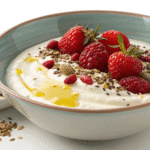
Berry cottage cheese bowl
About 222 kcal, 23 g protein, 23 g carbohydrate, 5 g fat. One serving. No cooking.
Ingredients
- 200 g lowfat cottage cheese, 2% milkfat
- 75 g raw strawberries, hulled and sliced
- 10 g honey
- Cinnamon, optional
Method
- Spoon the cottage cheese into a bowl.
- Add the strawberries and honey.
- Eat it right away. If it sits for hours, the berries soften and the cheese weeps.
Leave the honey out and you remove about 30 kcal and about 8 g of carbohydrate (10 g honey, FDC 169640).
| Ingredient | Amount | kcal | Protein (g) | Carb (g) | Fat (g) |
|---|---|---|---|---|---|
| Cottage cheese, 2% (FDC 328841) | 200 g | 168.0 | 22.00 | 8.62 | 4.60 |
| Strawberries, raw (FDC 167762) | 75 g | 24.0 | 0.50 | 5.76 | 0.22 |
| Honey (FDC 169640) | 10 g | 30.4 | 0.03 | 8.24 | 0.00 |
| Total, then rounded | 222.4 → 222 | 22.53 → 23 | 22.62 → 23 | 4.82 → 5 |
Cottage cheese egg scramble
About 278 kcal, 24 g protein, 6 g carbohydrate, 17 g fat. One serving. About 10 minutes. Fat is higher here because of the egg and the oil, not because of the cheese.
Ingredients
- 100 g whole egg, weighed out of the shell (about two large eggs)
- 100 g lowfat cottage cheese, 2%
- 30 g raw spinach
- 5 g olive oil
- Black pepper
Method
- Warm the oil in a nonstick pan over medium heat. Wilt the spinach, about a minute.
- Beat the eggs, pour them in, and scramble until almost set.
- Take the pan off the heat and fold in the cottage cheese so it warms without turning watery.
- Add pepper. Taste before any salt. The cheese is already salty.
| Ingredient | Amount | kcal | Protein (g) | Carb (g) | Fat (g) |
|---|---|---|---|---|---|
| Egg, whole, raw (FDC 171287) | 100 g | 143.0 | 12.56 | 0.72 | 9.51 |
| Cottage cheese, 2% (FDC 328841) | 100 g | 84.0 | 11.00 | 4.31 | 2.30 |
| Spinach, raw (FDC 168462) | 30 g | 6.9 | 0.86 | 1.09 | 0.12 |
| Olive oil (FDC 171413) | 5 g | 44.2 | 0.00 | 0.00 | 5.00 |
| Total, then rounded | 278.1 → 278 | 24.42 → 24 | 6.12 → 6 | 16.93 → 17 |
For a cold, sweeter breakfast, use high-protein overnight oats with Greek yogurt. One version on that page already stirs in cottage cheese.
Tuna cottage cheese bowl
About 234 kcal, 38 g protein, 10 g carbohydrate, 4 g fat. One serving. No cooking. This is the highest-protein plate here.
The tuna must be light tuna, canned in water, drained, without salt (FDC 171986: 116 kcal and 25.51 g protein per 100 g). Salted tuna and tuna in oil do not match this total.
Ingredients
- 150 g lowfat cottage cheese, 2%
- 80 g of that tuna, weighed after draining
- 100 g cucumber, with peel, chopped
- 1 teaspoon lemon juice or vinegar
- Dill or black pepper
- No mayonnaise and no added salt
Method
- Drain the can and weigh 80 g. A small can is often more than 80 g, so do not tip the whole can in.
- Chop the cucumber.
- Fold tuna, cucumber, and cottage cheese together. Add lemon or vinegar and dill.
| Ingredient | Amount | kcal | Protein (g) | Carb (g) | Fat (g) |
|---|---|---|---|---|---|
| Cottage cheese, 2% (FDC 328841) | 150 g | 126.0 | 16.50 | 6.46 | 3.45 |
| Tuna, water, no salt, drained (FDC 171986) | 80 g | 92.8 | 20.41 | 0.00 | 0.66 |
| Cucumber, with peel, raw (FDC 168409) | 100 g | 15.0 | 0.65 | 3.63 | 0.11 |
| Total, then rounded | 233.8 → 234 | 37.56 → 38 | 10.09 → 10 | 4.22 → 4 |
Another no-cook lunch on the site: chickpea tuna salad. More canned-fish and egg meals: cheap high-protein meals.
Tomato cottage cheese toast
About 216 kcal, 19 g protein, 25 g carbohydrate, 4 g fat. One serving.
This does not reach 20 g of protein. It is the fast option, not the highest-protein one. If you want 20 g or more at breakfast, make the berry bowl or the scramble.
Ingredients
- 40 g whole-wheat bread, commercially prepared, weighed before toasting
- 120 g lowfat cottage cheese, 2%
- 80 g raw red tomato, sliced
- Pepper
Method
- Toast the bread if you like. The estimate uses 40 g of untoasted bread (FDC 172688). Weighing after toasting is a different number, because water has left the slice.
- Add the cottage cheese and tomato. Pepper it. Skip the salt.
| Ingredient | Amount | kcal | Protein (g) | Carb (g) | Fat (g) |
|---|---|---|---|---|---|
| Whole-wheat bread (FDC 172688) | 40 g | 100.8 | 4.98 | 17.08 | 1.40 |
| Cottage cheese, 2% (FDC 328841) | 120 g | 100.8 | 13.20 | 5.17 | 2.76 |
| Tomato, raw (FDC 170457) | 80 g | 14.4 | 0.70 | 3.11 | 0.16 |
| Total, then rounded | 216.0 → 216 | 18.88 → 19 | 25.37 → 25 | 4.32 → 4 |
Chocolate cottage cheese cup
About 181 kcal, 18 g protein, 21 g carbohydrate, 5 g fat. One serving. A snack, not a full meal. Use it in the snack slot of the meal prep guide.
Ingredients
- 150 g lowfat cottage cheese, 2%
- 8 g unsweetened cocoa powder (not a sweetened drinking mix)
- 12 g honey
- Vanilla, optional
Method
- Blend the cheese, cocoa, and honey until the curds are gone, about 20 to 30 seconds.
- Extra honey changes the carbohydrate number. Chill 30 minutes if you want it colder. It will not set like custard.
| Ingredient | Amount | kcal | Protein (g) | Carb (g) | Fat (g) |
|---|---|---|---|---|---|
| Cottage cheese, 2% (FDC 328841) | 150 g | 126.0 | 16.50 | 6.46 | 3.45 |
| Cocoa, unsweetened (FDC 169593) | 8 g | 18.2 | 1.57 | 4.63 | 1.10 |
| Honey (FDC 169640) | 12 g | 36.5 | 0.04 | 9.89 | 0.00 |
| Total, then rounded | 180.7 → 181 | 18.10 → 18 | 20.98 → 21 | 4.55 → 5 |
Eight grams of this cocoa is about 18 kcal. It is not a free flavoring.
Which one to make
| When | Recipe | Protein (rounded) | kcal (rounded) |
|---|---|---|---|
| Highest protein, no cooking | Tuna bowl | 38 g | 234 |
| Hot breakfast | Egg scramble | 24 g | 278 |
| Cold breakfast | Berry bowl | 23 g | 222 |
| Fast savory bite | Tomato toast | 19 g | 216 |
| Sweet snack | Chocolate cup | 18 g | 181 |
Do not add the pasta page's macros into this table. They were not recalculated here.
Storage and swaps
Mix these the day you eat them. The scramble is worst as a leftover: reheated cottage cheese splits. The berry bowl and tuna bowl can sit covered in the fridge until later the same day. The chocolate cup can wait until the next day if it stays cold; stir it, because liquid separates. Do not leave tuna or dairy out on the counter.
- Blending does not change the macros, only the texture.
- Unsweetened frozen strawberries can replace fresh if you still weigh 75 g. Sweetened frozen berries were not calculated.
- Pouring off the whey makes a drier cheese than FDC 328841. Either stir the liquid back in, or accept that the estimate has moved.
- 1%, nonfat, and 4% cottage cheese are different foods. Do not keep these totals if you swap them.
- Greek yogurt is not a one-for-one swap. Use the overnight oats recipe for that.
A sensible day is one savory recipe here, dinner from high-protein lunch and dinner or the pasta, and the chocolate cup only if you still need a snack. Eating all five recipes in one day piles up sodium. Cottage cheese still contains lactose (the USDA cheese record lists it). If dairy bothers you, use peanut tofu rice bowls or sheet-pan chicken thighs instead.
More posts in the breakfast category: high-protein breakfast.
FAQ
Is cottage cheese good for weight loss?
It can be a useful food because 100 g of this 2% cottage cheese is about 84 kcal and 11 g of protein in FDC 328841. It does not cause weight loss on its own. The rest of the day still has to fit your calorie target. Start from how much protein to lose weight.
How much cottage cheese should I eat in a day?
These recipes use 100 g to 200 g in one meal. Because this cheese has 321 mg of sodium per 100 g, one savory portion is enough for most people. There is no single daily gram target that fits everyone.
Can I eat it every day?
Yes, if you tolerate dairy and the sodium fits. Rotate with eggs, yogurt, tofu, beans, tuna, and chicken so one tub is not the whole diet. That rotation is the point of cheap high-protein meals.
Is it better than Greek yogurt?
This page does not say either is better. Per 100 g, the cheese used here is about 84 kcal and 11 g of protein. Read the yogurt label you actually buy. A yogurt recipe is already on the site: overnight oats.
Why doesn't this match my package?
The package describes that brand and that serving. These totals are USDA values scaled by weight, then rounded. Fat, water, and salt differ by brand. For a strict target, use your label. Treat this page as a plan, not a lab result.
Should I drain it first?
No. Draining changes the food relative to FDC 328841. Stir the liquid back in and use the weights as written.
Sources
Read from USDA FoodData Central on 8 October 2026. Energy is kilocalories (nutrient 208), not kilojoules. Values are per 100 g.
- FDC 328841, cheese, cottage, lowfat, 2% milkfat (Foundation): 84 kcal, 11.0 g protein, 4.31 g carbohydrate, 2.3 g fat, 321 mg sodium.
- FDC 167762, strawberries, raw (SR Legacy): 32 kcal, 0.67 g protein, 7.68 g carbohydrate, 0.3 g fat.
- FDC 169640, honey (SR Legacy): 304 kcal, 0.3 g protein, 82.4 g carbohydrate, 0 g fat.
- FDC 171287, egg, whole, raw, fresh (SR Legacy): 143 kcal, 12.56 g protein, 0.72 g carbohydrate, 9.51 g fat.
- FDC 168462, spinach, raw (SR Legacy): 23 kcal, 2.86 g protein, 3.63 g carbohydrate, 0.39 g fat.
- FDC 171413, oil, olive, salad or cooking (SR Legacy): 884 kcal, 0 g protein, 0 g carbohydrate, 100 g fat.
- FDC 171986, tuna, light, canned in water, without salt, drained solids (SR Legacy): 116 kcal, 25.51 g protein, 0 g carbohydrate, 0.82 g fat.
- FDC 169593, cocoa, dry powder, unsweetened (SR Legacy): 228 kcal, 19.6 g protein, 57.9 g carbohydrate, 13.7 g fat.
- FDC 172688, bread, whole-wheat, commercially prepared (SR Legacy): 252 kcal, 12.45 g protein, 42.71 g carbohydrate, 3.5 g fat.
- FDC 170457, tomatoes, red, ripe, raw (SR Legacy): 18 kcal, 0.88 g protein, 3.89 g carbohydrate, 0.2 g fat.
- FDC 168409, cucumber, with peel, raw (SR Legacy): 15 kcal, 0.65 g protein, 3.63 g carbohydrate, 0.11 g fat.
Database: https://fdc.nal.usda.gov/