



Can’t do a single chin-up yet? You don’t need one to build the same back muscles. Here are 9 alternatives, ranked from easiest to hardest — plus how to progress toward your first real chin-up.
What’s in this guide
Why chin-ups are so hard for most people
The 9 best alternatives, easiest to hardest
Which alternative fits your situation
How to build toward your first chin-up
Common mistakes
FAQ
WHY CHIN-UPS FEEL IMPOSSIBLE (IT IS NOT YOUR FAULT)
A chin-up requires you to lift roughly 70 to 90 percent of your own body weight in one movement. There is no other common exercise that asks this much from your arms and back.
If you have never done one, you are not weak. You are simply facing a movement that demands a strength-to-bodyweight ratio most people have never built. The average untrained adult can complete zero chin-ups, and that is a normal starting point.
The good news is that the muscles a chin-up trains — the latissimus dorsi, the biceps, the rhomboids, the rear delts and the forearms — can all be trained with easier movements. You do not need a bar to build them.
And here is the part most people miss: a strong back is not just for show. It supports your posture, protects your lower spine when you lift, and improves how you perform almost every other exercise, from rows to squats. If your goal is fat loss, back training also adds muscle mass, which raises your daily calorie burn modestly over time — a small but real effect that compounds.
THE 9 CHIN-UP ALTERNATIVES, EASIEST TO HARDEST
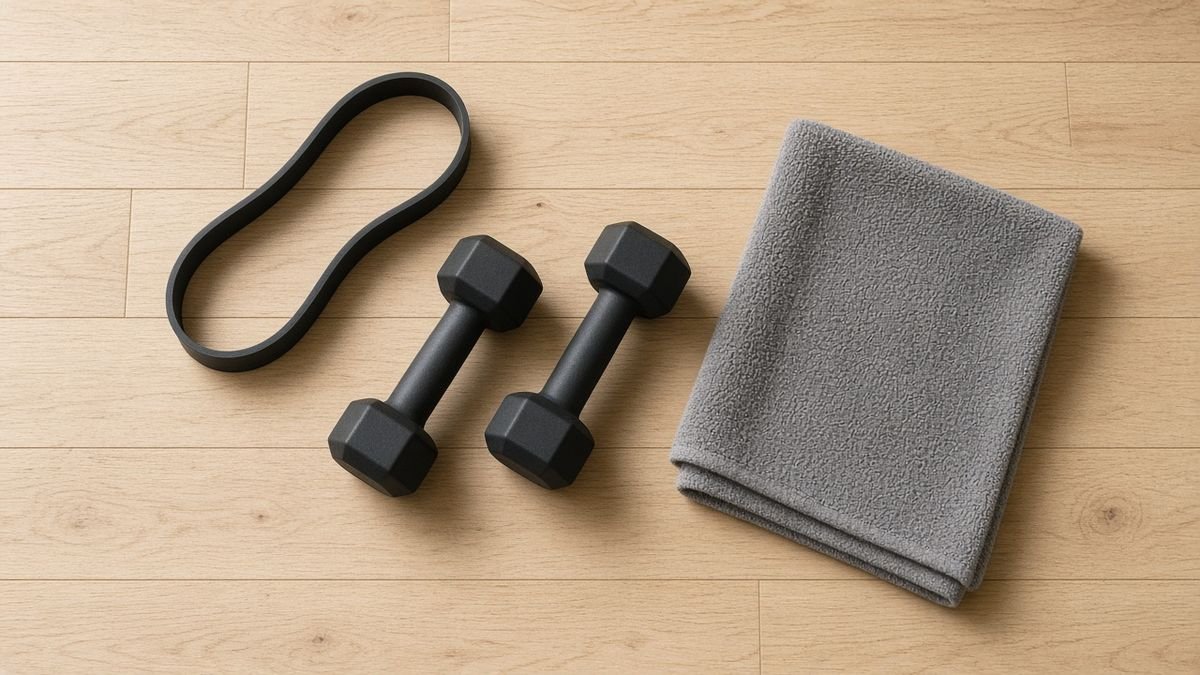
1. Band Pull-Apart
Difficulty: 1 of 5
Hold a light resistance band in both hands, arms straight in front of you at chest height. Pull your hands apart until the band touches your chest, squeezing your shoulder blades together. Return slowly.
Muscles: Rear delts, rhomboids, upper back
Sets and reps: 3 x 15
Best for: Complete beginners, desk workers, anyone with rounded shoulders
Equipment: A resistance band
This is the easiest movement on the list, and it is the one most people skip. Do not skip it. If your upper back is weak, a band pull-apart is where you start.
2. Inverted Row (Bar at Waist Height)
Difficulty: 2 of 5
Set a barbell in a rack at roughly waist height, or use a sturdy table edge. Lie underneath it, grip the bar, and pull your chest up to it while keeping your body straight like a plank. Lower slowly.
Muscles: Lats, mid-back, biceps, core
Sets and reps: 3 x 8-12
Best for: Anyone who can lie down and get up comfortably
Equipment: A barbell in a rack, a Smith machine, or a sturdy table
Why this matters: this is the single closest movement to a chin-up in terms of muscle activation. The higher the bar, the easier the row. Lower the bar as you get stronger.
3. Band-Assisted Chin-Up
Difficulty: 2 of 5
Loop a resistance band over the pull-up bar and place one knee or foot inside the band’s loop. The band takes some of your bodyweight, letting you complete a chin-up you could not do unassisted.
Muscles: The full chin-up pattern
Sets and reps: 3 x 5-8
Best for: Anyone who wants to practice the real movement
Equipment: A pull-up bar and bands of varying thickness
Use a thick band at first. As you get stronger, move to a thinner one. This is how most people actually reach their first unassisted chin-up.
4. Negative Chin-Up
Difficulty: 3 of 5
Jump or step up so your chin is above the bar, then lower yourself as slowly as you can — aim for 5 seconds. Step down and repeat.
Muscles: The full chin-up pattern, with emphasis on the lowering phase
Sets and reps: 3 x 3-5
Best for: Anyone who can get above the bar but cannot pull themselves up
Equipment: A pull-up bar plus a chair or box
This is the most underused technique in all of bodyweight training. Your muscles are stronger during the lowering phase than the lifting phase — so you can train the chin-up movement even before you can perform one.
5. Lat Pulldown
Difficulty: 3 of 5
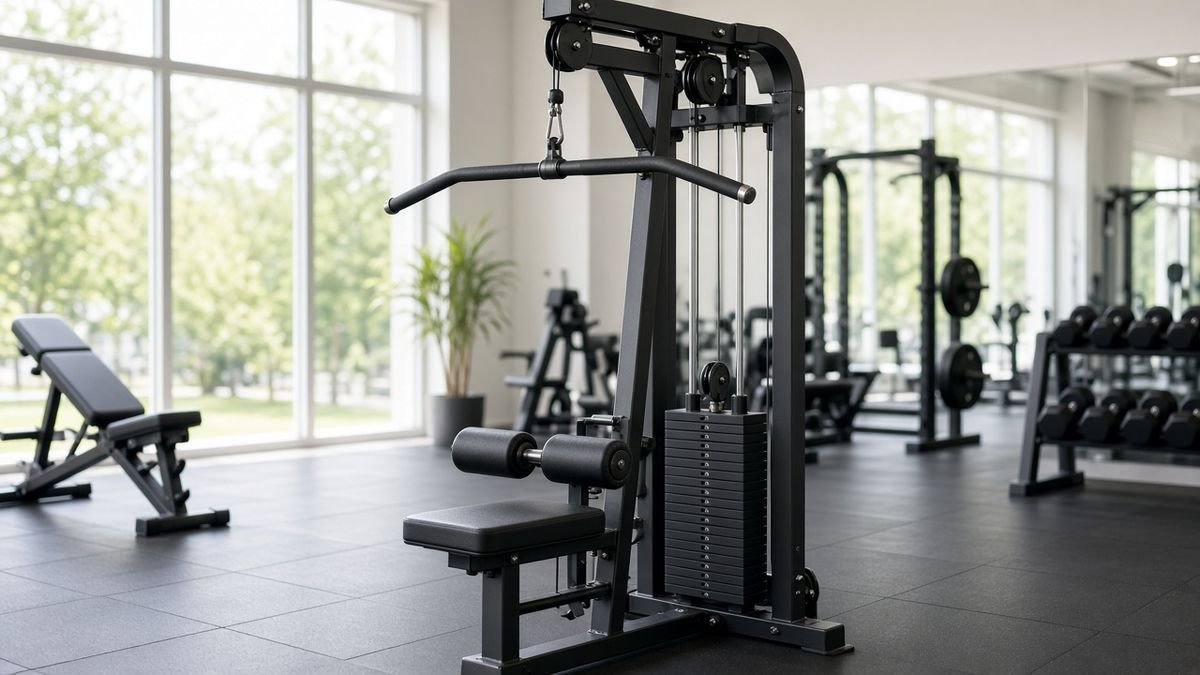
At a cable machine, grip the bar slightly wider than shoulder width and pull it down to your upper chest, keeping your torso still. Return slowly with control.
Muscles: Lats, biceps, mid-back
Sets and reps: 3 x 10-12
Best for: Gym members who want to load the muscles progressively
Equipment: A lat pulldown machine or cable station
Unlike bodyweight alternatives, the pulldown lets you add weight in small increments. That makes progress measurable — you can see yourself getting stronger week to week.
6. Seated Cable Row
Difficulty: 3 of 5
Sit at a cable row station, feet braced, and pull the handle to your lower ribs while squeezing your shoulder blades together. Keep your back straight — no leaning back to cheat the weight.
Muscles: Mid-back, lats, biceps
Sets and reps: 3 x 10-12
Best for: Building thickness in the upper back
Equipment: A cable row machine
7. Dumbbell Single-Arm Row
Difficulty: 4 of 5
Place one knee and one hand on a bench, hold a dumbbell in the free hand, and row it up to your hip. Keep your back flat and resist the urge to twist.
Muscles: Lats, mid-back, core (via anti-rotation)
Sets and reps: 3 x 8-10 per arm
Best for: Home lifters with limited equipment
Equipment: A dumbbell and a bench or sturdy chair
The single-arm version also trains your core, because your trunk has to resist the pull of the weight. That is a bonus most people do not expect.
8. Australian Pull-Up (Low Bar, Feet Elevated)
Difficulty: 4 of 5
Same as the inverted row, but with your feet elevated on a box so your body is closer to horizontal. This puts more of your bodyweight into the pull.
Muscles: Lats, mid-back, biceps
Sets and reps: 3 x 6-10
Best for: Anyone who has mastered the basic inverted row
Equipment: A low bar and a box or bench
9. Scapular Pull-Up
Difficulty: 5 of 5
Hang from the bar with straight arms. Without bending your elbows, pull your shoulder blades down and back so your body rises slightly — a few centimetres only. Hold for one second, then relax.
Muscles: Lower traps, lats, shoulder stabilisers
Sets and reps: 3 x 8-10
Best for: Anyone stuck at zero chin-ups despite training
Equipment: A pull-up bar
It looks like nothing. It is not nothing. Most people who cannot do a chin-up have a weak scapular pull — they try to bend their elbows when the real problem is that their shoulder blades do not move properly. Fix this and the chin-up often follows within weeks.
WHICH ALTERNATIVE FITS YOUR SITUATION
| Your situation | Start with | Then move to |
|---|---|---|
| No equipment at all | Band pull-apart | Scapular pull-up (needs a bar) |
| A pull-up bar, zero chin-ups | Band-assisted chin-up | Negative chin-up |
| Full gym access | Lat pulldown | Assisted chin-up |
| Home with dumbbells | Single-arm row | Australian pull-up |
| Desk worker, tight shoulders | Band pull-apart | Inverted row |
A note on age and joint health: if you are over 60, or returning from a shoulder or elbow injury, start with the band pull-apart and the lat pulldown. Skip the hanging variations until your shoulders feel stable and pain-free. Hanging from a bar is safe for a healthy shoulder — it is not safe for an injured one.
HOW TO PROGRESS TOWARD YOUR FIRST CHIN-UP
The mistake most people make is training only alternatives and never practising the actual movement. That is like preparing for a swimming race by riding a bike.
A weekly plan that works:
Twice a week, do a chin-up practice session:
- Band-assisted chin-ups: 3 sets of 5
- Negative chin-ups: 3 sets of 3
Twice a week, do a back-strength session:
- Inverted rows or lat pulldowns: 3 sets of 10
- Single-arm rows: 3 sets of 10 per arm
- Band pull-aparts: 3 sets of 15
Rest at least one day between sessions. The back muscles need recovery just like any other.
Do not test your max every session. Test once every two weeks. Testing every workout adds fatigue without adding strength.
Realistic timeline: if you start with zero chin-ups and follow this consistently, most people reach their first strict chin-up in 8 to 16 weeks. Some take longer. That is fine — the strength you build along the way is worth having regardless.
COMMON MISTAKES THAT KEEP YOU STUCK AT ZERO
Training only the biceps. The chin-up is a back exercise with biceps assistance — not the other way around. If all your training is curls, you are not building the movement.
Using momentum. Kicking, swinging, or bouncing off the bottom of a rep means you are training your tendons to absorb force rather than training your muscles to produce it. Slow down.
Never training the real pattern. Band-assisted and negative chin-ups are how you teach your nervous system the movement. Skip them and you will be strong in the alternatives and still unable to do a chin-up.
Skipping the scapular work. As noted above, this is the most common hidden weakness.
Training the back only once a week. Twice weekly is the minimum for meaningful progress in a strength skill.
FAQ
How long does it take to get your first chin-up?
For most people starting from zero, between 8 and 16 weeks of consistent training. If you train less than twice a week, or skip the assisted and negative variations, expect it to take considerably longer.
Can I build back muscles without a pull-up bar?
Yes. Band pull-aparts, dumbbell rows, inverted rows using a sturdy table, and lat pulldowns all build the same primary muscles. A bar helps you practise the specific movement, but it is not required to build strength.
Are chin-ups better than lat pulldowns?
Neither is better — they do different jobs. The chin-up is a bodyweight skill that requires core control and grip strength. The pulldown lets you add precise amounts of weight. The best approach is to train both.
What is the difference between a chin-up and a pull-up?
A chin-up uses an underhand grip (palms facing you), which places more emphasis on the biceps. A pull-up uses an overhand grip, which emphasises the upper back and lats. Both train the same major muscles in different proportions.
At what age should you stop doing chin-ups?
There is no age at which you must stop. Many people train chin-ups into their seventies. That said, if you have a history of shoulder, elbow or wrist injury, get clearance from a physiotherapist before starting hanging movements.
Why can I do 10 rows but not one chin-up?
Because a row moves only part of your bodyweight, while a chin-up moves nearly all of it. The strength required is not comparable. This is normal and expected — it does not mean your training is failing.
THE BOTTOM LINE
You do not need a chin-up to build back strength. You need the movements that train the same muscles under less load — and then you need to practise the real pattern until your body is ready.
Start with the band pull-apart. Add the inverted row. Then practise assisted and negative chin-ups twice a week. Give it three months, and the odds are good that a movement which felt impossible becomes routine.
And if it takes longer, that is not failure. That is strength training.
Keep going: