



Injured, sore, or just tired of leg day? Most cardio options assume your legs are available — running, cycling, stairs, all of it. When your legs need a break, the usual advice stops working.
Here is what most people do not realise: your legs only account for about 40% of your total muscle mass. Your back, chest, arms, and core make up the rest, and they burn calories every bit as efficiently when you train them hard enough.
This guide gives you nine cardio workouts that work your upper body and core instead. No equipment for most of them, and every one of them is a genuine cardio stimulus — not a light stretch session.
Can You Really Do Cardio Without Your Legs?
Yes — but be clear about what “cardio” means.
Cardio is not about which muscles you move. It is about keeping your heart rate in a training zone for a sustained period. If your heart rate sits between 60% and 85% of your maximum for 15 to 30 minutes, you are doing cardio. Which muscles produced that work is irrelevant to the calorie burn.
The practical problem is that upper-body exercise tends to fatigue fast, because the muscles are smaller. Your legs can run for 30 minutes; your arms cannot row for 30 minutes without a break. The solution is circuit format: alternate between different upper-body and core movements so no single muscle group fails before your heart rate has done its job.
Two rules keep it working:
Rest under 30 seconds between exercises. Longer than that and your heart rate drops out of the zone.
Use interval structure. Work 40 seconds, rest 20. This is more effective than steady pacing when the working muscles are small.
The 9 Best Cardio Exercises That Skip Your Legs
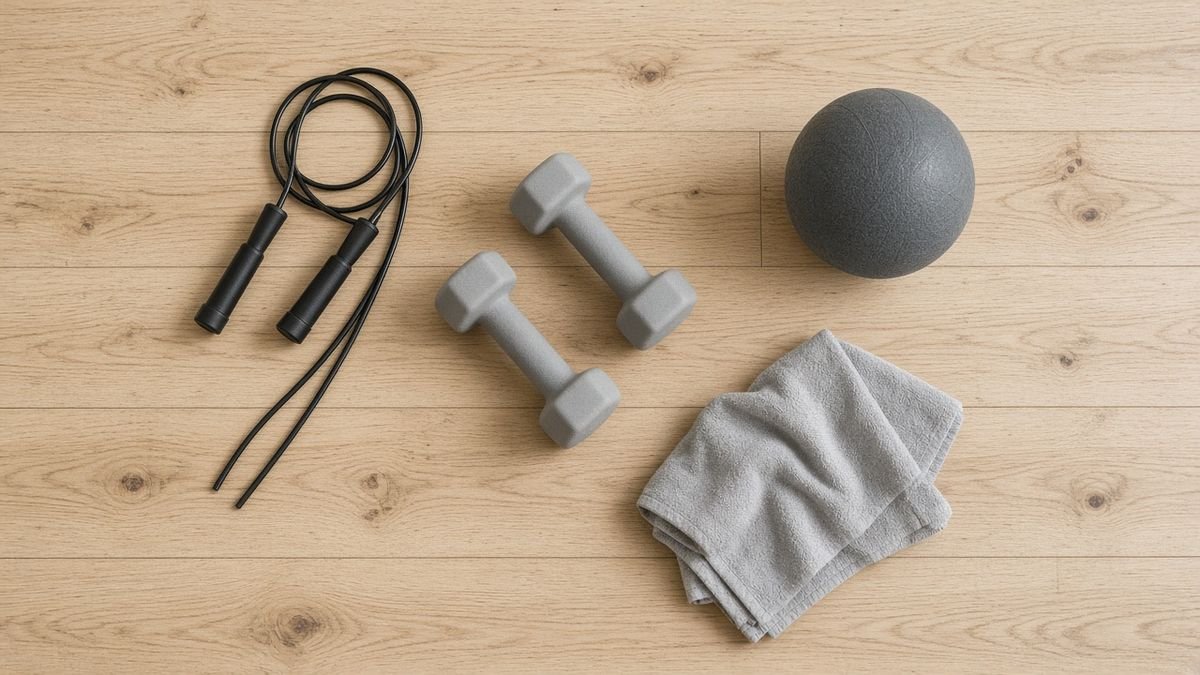
1. Seated Arm Ergometer (or Air Bike Arms Only)
Burn rate: 300–400 kcal/hour. If you have gym access, this is the obvious answer — it is designed exactly for this. Set resistance so you can hold 70 rpm for 20 minutes. If you are recovering from a leg injury, this is the safest option on the list.
2. Battle Ropes
Burn rate: 400–500 kcal/hour. Ten to fifteen minutes of alternating waves will beat most people’s 30-minute run. It is upper body, brutal, and requires no coordination. Work 20 seconds, rest 20, repeat for 10 minutes. If you do not have ropes, a heavy towel pulled taut by a partner produces a similar effect.
3. Rowing Machine (Arms and Back Emphasis)
Burn rate: 450–550 kcal/hour. Technically a full-body movement, but you can shift the load almost entirely to your back and arms by locking your leg drive. Sit tall, keep your knees still, and pull purely with your upper body. This is harder than it sounds and it works.
4. Shadowboxing
Burn rate: 350–450 kcal/hour. Free, requires nothing, and genuinely exhausting. Three-minute rounds with one minute rest. Throw combinations — jab, cross, hook — and keep moving your feet minimally. This is also a stress relief tool as much as a cardio one.
5. Rope Skipping, Seated
Burn rate: 300–380 kcal/hour. Sit on a chair and skip the rope in front of you using only wrist rotation. It looks strange. It also keeps your heart rate at 70% for as long as you can stand it, and it is a real option for anyone with a lower-limb injury who still wants a cardio habit.
6. Swimming with a Pull Buoy
Burn rate: 400–600 kcal/hour. A pull buoy sits between your thighs and removes your legs from the stroke entirely. You then swim with arms and core only. This is the single best option for a high calorie burn with zero leg involvement, provided you have pool access.
7. Medicine Ball Slams
Burn rate: 400–500 kcal/hour. Pick up a ball, throw it at the ground as hard as you can, pick it up again. Twelve to fifteen repetitions, then rest 30 seconds. Ten rounds is a legitimate workout. Keep your knees slightly bent but do not drive with them — the power comes from your core and shoulders.
8. Seated Boxing or Speed Bag Work
Burn rate: 320–420 kcal/hour. If you have access to a speed bag, it is the most sustained upper-body cardio available — once you find the rhythm you can keep it going for 20 minutes. Seated boxing with a partner holding pads is the accessible version.
9. Core Circuit Intervals
Burn rate: 300–400 kcal/hour. Not traditionally cardio, but if you run it as intervals — 40 seconds of plank, 20 rest, 40 seconds of hollow hold, 20 rest, and so on for 20 minutes — your heart rate will not know the difference. Include bird dogs, dead bugs, and side planks.
The 20-Minute Upper-Body Cardio Circuit
No equipment needed. Complete all five movements, then repeat three times.
| Block | Movement | Work | Rest |
|---|---|---|---|
| 1 | Shadowboxing combinations | 40s | 20s |
| 2 | Plank shoulder taps | 40s | 20s |
| 3 | Standing arm circles (fast) | 40s | 20s |
| 4 | Hollow body hold | 40s | 20s |
| 5 | Push-up to shoulder tap | 40s | 20s |
Three rounds takes 20 minutes. One round is 6 minutes 40 — do not rest between rounds beyond the 20-second cycle rest.
If you have a pull-up bar, replace block 5 with 40 seconds of hanging knee raises. If you have dumbbells, replace block 3 with 40 seconds of standing shoulder presses at a weight you can move continuously.
Why This Works for Fat Loss
Calorie burn during exercise is only part of the picture. Two effects matter more.
First, upper-body muscle is undertrained in most people. A back or shoulder muscle that has never been trained responds faster to stimulus than a leg muscle that has been running for years. That means you build muscle more quickly — and muscle costs calories to maintain, every day, at rest.
Second, intervals keep the burn going. High-intensity intervals raise your metabolic rate for several hours after the session ends, an effect called excess post-exercise oxygen consumption. Steady-state cardio does this far less. When your working muscles are small, you have less capacity for steady state anyway, so intervals are the natural fit.
The practical target: three upper-body cardio sessions a week of 20 to 25 minutes, alongside whatever strength work your legs can handle. That is enough to keep a calorie deficit moving without touching your lower body.
When Your Legs Are Injured vs. Just Sore
These are different situations and they need different answers.
Sore from training: train through it with upper-body work. Soreness is not damage. The circuit above is fine.
Injured — suspected muscle tear, joint injury, or anything with sharp pain: get it assessed before you train around it. Most upper-body cardio is safe with a leg injury, but swimming with a pull buoy doubles your core demand, and core work loads your hip flexors, which attach near the site of many leg injuries. If anything hurts beyond the working muscle, stop.
Recovering from surgery: your surgeon’s restrictions override anything in this article. Arm ergometers and seated work are usually cleared early; battle ropes and slams are not.
FAQ
Can you lose belly fat without doing cardio with your legs?
Yes. Fat loss is driven by a calorie deficit, not by which muscles you move. Upper-body cardio contributes to that deficit just as leg cardio does. Spot reduction of belly fat does not work either way — the fat comes off through the deficit.
How many calories does upper-body cardio burn?
Between 300 and 550 kcal per hour depending on the exercise, which is comparable to moderate running. Battle ropes, rowing, and swimming with a pull buoy are at the top of that range; shadowboxing and seated skipping are at the bottom.
How often should you do cardio without legs?
Three sessions a week of 20 to 25 minutes is enough to support fat loss. Daily is fine if the intensity stays moderate, but upper-body muscles need recovery like any other.
Is shadowboxing real cardio?
Yes. Sustained shadowboxing keeps most people between 65% and 80% of maximum heart rate. It is one of the few options on this list you can do anywhere, with no equipment, at any fitness level.
The Bottom Line
Your legs are not required for a useful cardio session. Your heart does not care which muscles are producing the work — it only cares about the intensity and the duration.
Pick two or three exercises from the nine above, run them as 40-second intervals for 20 minutes, and do that three times a week. That is a full cardio programme with zero load on your legs.
If you want to build the rest of your training plan around it, our fitness category covers strength work for every level, and best exercises for weight loss pairs these sessions with a full weekly structure.
Next steps:
Strength training for weight loss — build muscle while losing fat
Best exercises for weight loss — the full weekly plan
Core and stability work — low-impact core training
Recovery and sleep habits — how to recover from upper-body intervals