


Quick answer: The best high-protein lunches with no microwave are built on proteins that taste good cold: canned tuna or salmon, cooked chicken breast, roasted turkey, hard-boiled eggs, cottage cheese, Greek yogurt, tofu, edamame and chickpeas. The 9 lunches below give 28 to 48 g of protein each, with exact US and metric amounts and macros calculated from USDA FoodData Central. Keep perishable lunches at 40°F (4°C) or below and never leave them out more than 2 hours.
No microwave at work, a line of 12 people waiting for one, or a job site with no break room at all. This guide is for those days. It is not about leftovers you heat up later (that is a different problem, covered in our guide to lunches that reheat well). Every lunch here is designed to be eaten cold, and the storage advice depends on what you actually have: a fridge, an insulated bag, or nothing.
What’s in this guide
- The 9 lunches at a glance
- Fridge, ice packs or nothing: choose your lunch
- 9 high-protein lunches with no microwave
- How to keep a cold lunch safe
- Shelf-stable protein for days with no cooling
- A 45-minute Sunday prep for the week
- Texture tips for cold lunches
- FAQ
- The bottom line
THE 9 LUNCHES AT A GLANCE
Calories and protein are per serving, calculated from USDA FoodData Central values for each ingredient.
| Lunch | Calories | Protein | Prep | Needs cooling? | Fridge life |
|---|---|---|---|---|---|
| Tuna & White Bean Salad Jar | 430 | 40 g | 10 min | Yes | 3 to 4 days (keep the tuna on top so the beans do not get soggy) |
| Greek Yogurt Chicken Salad Wrap | 390 | 48 g | 10 min | Yes | Filling 3 to 4 days; roll the wrap the morning you eat it |
| Cottage Cheese & Egg Protein Box | 315 | 31 g | 5 min | Yes | Eggs up to 1 week in the shell; packed box 3 to 4 days |
| Turkey Hummus Roll-Ups | 290 | 39 g | 5 min | Yes | 3 to 4 days with roasted turkey; opened deli turkey 3 to 5 days |
| Edamame & Tofu Sesame Bowl | 420 | 40 g | 15 min | Yes | 3 to 4 days |
| Cold Chicken & Quinoa Mediterranean Bowl | 530 | 46 g | 10 min | Yes | 3 to 4 days (dressing on the side) |
| Smoked Salmon & Cucumber Wrap | 350 | 28 g | 5 min | Yes | Eat the same day you make it |
| Chickpea & Egg Salad Lettuce Cups | 415 | 29 g | 10 min | Yes | 3 to 4 days (lettuce packed separately) |
| No-Fridge Shelf-Stable Protein Box | 455 | 35 g | 2 min | No | No fridge needed until the tuna pouch is opened |
The highest-protein picks are the Greek yogurt chicken salad wrap (48 g) and the chicken and quinoa bowl (46 g). The lightest is the turkey hummus roll-ups at 290 calories with 39 g of protein.
FRIDGE, ICE PACKS OR NOTHING: CHOOSE YOUR LUNCH
The right lunch depends less on taste than on how you can keep it cold between your kitchen and your desk.
| Your situation | What to do | Best lunches from this guide |
|---|---|---|
| Office fridge | Put the lunch in the fridge as soon as you arrive. Use the insulated bag only for the commute. | All 9; the wraps and the Mediterranean bowl are best fresh from the fridge |
| Insulated bag + 2 ice packs, no fridge | Freeze two gel packs overnight, place one above and one below the food, keep the bag closed until lunch. | Tuna and white bean jar, cottage cheese box, edamame tofu bowl, chickpea egg cups |
| No cooling at all | Pack only shelf-stable foods and whole fruit. Open cans and pouches at lunch. | No-fridge shelf-stable box (lunch 9) |
Office fridge
This is the easy case. Keep the lunch in your insulated bag on the way in, then move it to the fridge on arrival. The USDA notes that if you put the whole insulated bag in the fridge, you should leave it open so the cold air can reach the food.
Insulated bag + 2 ice packs
A brown paper bag does not keep food cold. Use an insulated, soft-sided bag with at least two cold sources: two frozen gel packs, or one gel pack and a frozen water bottle. The USDA recommends gel packs of at least 5 x 3 inches (13 x 8 cm). Put one under the food and one on top, and keep the bag closed and out of the sun until you eat.
No cooling at all
Without a fridge or ice, perishable food is safe for only 2 hours at room temperature, or 1 hour above 90°F (32°C). On those days, build lunch from foods that are safe unopened at room temperature: tuna, salmon or chicken in pouches or cans, beef jerky, nuts, nut butter, crackers and whole fruit. Lunch 9 below is built for exactly this.
9 HIGH-PROTEIN LUNCHES WITH NO MICROWAVE
Each recipe makes one serving. Amounts are in US units with metric in parentheses. Nutrition is per serving.
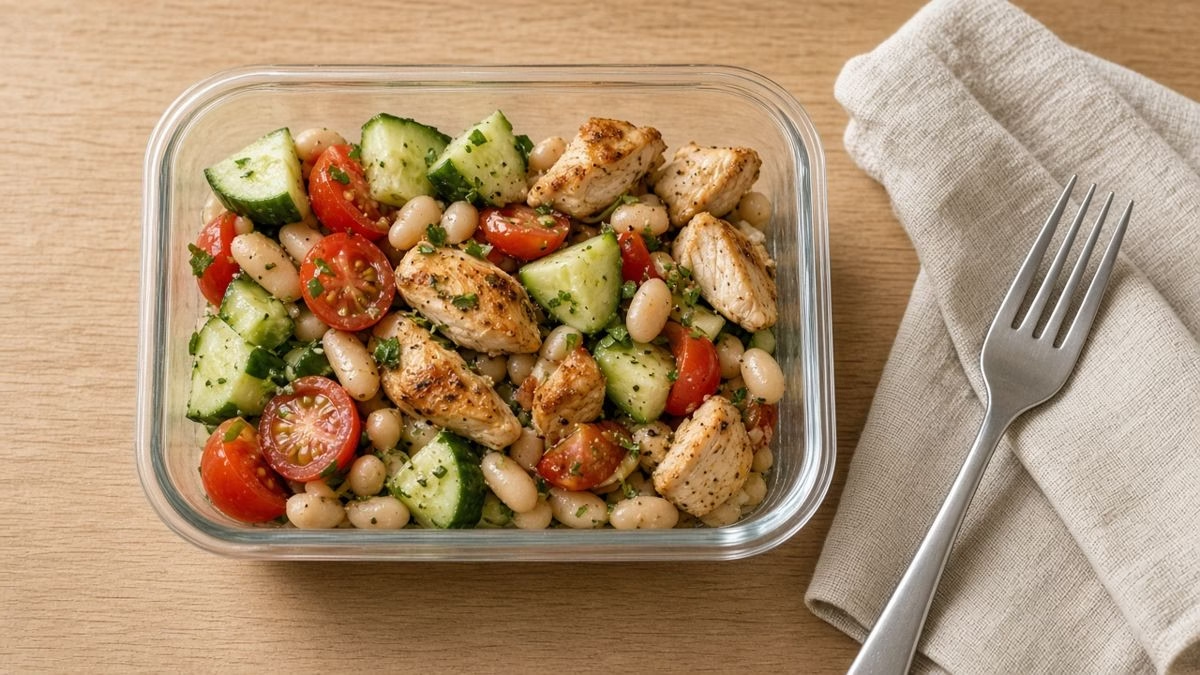
1. Tuna & White Bean Salad Jar
430 calories | 40 g protein | 15 g fat | 36 g carbs | Prep: 10 min | Fridge: 3 to 4 days (keep the tuna on top so the beans do not get soggy)
Ingredients
- 1 can (5 oz/142 g) light tuna in water, drained = about 4 oz (113 g)
- 1/2 cup (130 g) canned cannellini beans, rinsed
- 1/2 cup (52 g) diced cucumber
- 1/2 cup (75 g) cherry tomatoes
- 2 tbsp (20 g) minced red onion
- 1 tbsp (15 ml) olive oil
- 1 tbsp (15 ml) lemon juice
- Salt and pepper to taste
Steps
- Rinse and drain the beans. Drain the tuna well.
- Whisk the olive oil and lemon juice with a pinch of salt and pepper in the bottom of a 16 oz (500 ml) jar.
- Layer the beans, onion, cucumber and tomatoes, then put the tuna on top.
- Seal and refrigerate. Shake or tip into a bowl at lunch.
Like canned fish and beans? Our chickpea tuna salad is another no-cook option.
2. Greek Yogurt Chicken Salad Wrap
390 calories | 48 g protein | 8 g fat | 30 g carbs | Prep: 10 min | Fridge: Filling 3 to 4 days; roll the wrap the morning you eat it
Ingredients
- 4 oz (113 g) cooked chicken breast, diced
- 1/4 cup (70 g) plain nonfat Greek yogurt
- 1/4 cup (25 g) diced celery
- 1 whole-wheat tortilla, 8-inch (49 g)
- 1 cup (30 g) baby spinach
- Salt and pepper to taste
Steps
- Mix the chicken, Greek yogurt and celery with salt, pepper and a squeeze of lemon.
- Lay the spinach on the tortilla, spoon the chicken salad down the center and roll tightly.
- Wrap in parchment or foil and cut in half. Keep it cold until lunch.
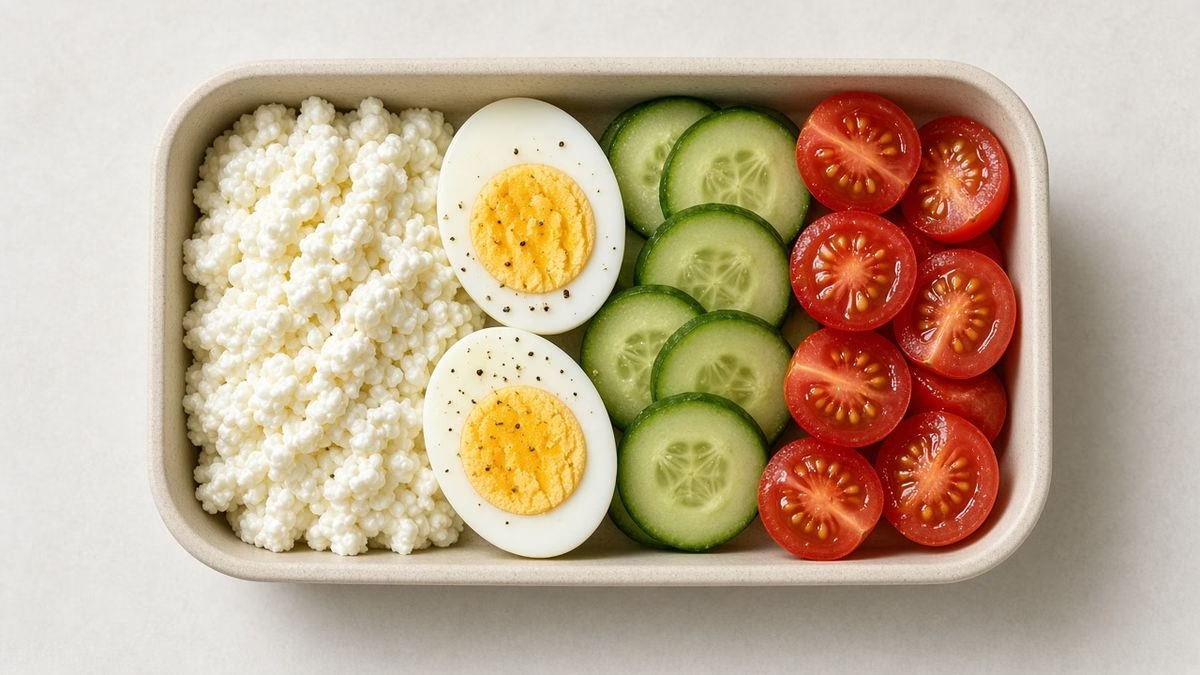
3. Cottage Cheese & Egg Protein Box
315 calories | 31 g protein | 15 g fat | 14 g carbs | Prep: 5 min | Fridge: Eggs up to 1 week in the shell; packed box 3 to 4 days
Ingredients
- 3/4 cup (170 g) 2% cottage cheese
- 2 large hard-boiled eggs (100 g)
- 1/2 cup (52 g) cucumber slices
- 1/2 cup (75 g) cherry tomatoes
- Salt and pepper to taste
Steps
- Spoon the cottage cheese into the large section of a bento-style box.
- Halve the eggs and add them with the cucumber and tomatoes in separate sections.
- Season the eggs with salt, pepper or everything-bagel seasoning.
4. Turkey Hummus Roll-Ups
290 calories | 39 g protein | 7 g fat | 17 g carbs | Prep: 5 min | Fridge: 3 to 4 days with roasted turkey; opened deli turkey 3 to 5 days
Ingredients
- 4 oz (113 g) roasted turkey breast, thinly sliced
- 3 tbsp (45 g) hummus
- 1/2 cup (46 g) red bell pepper strips
- 1/2 cup (64 g) carrot sticks
- 1/2 cup (52 g) cucumber spears
- Salt and pepper to taste
Steps
- Spread hummus thinly over each turkey slice.
- Lay a few pepper strips on each slice and roll up.
- Pack the roll-ups seam side down next to the carrot and cucumber sticks.
5. Edamame & Tofu Sesame Bowl
420 calories | 40 g protein | 23 g fat | 23 g carbs | Prep: 15 min | Fridge: 3 to 4 days
Ingredients
- 1 cup (155 g) shelled edamame, thawed
- 4 oz (113 g) firm tofu, pressed and cubed
- 1/2 cup (55 g) shredded carrot
- 1 tsp (5 ml) toasted sesame oil
- 1 tbsp (15 ml) low-sodium soy sauce
- Salt and pepper to taste
Steps
- Press the tofu for 10 minutes, then cube it. It is safe to eat without cooking.
- Toss the edamame, tofu and carrot with the sesame oil and soy sauce.
- Pack in a sealed container; it tastes better after a few hours in the fridge.
6. Cold Chicken & Quinoa Mediterranean Bowl
530 calories | 46 g protein | 22 g fat | 36 g carbs | Prep: 10 min | Fridge: 3 to 4 days (dressing on the side)
Ingredients
- 4 oz (113 g) cooked chicken breast
- 3/4 cup (139 g) cooked quinoa
- 1 oz (28 g) crumbled feta
- 1/2 cup (52 g) diced cucumber
- 1/2 cup (75 g) cherry tomatoes
- 2 tsp (10 ml) olive oil
- Salt and pepper to taste
Steps
- Cook and chill the quinoa ahead (or use leftover quinoa that went into the fridge within 2 hours of cooking).
- Slice the chicken and combine with the quinoa, cucumber and tomatoes.
- Pack the feta and olive oil (plus lemon or oregano) on top or in a small cup.
7. Smoked Salmon & Cucumber Wrap
350 calories | 28 g protein | 13 g fat | 30 g carbs | Prep: 5 min | Fridge: Eat the same day you make it
Ingredients
- 4 oz (113 g) smoked salmon
- 2 tbsp (30 g) light cream cheese
- 1 whole-wheat tortilla, 8-inch (49 g)
- 1/2 cup (52 g) thin cucumber slices
- Salt, pepper, dill or capers to taste
Steps
- Spread the cream cheese over the tortilla.
- Cover with smoked salmon and cucumber slices, add dill or capers if you like.
- Roll tightly, wrap in parchment and cut in half.
8. Chickpea & Egg Salad Lettuce Cups
415 calories | 29 g protein | 15 g fat | 42 g carbs | Prep: 10 min | Fridge: 3 to 4 days (lettuce packed separately)
Ingredients
- 1 cup (164 g) canned chickpeas, rinsed
- 2 large hard-boiled eggs (100 g)
- 2 tbsp (35 g) plain nonfat Greek yogurt
- 1/4 cup (25 g) diced celery
- 4 romaine leaves (50 g)
- 1 tsp (5 g) Dijon mustard, salt and pepper to taste
Steps
- Mash half the chickpeas with a fork, leave the rest whole.
- Chop the eggs and mix with the chickpeas, Greek yogurt, celery, mustard, salt and pepper.
- Pack the salad in a container and the romaine leaves separately; fill the cups at lunch.
9. No-Fridge Shelf-Stable Protein Box
455 calories | 35 g protein | 22 g fat | 34 g carbs | Prep: 2 min | Fridge: No fridge needed until the tuna pouch is opened
Ingredients
- 1 pouch (2.6 oz/74 g) light tuna
- 1 oz (28 g) beef jerky
- 1 oz (28 g) almonds, about 23
- 1 medium apple (182 g)
Steps
- Pack the sealed tuna pouch, jerky and almonds in a zip bag or small box.
- Add a whole apple (uncut fruit needs no cooling).
- Open the tuna only when you are ready to eat; finish it within 2 hours of opening.
Calories add up fast with jerky and nuts, so this box is best for days you cannot keep anything cold, not every day.
HOW TO KEEP A COLD LUNCH SAFE
Bacteria multiply fastest between 40°F and 140°F (4°C and 60°C), which the USDA calls the Danger Zone. Cold lunches are safe when you keep them below that range from the moment you pack them until you eat.
The 2-hour rule and the 40°F (4°C) line
- Perishable food (meat, poultry, fish, eggs, dairy, cooked grains) should not sit at room temperature for more than 2 hours.
- Above 90°F (32°C), in a hot car or outdoors in summer, the limit drops to 1 hour.
- Your fridge should be at 40°F (4°C) or below. A cheap fridge thermometer tells you if the office fridge is really cold.
- When in doubt, throw it out. Smell and taste do not tell you if bacteria have grown.
Ice packs: how many and where
- Use at least two cold sources, never one.
- Freeze gel packs overnight; a frozen water bottle can count as one and is drinkable by the afternoon.
- Place one cold source below the food and one on top.
- Pack the lunch straight from the fridge in the morning, not the night before on the counter.
How long each lunch keeps in the fridge
| Food | Fridge at 40°F (4°C) |
|---|---|
| Cooked chicken, turkey, quinoa or other leftovers | 3 to 4 days |
| Tuna, chicken or egg salad | 3 to 4 days |
| Hard-boiled eggs | Up to 1 week |
| Opened deli meat | 3 to 5 days |
Source: USDA FSIS and the FoodSafety.gov Cold Food Storage Chart. Leftover food from your lunch bag that sat out should be thrown away, not saved for tomorrow.
SHELF-STABLE PROTEIN FOR DAYS WITH NO COOLING
These foods are safe at room temperature while sealed. Protein values are from USDA FoodData Central.
| Food (unopened) | Portion | Protein |
|---|---|---|
| Light tuna pouch | 2.6 oz (74 g) | 19 g |
| Beef jerky | 1 oz (28 g) | 9 g |
| Almonds | 1 oz (28 g) | 6 g |
| Canned chickpeas, drained | 1/2 cup (82 g) | 6 g |
| Peanut butter | 2 tbsp (32 g) | 8 g |
Once a can or pouch is opened, it becomes perishable. Eat it right away or keep it cold.
A 45-MINUTE SUNDAY PREP FOR THE WEEK
You do not need to cook much. Most of the protein here comes from cans, eggs and one tray of chicken.
- Roast 1 lb (454 g) of chicken breast at 425°F (220°C) for 20 to 25 minutes, until it reaches 165°F (74°C) inside. Cool, then refrigerate within 2 hours.
- While it roasts, hard-boil 6 eggs and cook 1 cup (170 g) of dry quinoa.
- Chop cucumbers, tomatoes, peppers, celery and carrots for 4 days.
- Pack Monday to Thursday lunches in sealed containers, dressings on the side.
- Make Friday’s lunch fresh on Wednesday or Thursday so it stays inside the 3 to 4 day window.
If you want one cook session to cover lunches and dinners, our cook once, eat all week method builds on the same idea. New to prepping? Start with the beginner high-protein meal prep guide.
TEXTURE TIPS FOR COLD LUNCHES
- Choose quinoa, beans or lentils over rice: cold rice turns hard in the fridge, quinoa stays tender.
- Keep dressing in a separate small container, or at the bottom of a jar with the protein on top.
- Roll wraps the morning you eat them and put a layer of spinach between tortilla and filling.
- Pack greens and lettuce cups separately and fill them at lunch.
- Pat tuna, tofu and cucumbers dry before packing to avoid a watery box.
- Season cold food a little more than hot food; cold dulls flavor.
HOW MUCH PROTEIN SHOULD A LUNCH HAVE?
Most adults trying to lose weight or keep muscle do well with about 25 to 40 g of protein per main meal. All 9 lunches here land between 28 and 48 g. To find your own daily target, use our free protein calculator. If you get hungry mid-afternoon, add one of these high-protein snacks under 200 calories.
FAQ
What can I eat for lunch at work with no microwave that is high in protein?
Pick a protein that tastes good cold: canned tuna or salmon, cooked chicken breast, roasted turkey, hard-boiled eggs, cottage cheese, Greek yogurt, firm tofu, edamame or chickpeas. Each of the 9 lunches in this guide gives 28 to 48 g of protein per serving with no reheating.
How long can a packed lunch stay out of the fridge?
No more than 2 hours for perishable food such as meat, poultry, eggs, fish and dairy, or 1 hour if the temperature is above 90°F (32°C). After that, the USDA says to throw it away.
How many ice packs do I need for a lunch bag?
The USDA recommends at least two cold sources in an insulated, soft-sided lunch bag, such as two frozen gel packs or one gel pack plus a frozen water bottle. Put one above and one below the food.
Can I meal prep cold lunches for the whole week?
Most of these lunches keep 3 to 4 days in the fridge at 40°F (4°C) or below. Prep Monday to Thursday on Sunday, then make Friday’s lunch fresh on Wednesday or Thursday.
Is it safe to eat cold chicken and rice without reheating?
Yes, if the cooked chicken and grains went into the fridge within 2 hours of cooking, stayed at 40°F (4°C) or below and are eaten within 3 to 4 days. Reheating is not required for food that was cooked and chilled properly.
What high-protein foods don’t need refrigeration?
Unopened shelf-stable tuna, salmon or chicken pouches and cans, beef jerky, nuts, nut butter, roasted chickpeas and hard cheese all travel without cooling. Once a can or pouch is opened, treat it as perishable.
How do I keep wraps and salads from getting soggy?
Pack dressings and wet ingredients separately, put greens on top or in their own container, and roll wraps the morning you eat them. A layer of spinach between the tortilla and the filling also helps.
Is a no-microwave lunch good for weight loss?
It can be. Seven of the 9 lunches here are under 450 calories with at least 28 g of protein, which helps you stay full. Your total daily calories still decide whether you lose weight.
THE BOTTOM LINE
A high-protein lunch with no microwave is easy once you pick proteins that are good cold and match the lunch to your cooling situation. Use the fridge if you have one, two ice packs if you do not, and shelf-stable foods when you have nothing. Keep perishable food at 40°F (4°C) or below, respect the 2-hour rule (1 hour above 90°F/32°C), and most of these lunches will keep 3 to 4 days.
Sources
- USDA Food Safety and Inspection Service, Keeping “Bag” Lunches Safe: https://www.fsis.usda.gov/food-safety/safe-food-handling-and-preparation/food-safety-basics/keeping-bag-lunches-safe
- USDA FSIS, Leftovers and Food Safety: https://www.fsis.usda.gov/food-safety/safe-food-handling-and-preparation/food-safety-basics/leftovers-and-food-safety
- USDA FSIS, Danger Zone 40°F to 140°F: https://www.fsis.usda.gov/food-safety/safe-food-handling-and-preparation/food-safety-basics/danger-zone-40f-140f
- FoodSafety.gov, Cold Food Storage Chart: https://www.foodsafety.gov/food-safety-charts/cold-food-storage-charts
- USDA, Use an Insulated Lunch Bag to Keep Meals Safe: https://www.usda.gov/about-usda/news/blog/use-insulated-lunch-bag-keep-meals-safe
- USDA FoodData Central (SR Legacy) for all nutrition values: https://fdc.nal.usda.gov/
How we calculated nutrition: calories and macros are estimates computed from USDA FoodData Central values for each ingredient and rounded (calories to the nearest 5, macros to the nearest gram). Brands vary, especially tortillas and deli turkey; check your labels.