

A cottage cheese breakfast bowl delivers over 25 grams of complete protein per serving to suppress hunger hormones and protect lean muscle mass during weight loss. Combining low-fat curds with fiber-rich toppings creates high-volume, low-calorie morning meals that sustain fullness for hours.
Why Choose a Cottage Cheese Breakfast Bowl for Weight Loss?
Cottage cheese offers an exceptional protein-to-calorie ratio. One cup of low-fat cottage cheese provides approximately 24 to 28 grams of protein for under 190 calories according to the USDA FoodData Central. This makes it an ideal base for caloric deficits.
Casein makes up the majority of the protein in dairy curds. Casein digests slowly in the stomach. It releases amino acids steadily into the bloodstream over several hours. This sustained release prevents early morning energy crashes and curbs snacking impulses.
High protein intake also stimulates the thermic effect of food. Research highlighted by Harvard T.H. Chan School of Public Health demonstrates that dietary protein requires more metabolic energy to digest than fats or carbohydrates. Starting your day with dairy protein elevates metabolic rate while keeping blood glucose stable. For more morning options, explore these high-protein breakfast ideas to support your training routine.
What Nutrients Support Fat Loss in Cottage Cheese?
Protein is not the only beneficial nutrient in cultured dairy. Cottage cheese provides significant levels of dietary calcium, phosphorus, and vitamin B12. Calcium plays a documented role in cellular metabolism and fatty acid oxidation according to the NIH Office of Dietary Supplements.
The moisture content in fresh curds adds physical weight without additional calories. Volumetric eating strategies rely on water-dense foods to fill the stomach receptor walls. This triggers satiety signals without blowing your daily calorie budget. Pairing this dairy base with dietary fiber slows digestion even further.
Which 7 Cottage Cheese Breakfast Bowls Keep You Full?
These seven recipes leverage precise macro profiles sourced from the USDA FoodData Central database. Each bowl provides substantial protein with minimal prep time.
1. Classic Berry Chia Bowl (283 Calories, 26.5g Protein)
This bowl balances sweet antioxidants with slow-burning fats. It prevents mid-morning sugar cravings.
- 1 cup low-fat (2% milkfat) cottage cheese (183 calories, 24.2g protein)
- 1/2 cup fresh blueberries (42 calories, 0.5g protein)
- 1 tablespoon chia seeds (58 calories, 1.8g protein)
Stir the curds in a bowl. Top with fresh berries and raw chia seeds. Let sit for two minutes to allow seeds to soften.
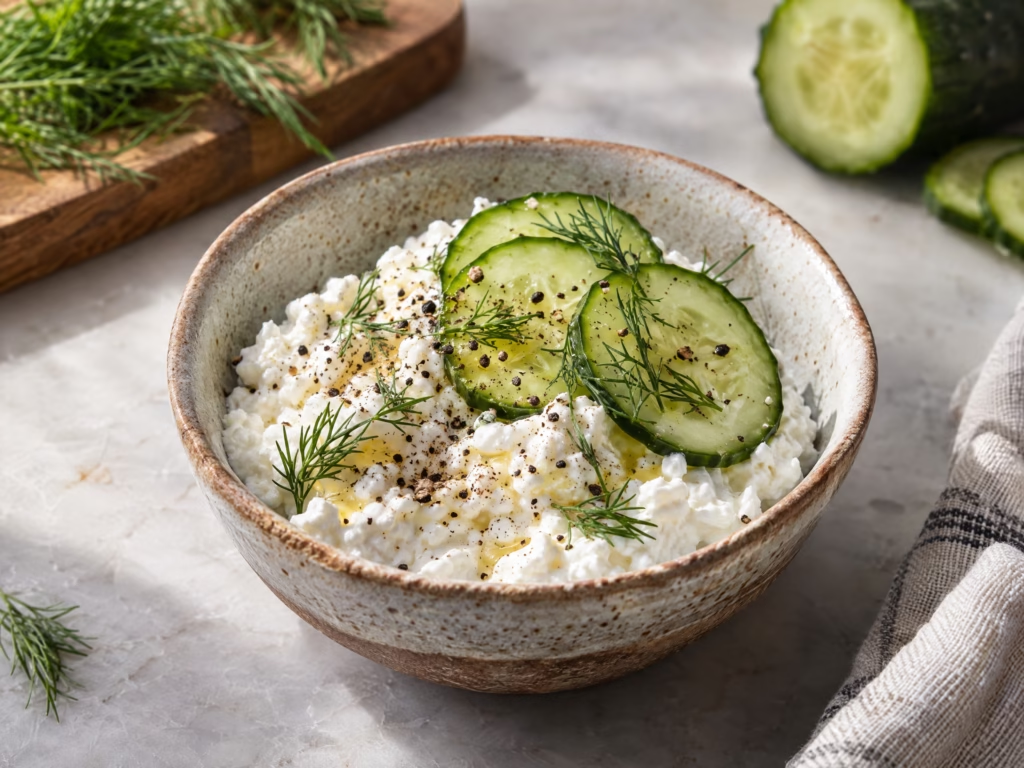
2. Savory Cucumber Herb Bowl (219 Calories, 25.5g Protein)
Savory breakfasts reduce sweet cravings throughout the day. This bowl provides crisp texture with negligible calories.
- 1 cup low-fat (2% milkfat) cottage cheese (183 calories, 24.2g protein)
- 1/2 cup diced English cucumber (8 calories, 0.3g protein)
- 1/2 cup halved cherry tomatoes (13 calories, 0.7g protein)
- 1 teaspoon everything bagel seasoning (15 calories, 0.3g protein)
Place cottage cheese into a bowl. Add chopped cucumber and tomatoes. Dust with everything bagel spice blend.
3. Peanut Butter Banana Power Bowl (310 Calories, 32.1g Protein)
This energy-dense bowl powers tough morning training sessions. Use nonfat cottage cheese to keep total calories low. Check out our guide to clean bulking meal plans for additional ways to scale this recipe.
- 1 cup nonfat cottage cheese (163 calories, 28g protein)
- 1/2 medium sliced banana (53 calories, 0.6g protein)
- 1 tablespoon natural creamy peanut butter (94 calories, 3.5g protein)
Whip nonfat curds with a spoon. Swirl in melted peanut butter. Garnish with sliced banana rounds.
4. Smoked Salmon and Dill Bowl (251 Calories, 34.7g Protein)
Omega-3 fatty acids meet premium casein. This combination maximizes satiety and muscle protein synthesis.
- 1 cup low-fat (2% milkfat) cottage cheese (183 calories, 24.2g protein)
- 2 ounces wild smoked salmon (66 calories, 10.4g protein)
- 1 tablespoon chopped fresh dill (2 calories, 0.1g protein)
- Pinch cracked black pepper (0 calories, 0g protein)
Spoon the dairy base into a wide shallow dish. Flake salmon across the top. Finish with chopped dill and black pepper.
5. Cinnamon Apple Walnut Bowl (279 Calories, 25.5g Protein)
Soluble apple pectin pairs with casein to suppress hunger hormones. Ground cinnamon adds natural sweetness without sugar.
- 1 cup low-fat (2% milkfat) cottage cheese (183 calories, 24.2g protein)
- 1/2 medium chopped Gala apple (48 calories, 0.3g protein)
- 1 tablespoon chopped raw walnuts (45 calories, 1.0g protein)
- 1/2 teaspoon ground cinnamon (3 calories, 0g protein)
Toss chopped apples with ground cinnamon. Place over cold cottage cheese. Sprinkle chopped walnuts over the surface.
6. Tropical Pineapple Coconut Bowl (239 Calories, 28.8g Protein)
Pineapple contains bromelain enzymes that aid protein digestion. Coconut adds texture and mouthfeel.
- 1 cup nonfat cottage cheese (163 calories, 28g protein)
- 1/2 cup fresh pineapple chunks (41 calories, 0.5g protein)
- 1 tablespoon unsweetened shredded coconut (35 calories, 0.3g protein)
Combine nonfat curds with drained pineapple chunks. Top with dry-toasted shredded coconut.
7. Spicy Avocado Boiled Egg Bowl (315 Calories, 31.2g Protein)
This bowl combines two gold-standard protein sources. Healthy monounsaturated fats extend the digestion curve.
- 1 cup low-fat (2% milkfat) cottage cheese (183 calories, 24.2g protein)
- 1 large hard-boiled egg sliced (72 calories, 6.3g protein)
- 1/4 medium avocado diced (58 calories, 0.7g protein)
- 1 teaspoon cayenne hot sauce (2 calories, 0g protein)
Layer halved hard-boiled egg and diced avocado over cold cottage cheese. Drizzle hot sauce across the bowl.
How Do Cottage Cheese Bowls Compare to Other Breakfasts?
Standard American breakfasts rely on refined carbohydrates. These foods elevate insulin and trigger rebound hunger. The table below outlines how cottage cheese stacks up against typical morning staples.
| Breakfast Type | Calories | Protein | Fullness Duration |
|---|---|---|---|
| Cottage Bowl | 280 kcal | 26g | 4 to 5 hours |
| Bagel Cream Cheese | 380 kcal | 10g | 1 to 2 hours |
| Instant Oatmeal | 220 kcal | 5g | 2 hours |
| Greek Yogurt Bowl | 270 kcal | 22g | 3 to 4 hours |
Pairing structured high-protein breakfast bowls with sound lifestyle habits delivers consistent weight loss results. If your schedule requires simple food prep, review our suggestions for prep-friendly muscle building meals to stay organized throughout the workweek.
How Can You Prep Cottage Cheese Bowls in Advance?
Cottage cheese separates if mixed with acidic fruit days in advance. Follow strict batch-prep rules to maintain optimal curd texture.
Portion your dairy curds into airtight glass meal prep containers. Store toppings in separate silicone baggies or small jars. Keep wet fruit, nuts, and seed toppings away from the cheese until mealtime.
Keep your refrigerator temperature below 40 degrees Fahrenheit. Consume pre-portioned dairy containers within four days of opening the commercial seal.
Frequently Asked Questions
Is full-fat or low-fat cottage cheese better for weight loss?
Low-fat (2% milkfat) or nonfat cottage cheese provides more protein per calorie. Full-fat versions offer extra creaminess but add approximately 40 to 60 extra calories per cup. Pick low-fat options to maximize volume on low-calorie diet targets.
Can you blend cottage cheese to remove lumps?
Yes. Processing cottage cheese in a high-speed blender or food processor creates a silky texture similar to Greek yogurt. It blends completely smooth within 60 seconds.
How much sodium is in a cottage cheese bowl?
Standard cottage cheese contains roughly 600 to 800 milligrams of sodium per cup. Look for low-sodium or no-salt-added varieties if you track sodium closely. Flavor low-sodium versions with herbs, lemon juice, or sweet fruit toppings.
Can you eat cottage cheese bowls warm?
Yes. Gently microwave cottage cheese on 50 percent power for 45 to 60 seconds. High heat causes curd separation and creates watery whey residue.
This article is not medical advice.
Change the portions: the A-Z Recipe Lab lets you adjust amounts and swaps, and recalculates calories and protein as you go.
For a daily target in grams, use the protein calculator. For 60 more small-portion recipes with full macros, see the GLP-1 Friendly High-Protein Cookbook.