


If you have been eating more protein to lose weight and noticed your skin looking duller, you are not imagining it. Cutting calories without enough protein is one of the fastest ways to lose muscle, slow your metabolism, and end up with skin that looks tired.
Here is the part most people miss: collagen is a protein. Your body builds it from the amino acids you eat. When you eat enough of the right protein — and pair it with vitamin C — you support both your skin and your fat loss at the same time.
This guide covers the 12 best high-protein foods for glowing skin, the vitamin C rule almost everyone gets wrong, and a 7-day meal plan that hits 25g+ of protein per meal.
Why Protein Matters for Skin (and for Losing Fat)
Skin is roughly 70% collagen by dry weight. Collagen is a structural protein made of three amino acids: glycine, proline, and hydroxyproline. Your body cannot make these from nothing — it needs them from food, or it needs the raw materials to assemble them.
When you eat in a calorie deficit, two things happen at once:
- Your body breaks down muscle for energy if protein is too low. Muscle loss slows your metabolism, which is why so many people plateau after a few weeks.
- Collagen production slows down. Amino acids get redirected to more urgent jobs. Skin loses firmness, fine lines look deeper, and the “glow” disappears.
The fix is not a cream or a serum. It is eating 25–35g of complete protein per meal — plus vitamin C, which we will get to in a moment. This is also the exact protein target that keeps you full and preserves muscle while losing fat. So the same habit fixes both problems.
The 12 Best High-Protein Foods for Skin
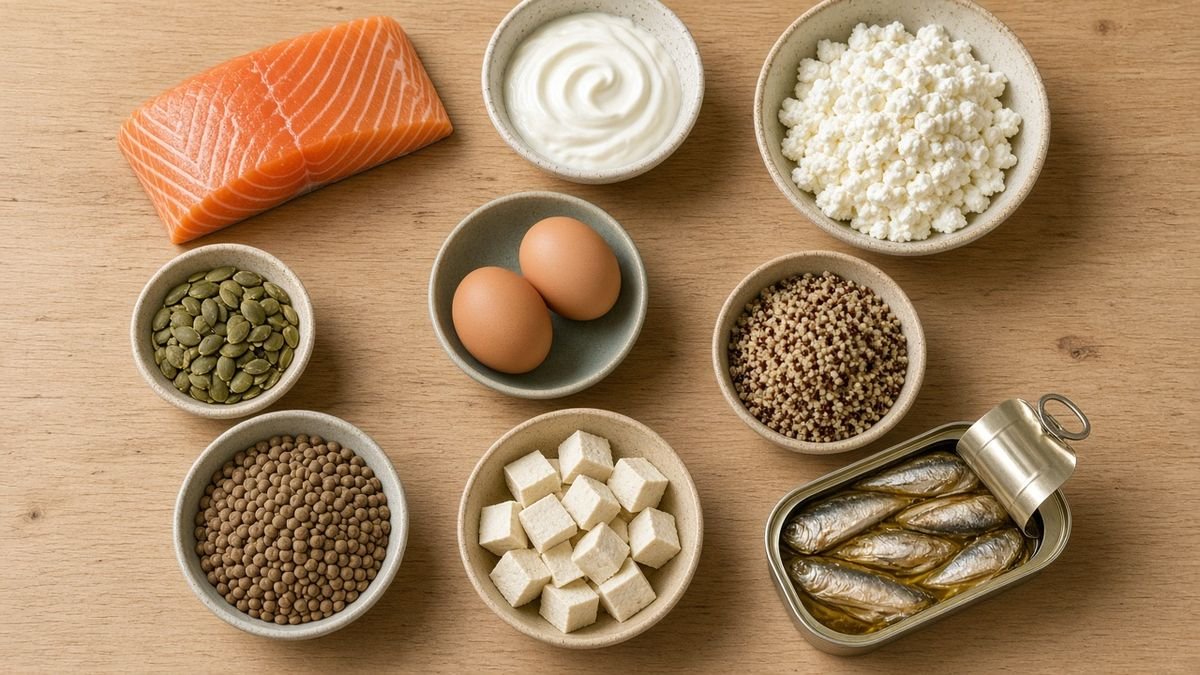
Each food below lists its protein content and the specific nutrient it contributes to skin.
1. Eggs
6g protein per large egg. Eggs contain lysine and proline, two of the amino acids your body needs for collagen. The yolk also supplies vitamin D and biotin. Two or three eggs at breakfast is one of the easiest ways to start the day with 12–18g of protein.
2. Greek Yogurt
17g protein per 170g cup. Greek yogurt is strained, which concentrates the protein and removes much of the lactose. It delivers zinc and vitamin B12, and the live cultures support gut health — which shows up on your skin more than most people expect.
Choose plain over flavoured: flavoured versions often carry 15g of added sugar, which works against everything else in this article.
3. Salmon
25g protein per 100g. Salmon is the best food on this list for skin because of what comes with the protein: omega-3 fatty acids. Omega-3s reduce inflammation and help keep the skin’s lipid barrier intact, which is what holds moisture in. Aim for two portions a week.
4. Cottage Cheese
14g protein per 100g. Cheap, fast, and almost pure casein protein, which digests slowly and keeps you full for hours. Cottage cheese also contains selenium, a mineral involved in skin repair. It works in both sweet and savoury dishes.
5. Chicken Breast
31g protein per 100g. The most protein-dense common food. It is a complete protein, meaning it contains all nine essential amino acids. If you are building a plate around a protein target, chicken breast is the most efficient way to hit the number.
6. Lentils and Chickpeas
9g protein per 100g cooked. Not complete proteins on their own, but they supply iron and zinc, both of which are involved in skin healing. They also deliver fibre, which most high-protein diets lack. Pair them with a grain to complete the amino acid profile.
7. Tofu and Tempeh
8g tofu / 19g tempeh per 100g. Tempeh is fermented, which makes its nutrients more available and adds probiotics. Both are complete proteins. This is the strongest plant option for anyone eating vegetarian, which we will cover properly at the end.
8. Bone Broth
9g protein per cup. The only common food that contains actual collagen rather than just its building blocks. Whether dietary collagen is directly absorbed into your skin is still debated, but bone broth is a solid source of glycine, which most Western diets are short on.
9. Sardines
25g protein per 100g. Along with salmon, sardines give you omega-3s — and they are far cheaper. They also carry calcium and vitamin D, which most people estimate they get more of than they actually do. If you dislike the taste, buy them in olive oil and mash them into toast.
10. Quinoa
4g protein per 100g cooked. Low in protein per gram, but it is a complete protein and a good source of magnesium. Use it as the base of a bowl instead of white rice and you add protein without adding effort.
11. Pumpkin Seeds
30g protein per 100g. By weight, pumpkin seeds carry more protein than chicken breast. A 30g handful gives roughly 9g. They are also one of the best food sources of zinc, which is directly involved in skin healing — a zinc deficiency shows up as slow-healing skin.
12. Collagen Peptides Powder
10g protein per scoop. This is the one supplement on the list worth mentioning. Collagen peptides are hydrolysed, meaning they are broken into short chains that dissolve in liquid. They are not a complete protein, so use them in addition to food, not instead of it. Mix into coffee or a smoothie.
The Vitamin C Pairing Rule
Here is the part almost every article on this subject skips.
Your body cannot build collagen without vitamin C. It acts as a cofactor — without it, the enzyme that stabilises collagen cannot do its job. You can eat every food on the list above and still produce poor collagen if vitamin C is low.
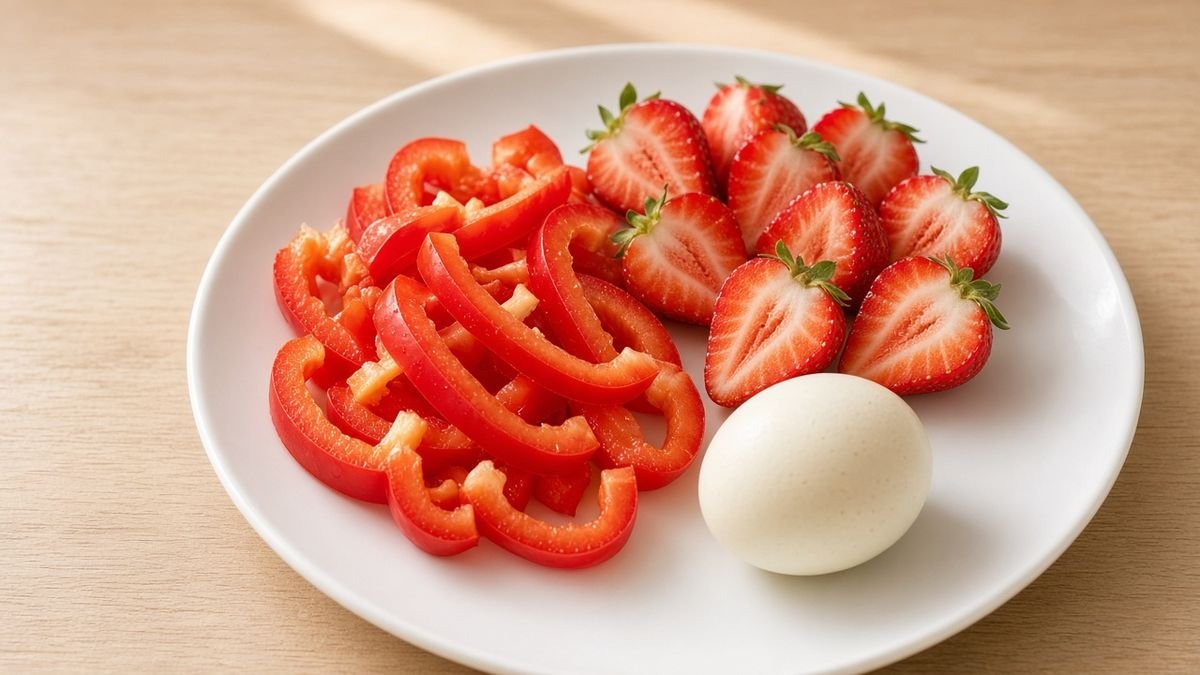
The good news: you do not need much. 75–90mg a day is the target. That is roughly one bell pepper, one orange, or a cup of strawberries.
Four pairings that work:
| Protein | Add this | Why |
|---|---|---|
| Eggs | Red bell pepper | 95mg vitamin C per half pepper |
| Greek yogurt | Strawberries | 60mg per half cup |
| Salmon | Broccoli | 50mg per 100g |
| Chicken | Kiwi | 70mg per fruit |
Eat them in the same meal where you can. It is a small change, and it is the difference between eating protein and actually building collagen from it.
A 7-Day High-Protein Skin Meal Plan
Every day below lands between 100g and 130g of protein with no meal under 25g.
| Day | Breakfast | Lunch | Dinner | Total |
|---|---|---|---|---|
| Mon | 3 eggs + peppers (18g) | Salmon salad (28g) | Chicken + quinoa (38g) | 108g |
| Tue | Greek yogurt + berries (20g) | Lentil bowl + feta (22g) | Sardines on toast (27g) | 105g |
| Wed | Cottage cheese + kiwi (17g) | Chicken wrap (30g) | Tofu stir-fry (25g) | 110g |
| Thu | Eggs + yogurt (24g) | Tuna chickpea salad (29g) | Salmon + broccoli (30g) | 115g |
| Fri | Protein smoothie (28g) | Chicken bowl (32g) | Tempeh + quinoa (28g) | 120g |
| Sat | 3 eggs + avocado (19g) | Sardine pasta (26g) | Chicken + pumpkin seeds (35g) | 112g |
| Sun | Greek yogurt + seeds (24g) | Leftovers (27g) | Salmon + salad (29g) | 115g |
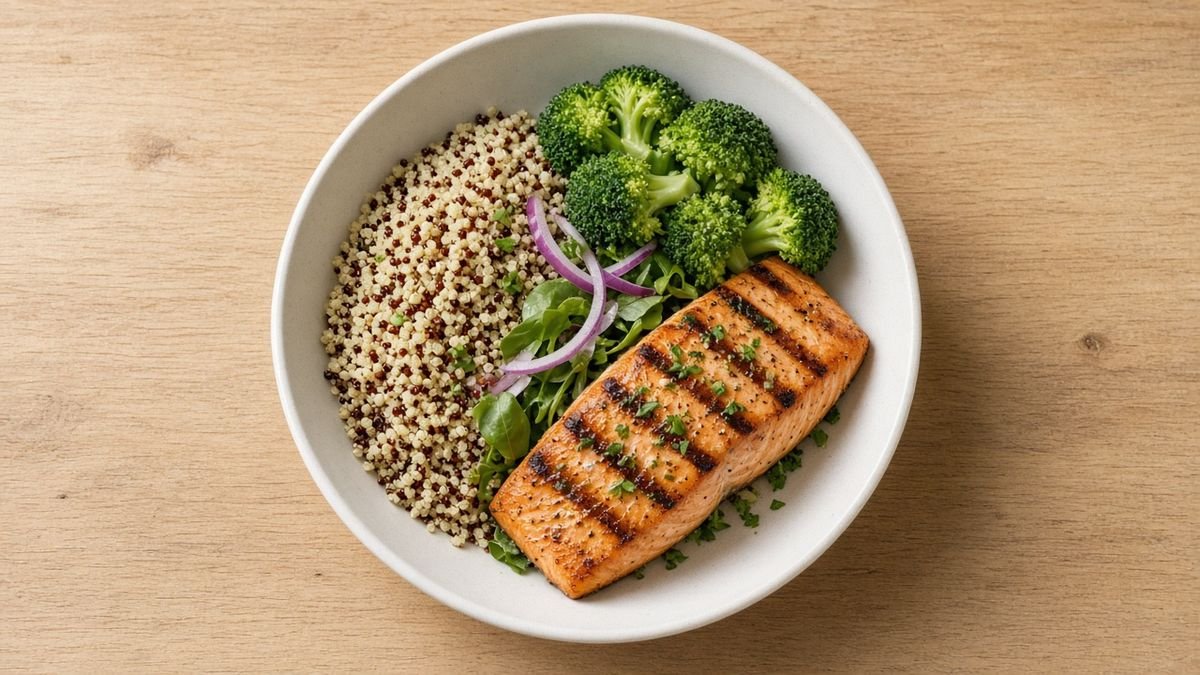
You do not have to follow this exactly. The point is the pattern: 25g+ at every meal, vitamin C at two of them, and a protein source at every sitting. Once you see the shape of it, you can apply it to food you already like.
What to Avoid If You Want Glowing Skin
Three things undo this work faster than almost anything else:
Added sugar. High sugar intake drives glycation, a process where sugar molecules attach to collagen and stiffen it. This is not a fringe theory; it is well established in dermatology. If you are eating 25g+ of protein per meal but finishing it with a dessert, you are working against yourself.
Alcohol. Alcohol is a diuretic and it interferes with vitamin A metabolism, which your skin needs for repair. It also consistently destroys sleep quality, and sleep is when most collagen repair happens.
Ultra-processed food. Not because of any single ingredient, but because it is calorie-dense and protein-poor. It fills your stomach without giving your body anything to build with.
None of this means never. It means not daily, and not while wondering why your skin is not improving.
FAQ
Can you get collagen from food without supplements?
Yes, but only from animal sources — bone broth, and to a lesser extent the connective tissue in meat and fish. Most foods described as “collagen-boosting” do not contain collagen. They contain the amino acids your body uses to build it, which is why the vitamin C pairing matters so much.
How much protein do you need for skin and weight loss?
Around 1.6g per kilogram of body weight is the evidence-based range for preserving muscle during fat loss. For a 70kg adult that is roughly 112g, split across three meals of 30–35g. Below 1.2g/kg, muscle loss accelerates.
Is collagen vegetarian?
No. Collagen only exists in animals. If you eat vegetarian, you can still support collagen production by eating complete plant proteins (tofu, tempeh, quinoa, and grain-legume combinations) and making sure your vitamin C intake is high. Soy, in particular, contains genistein, which has been linked to skin elasticity.
How long before you see results?
Skin cell turnover takes roughly 28 days in adults, and slower as you age. Expect the first changes in firmness and hydration at 4–6 weeks, with clearer differences at 12 weeks. If you are losing weight at the same time, be patient — the first month is mostly about stopping the decline.
The Bottom Line
Glowing skin and losing fat are not competing goals. They are the same goal, approached from two directions.
Eat 25–35g of protein per meal, include vitamin C at two meals a day, and keep added sugar and alcohol occasional rather than daily. That is the entire method.
Start with the 7-day plan above. If you want to go further, our high-protein nutrition guide covers the full protein target calculation, and the 5-day meal prep plan will save you from cooking every day.
Next steps:
High-protein breakfasts — the meal most people get wrong
High-protein lunch and dinner recipes — 30g+ meals
Cottage cheese pasta — a 40g-protein dinner in 15 minutes
Recovery and sleep habits — where collagen is actually rebuilt